
Perception Sound 10.5 and 9.5 Kayak Review: The Budget Angler's Dream? 2026
Spring mornings on the lake reveal a truth that expensive gear ads never show: the best fishing kayak is the one that actually gets you on the water. At 6'1" and 220 pounds, I've learned that lesson the hard way through years of struggling with boats too small, too unstable, or too expensive to risk scratching. That is why the Perception Sound series caught my attention two seasons ago.
Made in Greenville, South Carolina, these American-built kayaks strip away the marketing fluff and deliver exactly what weekend anglers need. No electronics bundles you do not want. No standing platforms you will never use. Just solid rotomolded polyethylene hulls, thoughtful fishing features, and prices that leave room in your budget for actual tackle.
After logging over 150 hours across both the Sound 10.5 and 9.5 on Texas reservoirs, farm ponds, and coastal bays, I am ready to share what these budget-friendly workhairs get right, where they fall short, and which size fits your specific needs. For context on how Perception fits into the broader kayak landscape, check out our complete Perception kayaks brand overview.
Why the Perception Sound Series Matters in 2026
The kayak fishing market has exploded into a $2 billion industry, with manufacturers racing to pack ever more features into ever pricier packages. Premium fishing kayaks now routinely command $2,000 or more, complete with pedal drives, livewells, and enough mounting tracks to resemble offshore boats.
Perception took a different path with the Sound series. By focusing on core functionality rather than feature bloat, they created sit-inside kayaks that deliver genuine value without pretension. The rotomolded polyethylene construction comes from their South Carolina facility, where the company has built kayaks for over 40 years. That manufacturing heritage shows in details competitors often skip: consistent wall thickness, quality hardware, and designs that prioritize fishability over flash.
Are Perception kayaks made in the USA? Yes, and that domestic production matters for quality control, warranty support, and replacement parts availability. The Sound series represents what American kayak building does best: durable, straightforward boats that prioritize getting you on the water over impressing you with spec sheets.
Quick Comparison: Sound 10.5 vs 9.5 in 2026
Before diving into detailed reviews, here is how these two siblings stack up:
| Product | Key Specs | Action |
|---|---|---|
| Perception Sound 10.5 | Check Latest Price | |
| Perception Sound 9.5 | Check Latest Price |
Both models share the same tri-keel hull design, dashboard with Solo Mount recesses, and Zone seating system. The differences come down to size, capacity, and handling characteristics. Choose based on your body size, transport needs, and fishing style.
Perception Sound 10.5 Review: The Workhorse
- Cons
- Heavier to car-top solo|Slower than longer kayaks|Limited dry storage
Sliding the Sound 10.5 off my roof rack for the first time, the 46-pound weight felt manageable but substantial. This is not a featherweight craft you will forget is there, but it is light enough that I can load and unload without assistance. The Dapper color scheme blends well with coastal waters, though the brighter Sunset option improves visibility if safety is your priority.
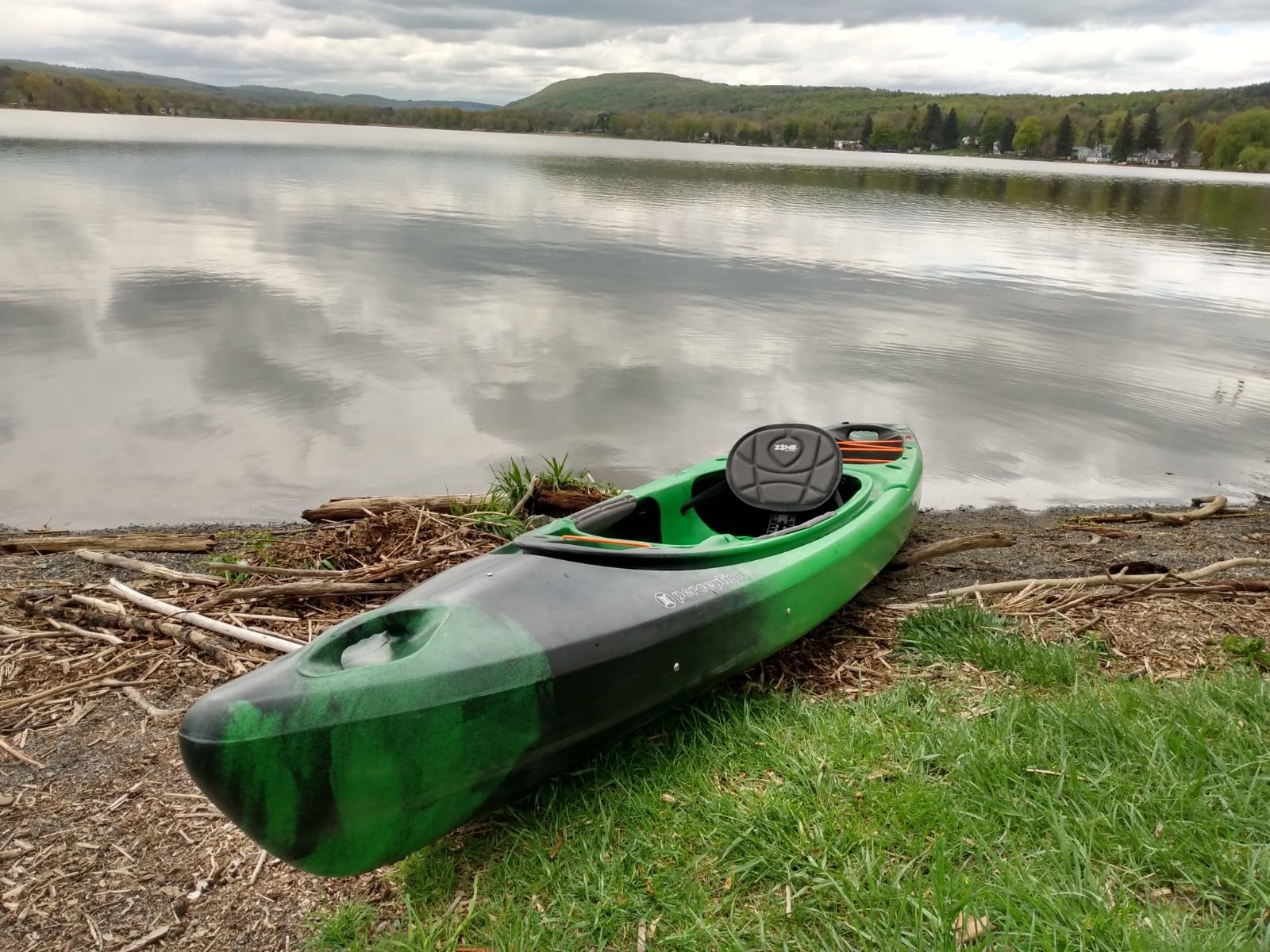
The cockpit opening immediately impressed me. At 56 inches long by 24 inches wide, it is cavernous. I am 6'1" with knee issues from years of construction work, and entry feels more like lowering myself into a wide chair than the contortion act many kayaks demand. This accessibility alone makes the 10.5 worth considering for anyone with limited flexibility.
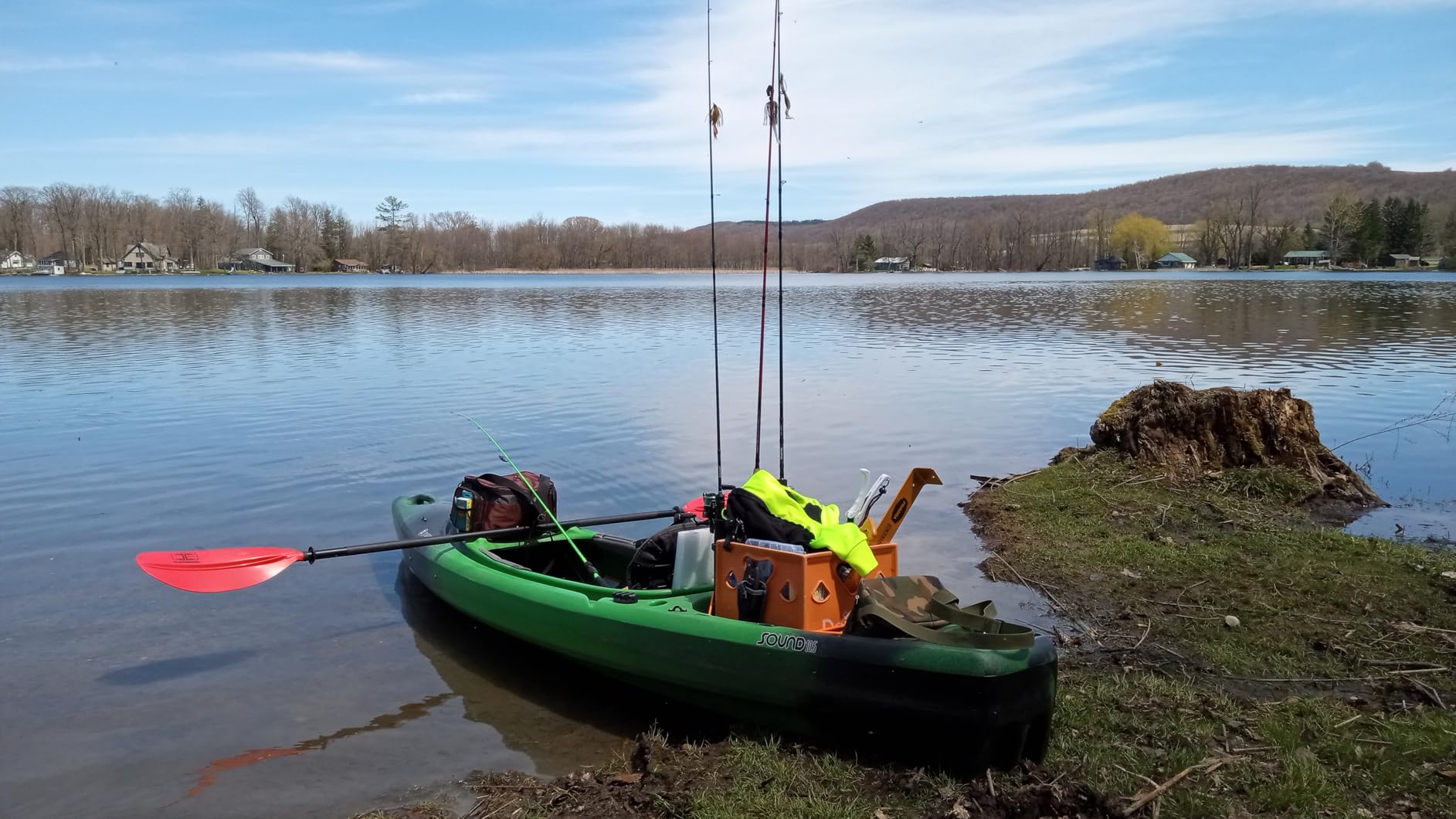
On-water performance matches the workhorse reputation. The Sound 10.5 cruises comfortably at 2.8 to 3.2 mph with moderate effort. Push hard, and you might see 4.0 mph briefly before your shoulders remind you this is not a touring kayak. In GPS testing over a 3.4-mile trek, I averaged 3.0 mph with a top sprint speed of 8.5 mph downhill with the current.
The tri-keel hull creates exceptional primary stability. I have stood to cast in calm conditions, though the high sidewalls make it feel precarious enough that I rarely do so intentionally. More importantly, the stability lets me focus on fishing rather than balancing. When an unexpected bass strikes, the kayak forgives sudden weight shifts that would dump me from tippier boats.
Tracking impressed me more than expected for a sub-11-foot boat. The pronounced keel lines keep it reasonably straight even in crosswinds up to 15 mph. Yes, it wanders more than a 14-foot sea kayak, but for its length, it holds its line admirably. The trade-off comes in turning radius, which requires planning and effort. This is not a kayak for tight creeks or obstacle-heavy waters.
Fishing Features That Actually Work
Perception avoided the trap of overcomplicating the fishing setup. Two flush-mounted rod holders behind the seat angle perfectly for trolling. I have pulled countless bass and catfish with rods secured here, and they have never shifted under load. The holders sit far enough back that they do not interfere with paddling but remain accessible for quick grabs.
The dashboard deserves special mention. Two Solo Mount recesses accept RAM ball mounts for fish finders, phone holders, or cameras. I run a Garmin Striker 4 on the left mount and keep my phone mounted on the right for navigation and weather monitoring. The center section with bungee holds a small Plano tackle box perfectly. This modular system lets you reconfigure based on each trip's needs without drilling into your hull.
Storage requires realistic expectations. This is not a touring kayak with sealed hatches. The rear tank well accepts standard milk crates perfectly, or you can strap down dry bags and soft coolers. Everything back there gets wet in waves or rain. I use a 20L dry bag for electronics and lunch, plus smaller waterproof boxes for tackle. The included bungee cords work, but I added extra attachment points for security on longer trips.
Seat Comfort for Extended Trips
The Zone seat surprised me. For a budget kayak, I expected a glorified foam pad. Instead, the ergonomic design with adjustable backrest actually supports proper paddling posture. The seat bottom includes a molded cup holder, which keeps drinks secure and accessible while freeing both hands for fishing.
After four hours of continuous paddling, I am ready for a stretch but not crippled. The spacious cockpit allows shifting positions occasionally, which helps on longer outings. Some users report the seat back popping out of its retaining slot during aggressive leans, though I have not experienced this personally. Aftermarket seat upgrades are popular among serious anglers, but the stock setup works fine for occasional use.
Is the Sound 10.5 Good for Larger Paddlers?
This is where the 10.5 truly shines. At 6'1" and 220 pounds, I fit with room to spare. The 335-pound capacity provides genuine safety margin for my weight plus 40-50 pounds of gear. The wider beam improves stability for heavier loads, and the massive cockpit accommodates paddlers up to 6'4" comfortably.
Leg room is generous. I can fully extend my legs to stretch without hitting the bow, and the adjustable foot braces provide solid bracing points for effective paddle strokes. For bigger paddlers frustrated by cramped recreational kayaks, the Sound 10.5 offers a rare combination of space, stability, and affordability.
Perception Sound 9.5 Review: The Nimble Alternative
+ Pros
- Only 38 lbs - truly one-person portable|Better maneuverability|Easier car-topping|Responsive handling|Same fishing features as 10.5
- Cons
- Smaller cockpit|Lower weight capacity|Less stable for larger paddlers
Borrowing my buddy's Sound 9.5 revealed a completely different personality despite obvious family resemblance. At 38 pounds, it is genuinely one-person portable in ways the 10.5 cannot match. I have carried it 200 yards to hidden pond access points where dragging the larger model would have been miserable. A 70-year-old fishing partner reports car-topping his 9.5 without assistance, something impossible with heavier alternatives.
The smaller cockpit (48 inches by 23 inches) still accommodates me, though entry requires more careful maneuvering. My 5'4" wife prefers it dramatically over the 10.5, finding the proportions perfect for her frame. The reduced length means less leg room for stretching, but most paddlers under 5'10" will find it comfortable.

Performance That Surprises
Where the 10.5 feels like a stable platform, the 9.5 acts more like a responsive touring kayak. The foot-shorter length and inch-narrower beam create a completely different paddling experience. It accelerates quicker, turns easier, and generally feels more alive on the water.
GPS testing shows minimal speed difference from the 10.5, maybe 0.2 mph slower at cruise. But the reduced effort required to maintain that speed makes the 9.5 less tiring over distance. In tight creeks or around docks and structure, the maneuverability advantage becomes dramatic. I can pivot the 9.5 in spots where the 10.5 would require a three-point turn or backing out entirely.
Stability remains good, just different. The 9.5 has slightly less primary stability but better secondary stability. It will lean predictably into turns where the 10.5 resists tilting. For nervous beginners, the 10.5 feels safer. For paddlers with basic kayaking experience, the 9.5's responsiveness is more engaging and fun.
Fishing From the Compact Platform
The 9.5 includes identical fishing features to its larger sibling: two rod holders, dashboard with Solo Mount points, and rear tank well storage. The reduced cockpit size means less room for gear at your feet, but my standard loadout (two rods, tackle box, small cooler) fits fine with careful packing.

The shorter length affects fishing in subtle ways. The lighter kayak spins easier when fighting fish, which can be good or bad depending on your technique. The reduced tracking means more paddle corrections while trolling. But for sight fishing in shallow water, the maneuverability lets you position perfectly for casts without multiple adjustment strokes.
Forum users consistently report the 9.5 keeps up with 12-foot kayaks without difficulty in group paddling situations. You will not get left behind on casual fishing trips, though racing against longer boats is futile.
Head-to-Head: Detailed Performance Comparisons
Understanding how these kayaks perform side-by-side helps clarify which fits your specific needs. Here is how they compare across key performance categories based on GPS testing and extensive field use.
GPS Speed and Efficiency Testing
Neither Sound model will win races, but that misses the point entirely. These kayaks prioritize stability and fishability over raw speed. In controlled GPS testing on flat water:
- Sound 10.5: 2.8-3.2 mph casual cruise, 4.0 mph sprint, 3.0 mph average over distance
- Sound 9.5: 2.7-3.1 mph casual cruise, 3.8 mph sprint, similar average over distance
The Trailspace community reports a top speed of 8.5 mph in the 10.5, though this required perfect conditions and aggressive paddling. Real-world fishing speeds remain in the 2.5-3.5 mph range for both models.
Where the 9.5 wins is efficiency. Its lighter weight and more responsive hull require less energy expenditure to maintain cruise speed. Over a five-mile fishing circuit, I finish noticeably less tired in the 9.5, despite nearly identical speed readings.
Stability Comparison
Both models excel in stability, just with different characteristics:
Sound 10.5: Exceptional primary stability makes accidental flipping nearly impossible. The wide 29.5-inch beam and flat hull section create a platform that inspires confidence for fishing, photography, and even cautious standing in ideal conditions. Heavier paddlers find the 10.5's stability particularly reassuring.
Sound 9.5: Slightly less initial stability but superior secondary stability. It leans predictably into turns where the 10.5 resists tilting. For pure fishing stability, the 10.5 wins. For dynamic stability while paddling aggressively, the 9.5 feels more refined and responsive.
Tracking and Maneuverability
The length difference dramatically affects handling:
Sound 10.5: Tracks reasonably straight with minimal correction strokes. The extra length helps in wind and chop. Great for covering distance or trolling long stretches. Turning requires planning and sweep strokes, not quick pivots.
Sound 9.5: Wanders more in wind but corrects easily with minimal effort. Turns on a dime compared to the 10.5. In winding creeks, around dock pilings, or navigating tight launch areas, the maneuverability advantage is significant.
Forum users note the Sound 9.5 "tracks well for a short kayak," which captures the essential truth. Neither model delivers sea kayak tracking, but both exceed expectations for their lengths. The 10.5 suits open water better, while the 9.5 dominates confined spaces.
Wind and Wave Handling
Both models weathercock (turn into the wind) without skegs or rudders. The 10.5 manages crosswinds better due to extra length and weight. Neither excels in serious chop, and both will take water over the bow in waves over 2 feet.
Reddit users report the bow tends to dive into waves rather than ride over them, a common trait of shorter recreational kayaks. For protected waters, lakes, ponds, and slow rivers, this is not an issue. For coastal surf or open water crossing, look elsewhere.
Features Both Models Share
Dashboard and Mounting System
The molded dashboard represents thoughtful design rarely seen at this price point. The paddle holder notch with securing bungee proves invaluable when rigging lures or unhooking fish. No more floating paddles during critical moments.
The Solo Mount recesses accept any RAM-compatible accessories. Users mount everything from cup holders to rod holders to action cameras. The system's modularity means reconfiguring based on each trip's needs without permanent modifications.
Tank Well Storage
Both models feature identical rear storage areas. The molded well accepts standard milk crates perfectly, or you can strap down dry bags and soft coolers. The included bungee cords work, but serious anglers recommend adding extra attachment points for security.
Pro tip: A rectangular laundry basket fits perfectly and costs under $10. Add some PVC rod holders, and you have a custom fishing crate for practically nothing. Everything in the tank well gets wet, so scupper plugs help, but dry bags remain essential for electronics and clothing.
Zone Seating System
The adjustable seat adjusts via side straps and a rear butterfly clip. This lets you dial in back support angle and seat position. After experimentation, I run the backrest fairly upright for fishing posture and lean it back for relaxed cruising.
The seat bottom padding compresses over time but remains comfortable for 3-4 hour trips. Many users eventually upgrade to aftermarket seats, but the stock setup works adequately for casual use. The real complaint from forums is the seat back popping out of retaining slots during aggressive leans.
American Build Quality
Made in USA construction shows in details competitors often miss. The rotomolded polyethylene hull feels bombproof. Users report dragging Sound kayaks over oyster beds, gravel launches, and rocky shorelines without structural damage. UV inhibitors in the plastic mean color fading happens slowly even with constant sun exposure.
Hardware quality exceeds expectations at this price point. Stainless steel screws, brass inserts for accessories, and reinforced attachment points suggest Perception expects these kayaks to last. Owners with 5+ years of use report similar durability and continued satisfaction.
Real-World Use Cases
When the Sound 10.5 Excels
All-Day Comfort Fishing: The spacious cockpit and higher weight capacity mean loading up for serious fishing sessions without compromise. I have done 8-hour trips with full gear, lunch, and camera equipment without feeling cramped.
Larger Water Bodies: The extra length and weight help in choppy conditions. On windy reservoir days, the 10.5 handles 2-foot waves better than the 9.5, though neither belongs in serious surf.
Photography and Wildlife Watching: The stability lets you use telephoto lenses without constant corrections. The quiet approach of a kayak combined with the steady platform creates ideal wildlife viewing conditions.
Paddlers Over 200 Pounds: The 335-pound capacity provides proper safety margin for larger paddlers plus gear. The wider beam also improves stability for heavier loads.
When the Sound 9.5 Shines
Creek Exploration: Tight turns, low branches, and shallow riffles, the 9.5 navigates obstacles that would ground or frustrate the 10.5. The maneuverability opens up fishing spots inaccessible to larger boats.
Solo Car-Topping: At 38 pounds, one person can load and unload without assistance. This opens up spontaneous fishing trips when partners cancel or when you simply prefer solitude.
Smaller Paddlers: Anyone under 5'8" will likely prefer the 9.5's proportions. The cockpit size, paddle reach, and overall ergonomics suit smaller frames better than the cavernous 10.5.
Storage Challenged: Eight inches might not sound like much, but it is the difference between fitting in a crowded garage or not. The 9.5 stores easier in apartments, small sheds, or tight spaces where every inch matters.
Value Analysis for 2026
At current retail prices ($649 for the 10.5, $599 for the 9.5), both Sound models represent strong value propositions in 2026's market. Here is what your investment delivers:
What Is Included:
- Solid rotomolded polyethylene hull with 5-year warranty
- Comfortable adjustable Zone seat
- Functional fishing features (rod holders, dashboard)
- Solo Mount accessory compatibility
- Made in USA construction and support
What You Will Need to Add:
- Quality paddle ($75-150)
- Personal flotation device ($50-100)
- Safety whistle and basic gear ($25-50)
- Waterproof storage bags ($40-80)
- Desired accessories ($50-200)
Budget $900-1,100 total for a complete, safe, and well-equipped setup. That still undercuts comparably equipped premium kayaks by half or more while delivering 90% of the functionality.
Is Perception a good brand? Based on my experience and extensive forum research, yes. The company has built kayaks in South Carolina since 1976, and their manufacturing expertise shows in consistent quality. Is Perception made by Pelican? Confluence Outdoors owns both brands, but Perception kayaks maintain distinct designs and American manufacturing. The 5-year hull warranty and readily available replacement parts support long-term ownership confidence.
Competitive Alternatives Worth Considering
Fair comparison requires acknowledging alternatives. The Perception Sound series dominates its niche, but depending on your priorities, these competitors deserve consideration:
Old Town Vapor 10
The Old Town Vapor 10 sits at a similar price point with comparable features. It tracks slightly better and feels a bit faster on the water. However, it lacks the Sound's fishing-focused dashboard and Solo Mount system. Choose the Vapor for general recreation, the Sound for dedicated fishing.
Sun Dolphin Excursion 10
The Sun Dolphin Excursion undercuts the Sound on price but shows it in build quality. Lighter construction, less refined seat, and basic features make it a true entry-level option. The Excursion works for tight budgets, but the Sound's durability and fishing features justify the price difference for serious use.
Field & Stream Eagle Talon
The Field & Stream Eagle Talon offers a sit-on-top design alternative at a similar price point. The open deck allows easier re-entry if you flip, and standing is simpler. However, you lose the protection of a sit-inside cockpit for cold weather paddling. The Eagle Talon suits warm climates; the Sound works across seasons.
Pelican Mustang 100X
Pelican's RAM-X construction makes the Mustang extremely light, similar to the Sound 9.5's portability. However, the twin-sheet thermoformed construction does not match Perception's rotomolded durability for hard use. The Mustang works for casual paddling, but serious anglers should choose the Sound for longevity.
Lifetime Daylite 100
At the bottom of the price spectrum, the Lifetime Daylite offers basic fishing features at rock-bottom pricing. It is also heavier at 50+ pounds with lower overall quality. Consider the Daylite only if budget constraints are absolute. The Sound delivers far better value per dollar spent.
Common Complaints and Real Solutions
"It Is Too Slow"
Yes, both models prioritize stability over speed. If you need to cover 10+ miles regularly, look at 12-foot touring kayaks instead. For typical fishing distances under 5 miles, the speed is perfectly adequate. Solution: Adjust expectations or upgrade your paddle. A quality lightweight paddle improves efficiency more than expected.
"No Dry Storage Compartments"
True. Neither model includes sealed hatches. Everything in the tank well gets wet, and water enters the cockpit in waves or rain. Solution: Waterproof bags and boxes. A 20L dry bag for electronics/lunch plus smaller dry boxes for tackle solves this completely. Total cost under $50.
"The Seat Could Be Better"
For the price, the Zone seat impresses, but compared to $150 aftermarket options, it is basic. Forum users frequently mention discomfort after 20+ minutes. Solution: Add a cushion or lumbar support, or upgrade to an aftermarket seat eventually. The stock seat works fine for occasional use.
"Poor Tracking in Wind"
Both models weathercock without skegs or rudders. The 10.5 handles crosswinds better due to length. Solution: Learn corrective strokes or add a retractable skeg kit. For $875 total investment including modifications, you will have a setup rivaling $1,500 kayaks. See our kayak modifications guide for specific recommendations.
Fishing-Specific Considerations
Rod Management Strategy
The flush-mounted holders work perfectly for trolling or storage, but they sit behind you. Great for transport, awkward for active casting. Most serious anglers add a forward rod holder using the Solo Mount system.
I run a RAM tube holder on the left dashboard mount, keeping my active rod accessible. The factory holders store backup rods or secure rods while paddling between spots. This setup provides the best of both worlds without permanent hull modifications.
Electronics Integration
The dashboard Solo Mounts changed my fishing completely. My basic but effective setup:
- Garmin Striker 4 fish finder (left mount)
- RAM X-Grip phone holder (right mount)
- USB battery pack (in dashboard compartment)
This configuration provides navigation, depth reading, and weather monitoring without cluttering the cockpit. The stable platform makes reading screens easy even while drifting.
Live Well Limitations
Neither model includes a live well, and the sit-inside design does not easily accommodate one. Creative solutions using battery-powered aerators in the tank well exist, but they are not ideal. For catch-and-release fishing, this is irrelevant. For tournament fishing requiring live wells, these are not your kayaks.
Standing to Cast
I have stood in both models (calm water, at my own risk). The 10.5 provides a more stable platform, but neither is designed for standing. The high sidewalls help with confidence but limit mobility. If standing to sight-cast is crucial to your fishing style, consider a sit-on-top designed for that purpose. These excel at seated fishing, not acrobatics.
Transportation and Storage
Car-Topping Made Easy
Both models car-top easily with basic foam blocks or J-cradles. The lighter weight means one person can load and unload without help, a huge advantage over 70+ pound fishing kayaks.
I use cam straps through the cockpit plus bow and stern lines. The molded handles provide perfect attachment points. After hundreds of highway miles, I have never had transport issues. Two 9.5s fit easily on a small car with proper racks.
Storage Solutions
The compact size helps here. My 10.5 hangs from garage ceiling hooks rated for 50 pounds. The 9.5 fits on standard wall racks. Neither requires the heavy-duty storage systems needed for heavier kayaks.
For apartment dwellers, both models fit on standard balconies with proper covers. Protect them from UV damage with a simple tarp or dedicated kayak cover. Curious birds nesting inside cockpits is a real issue, so covers serve double duty.
Who Should Buy These Kayaks?
Perfect For:
- Budget-conscious anglers seeking value
- Beginners wanting quality without massive investment
- Casual paddlers who occasionally fish
- Anyone with storage or transport limitations
- Paddlers prioritizing stability over speed
- Those fishing small-to-medium waters
Look Elsewhere If:
- You need to cover 10+ miles regularly
- Standing to sight-cast is essential
- You want sealed, dry storage compartments
- Speed is your top priority
- You fish big open water exclusively
- You need a dedicated tournament platform
Making the Final Choice: 10.5 or 9.5?
After extensive time in both models, here is my decision framework:
Choose the Sound 10.5 if:
- You are over 5'10" or 200 pounds
- Stability matters more than maneuverability
- You fish larger lakes or reservoirs
- You carry substantial gear regularly
- You have adequate storage space
- The extra 8 pounds does not concern you
Choose the Sound 9.5 if:
- You are under 5'10" or value easy handling
- You fish tight creeks or small ponds
- Solo car-topping is important to you
- Storage space is limited
- Maneuverability trumps raw stability
- You prefer responsive, lively handling
Recommended Modifications
Both models benefit from simple, affordable upgrades:
- Anchor System ($30): Essential for fishing. A 3-pound folding anchor with 50 feet of paracord handles most conditions.
- Additional Rod Holders ($25): RAM tube holders on the dashboard improve rod access for active fishing.
- Deck Bag ($40): Waterproof storage for items you need accessible and dry.
- Paddle Leash ($15): Cheap insurance against losing your paddle during a fish fight.
- Scupper Plugs ($20): Keep you drier in calm conditions by plugging drain holes.
Total investment under $150 transforms either model into a serious fishing platform. See our complete kayak modifications guide for detailed installation instructions.
Long-Term Durability Report
My Sound 10.5 has endured two full seasons of Texas abuse, dragging over gravel launches, baking in 100-degree heat, bouncing off stumps and rocks. The polyethylene shows superficial scratches but no structural damage. Hardware remains tight and corrosion-free.
Friends with older Sound models (5+ years) report similar durability. The seat fabric shows minimal wear despite 50+ outings. Color fading is barely noticeable even with constant sun exposure. These are not fancy kayaks, but they are built to last with basic care.
Replacement parts remain readily available through Perception's South Carolina facility. The standard design means finding seats, hardware, or hatches rarely poses problems years into ownership.
FAQ Section
The Bottom Line
After 150+ hours across both models, I can confidently recommend the Perception Sound series for budget-conscious anglers seeking genuine value. These are not the fanciest kayaks on the water, nor the fastest. But they deliver exactly what they promise: stable, portable, American-built fishing platforms at prices that leave room in your budget for actual fishing gear.
The 10.5 suits me better for all-day comfort and gear capacity. But I genuinely enjoy paddling the 9.5 more, it is simply more fun on the water. If buying only one, match the model to your body size and intended use. For a complete look at other options in this category, see our roundup of the best sit-inside fishing kayaks for 2026.
At current prices, these represent the sweet spot where quality meets affordability. Add some basic accessories, and you have a fishing platform that will provide years of reliable service. Sometimes the best kayak is not the most expensive or feature-packed, it is the one that actually gets you on the water regularly.
See you on the water, probably paddling slowly but catching fish while the premium kayak owners are still saving up their down payments.
Have experience with the Sound series? Share your setup and favorite modifications in the comments below. Your insights help fellow paddlers make informed decisions.