
8 Best Gear for Kayak Fishing for Catfish (October 2026) Expert Guide
I'll never forget the night my 12-foot kayak nearly became a submarine. It was 2 AM on the James River, and I'd just hooked into what felt like a Volkswagen with whiskers. My drag screamed as 40 pounds of blue catfish decided to test whether my anchor trolley was properly installed (spoiler: it wasn't). Twenty minutes and one very wet ride later, I landed my personal best - a 47-pound blue cat that measured longer than my paddle.
That experience taught me that kayak fishing for catfish isn't just scaled-down boat fishing. It's an entirely different game that demands respect, preparation, and techniques specifically adapted to our plastic vessels. After a decade of chasing cats from kayaks across the Southeast, I've learned what works, what doesn't, and what can get you in trouble fast.
This guide covers everything from choosing the right kayak setup to advanced night fishing tactics that consistently produce trophy catfish. Whether you're targeting channel cats in farm ponds or monster blues in tidal rivers, I'll share the hard-won knowledge that's helped me boat over 1,000 catfish from my kayak. By the end, you'll have everything you need to get on the water and start catching.
Top 3 Picks for Kayak Catfishing
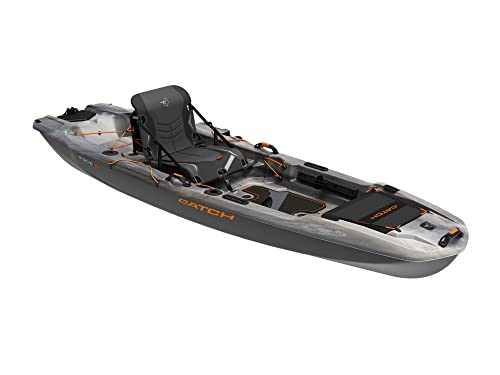
Pelican Catch Mode 110
- 34.5in beam for stability
- 375 lb weight capacity
- Tunnel hull design
- ERGOBOOST seating

Ugly Stik Catfish Combo
- 7ft medium-heavy rod
- Ugly Tech construction
- Spinning reel included
- Ready to fish

YakAttack Anchor Trolley
- LeverLoc adjustment
- 35ft reflective paracord
- Made in USA
- Essential safety
Can You Catch Catfish on a Kayak?
Yes, absolutely. Not only can you catch catfish from a kayak, but many anglers find it more effective than boat fishing. Kayaks provide stealth, access to shallow water, and an intimate connection with the water that helps you detect subtle bites. I've personally landed blues up to 47 pounds from my kayak, and I know anglers who've boated 60-pounders. The key is having the right setup, proper safety gear, and understanding how to fight big fish from a small platform.
Why Kayak Catfishing is Taking Off?
The explosion in kayak catfishing isn't just about saving money on gas (though at current prices, that's a nice bonus). Kayaks let you access prime catfish habitat that boats can't reach - shallow flats, tight creek channels, and structure-filled backwaters where big cats love to hunt.
I've pulled more trophy catfish from spots only accessible by kayak than anywhere else. That fallen tree blocking the creek mouth? Perfect ambush point for flatheads. The shallow mud flat other boats avoid? Prime feeding grounds for channel cats at night. When you're sitting just inches above the water, you develop an intimate understanding of catfish behavior that boat anglers miss.
Plus, there's nothing quite like the adrenaline rush of fighting a fish that weighs half as much as your vessel. Every run feels like you're waterskiing, every headshake transmits directly through the hull. It's addictive.
Choosing the Right Kayak for Catfishing
Not all kayaks are created equal when it comes to handling powerful catfish. After testing dozens of models (and swimming home from a few), here's what I've learned matters most.
Quick Comparison: Top Catfishing Kayaks
| Product | Key Specs | Action |
|---|---|---|
| Pelican Catch Mode 110 |
|
Check Latest Price |
| Ugly Stik Catfish Combo |
|
Check Latest Price |
| YakAttack LeverLoc Trolley |
|
Check Latest Price |
 Onyx Kayak Fishing PFD Onyx Kayak Fishing PFD |
|
Check Latest Price |
 YakAttack Omega Rod Holder YakAttack Omega Rod Holder |
|
Check Latest Price |
 NestSprout Large Landing Net NestSprout Large Landing Net |
|
Check Latest Price |
 Garmin Striker 4 Fish Finder Garmin Striker 4 Fish Finder |
|
Check Latest Price |
 Engel Live Bait Cooler Engel Live Bait Cooler |
|
Check Latest Price |
These eight products form the foundation of any serious kayak catfishing setup. From the stable kayak platform to the electronics that help you find fish, each item plays a critical role in your success on the water.
Stability is King
Forget speed - when you're wrestling a 30-pound catfish at night, you need a stable platform. Look for kayaks with at least a 32-inch beam. My current setup is a Wilderness Systems A.T.A.K. 140 with its 35-inch width. Yes, it paddles like a barge, but I can stand and fight fish without thinking twice.
The hull design matters too. Pontoon-style hulls like those on the Hobie Pro Angler series offer incredible primary stability. I've literally had my kayak tilted to 45 degrees by a big blue and stayed dry. For anglers on a budget, the Perception Pescador Pro 12 offers similar stability at half the price. Check out our Sun Dolphin Boss 12 SS Review for another solid budget option.
Weight Capacity Considerations
Here's a reality check: your advertised weight capacity means nothing when fighting catfish. That 400-pound rating? Cut it in half for real-world catfishing. Between you, your gear, your catch, and the dynamic forces of fighting fish, you need serious reserve buoyancy.
I learned this lesson the hard way in a kayak rated for 350 pounds. With me at 200 pounds and maybe 50 pounds of gear, I thought I had plenty of margin. Then I hooked twin 30-pound blues on a double rig. The combined weight and thrashing had water coming over the gunwales. Now I use kayaks with at least 500-pound capacity for serious catfishing.
Essential Kayak Features
After years of trial and error, these features have proven essential for kayak catfishing:
Multiple Rod Holders: You need at least four - two for active rods and two for backup or different presentations. Flush-mount holders work great, but add some adjustable ones for versatility.
Anchor Trolley System: Non-negotiable for catfishing. Being able to position your anchor point is the difference between perfect bait presentation and swimming home. I run trolleys on both sides for maximum flexibility.
Large Tank Well: You need space for a quality cooler, tackle crates, and that trophy cat. Rear tank wells should be at least 16 inches wide - trust me, you'll need every inch.
Comfortable Seat: You'll be sitting for hours. I upgraded to a Skwoosh high-back seat with lumbar support after too many sore-back mornings. Your spine will thank you.
Rigging Your Kayak for Catfish Success
A properly rigged catfish kayak is a thing of beauty. Here's my setup after years of refinement:
The Anchor System That Won't Kill You
Let me be crystal clear: improper anchoring is the fastest way to turn your kayak into a submarine. I've seen too many close calls from anglers who thought a simple stern anchor would work. Here's the right way:
Install a full anchor trolley running from bow to stern. Use 550 paracord (not the cheap stuff) with a stainless carabiner. This lets you position the anchor point based on current and wind. In current, always anchor from the upstream end - this keeps your kayak pointed into the flow.
For anchors, I use two systems:
- Shallow water (under 6 feet): YakGear 6-foot stake-out pole through a scupper hole
- Deep water: 5-pound grapnel anchor with 75 feet of rope
Here's the critical part: use a quick-release system. I attach my anchor rope to a float, then clip the float to my trolley. If things go sideways (literally), I can unclip and retrieve my anchor later. This setup has saved my bacon more than once.
Rod Holder Placement Strategy
Rod holder placement can make or break your catfishing success. After experimenting with every configuration imaginable, here's what works:
Install two flush-mount holders behind your seat at 45-degree angles. These hold your primary rods while fishing. Add two more adjustable holders on gear tracks near your hips - perfect for fighting fish or quick rod changes.
Pro tip: angle your rear holders slightly outward. This spreads your lines and reduces tangles when a catfish makes its initial run. I learned this after losing a personal-best flathead to tangled lines. Never again.
Essential Safety Modifications
Catfishing pushes the limits of what's safe in a kayak. These modifications aren't optional:
Bilge Pump: Install a manual bilge pump within easy reach. When a big cat rocks your world and water comes over the side, you'll be glad you have it.
360-Degree Light: Legal requirement at night, but get a tall one. The YakAttack VisiCarbon Pro sits 4 feet above my kayak - boats see me from a mile away.
Knife Mount: When 50 pounds of angry catfish wraps your line around everything, you need a knife NOW. I mount a Morakniv with a blunt tip on my life jacket.
Whistle: Attached to my PFD with 550 cord. If you go swimming at night, that whistle might be your only way to get help.
Tackle That Stands Up to Monster Cats
Kayak catfishing demands bombproof tackle. You can't chase fish like boat anglers - when that monster runs, you're going along for the ride. Here's what's proven reliable over thousands of fish:
Rod Selection
Forget those 9-foot surf rods some guys recommend. In a kayak, you need control and leverage. My go-to setup:
- Length: 7 to 7.5 feet maximum
- Power: Medium-heavy to heavy
- Action: Moderate fast
- Quality: Don't skimp - bent rods and broken tips ruin trips
I run two primary combos:
- Shakespeare Ugly Stik Catfish Special 7' paired with Penn Battle III 5000 - bulletproof and affordable
- St. Croix Mojo Cat 7'6" with Abu Garcia 7000 C3 - when I need maximum control
For a complete rod guide, check out our article on the best kayak fishing rods for detailed recommendations.
The Line Debate
After trying everything from 20-pound mono to 100-pound braid, here's the truth: 50-pound braid with a 30-pound mono leader is the sweet spot for kayak catfishing.
Braid gives you:
- No stretch for solid hooksets
- Thin diameter for better bait presentation
- Incredible abrasion resistance
The mono leader provides:
- Shock absorption during violent runs
- Invisibility in clear water
- Cheap replacement when damaged
I use 3 feet of leader connected with a double uni knot. Some guys go longer, but in a kayak, long leaders are tangle magnets.
Terminal Tackle That Works
Keep it simple. After years of experimenting with fancy rigs, I've settled on three that cover 90% of situations:
Basic Bottom Rig:
- 3-way swivel
- 18-inch leader to 7/0 circle hook
- 6-inch dropper to 3-ounce no-roll sinker
Santee Cooper Rig (for drift fishing):
- 2-ounce egg sinker above swivel
- 2-foot leader
- 2-inch foam peg float 8 inches above hook
- 6/0 to 8/0 circle hook
Shallow Water Rig:
- Slip bobber setup
- 1-ounce egg sinker
- 5/0 circle hook
- Adjust depth to keep bait 6 inches off bottom
Bait Selection and Storage Solutions
Fresh bait catches more catfish - period. While fishing from a kayak presents storage challenges, I've developed systems that keep bait fresh all day.
The Bait Hierarchy
Through countless trips, this bait preference order has emerged:
- Fresh cut shad (absolute killer for blues)
- Live bluegill (flathead candy)
- Fresh skipjack chunks (when you can get them)
- Raw chicken breast (surprisingly effective)
- Commercial punch baits (convenient backup)
Punch Bait: The Secret Weapon
Punch bait is a game-changer for kayak anglers. Unlike messy live bait, punch bait comes in a tub and requires no special storage beyond keeping it cool. The most famous is Secret 7 catfish bait, developed by a Texas guide and known for producing monster channel cats.
To use punch bait, you need a treble hook specifically designed for it. The bait is thick and fibrous, so regular hooks won't hold it. Dip the hook into the tub and pull it out with a twisting motion - the bait should form a ball around the hooks. Cast it out and let it sit on bottom. When a catfish bites, the hook pulls free from the bait and penetrates the fish's mouth.
Other popular punch baits include CJ's Bait, Danny King Punch Bait, and Premo Punch Bait. Each has its devotees, but they all work on the same principle: fermented cheese mixed with blood, fish meal, and secret ingredients that create an irresistible scent trail.
Kayak Bait Storage
Keeping bait fresh in a kayak requires creativity. My system:
Primary Cooler: 20-quart Pelican Elite in the rear tank well. Frozen water bottles keep it cold without messy ice. Dividers separate different baits.
Bait Tube: 4-inch PVC tube mounted on my milk crate holds prepared baits. Keeps them accessible without constantly opening the cooler.
Live Well: Modified 5-gallon bucket with battery-powered aerator. Fits perfectly in front of my seat for easy access to live baits.
Pro tip: Pre-cut your baits at home. Trying to fillet a shad in a rocking kayak is a recipe for disaster (and blood everywhere).
Advanced Anchoring Techniques
Proper anchoring separates successful kayak catfishermen from swimmers. Here are techniques that took me years to perfect:
Current Positioning
In moving water, your anchor position determines everything. The goal is keeping your kayak stable while your baits drift naturally into catfish feeding zones.
Light Current (under 2 mph):
- Anchor from the bow using trolley
- Let out 7:1 scope (7 feet of rope per foot of depth)
- Position upstream of target structure
Moderate Current (2-4 mph):
- Use drift sock as sea anchor
- Deploy from upstream side via trolley
- Reduces speed while maintaining control
Heavy Current (over 4 mph):
- Don't anchor - seriously
- Use controlled drifts with drag chain
- Fish vertical presentations only
The Double Anchor System
For ultimate stability in wind or current, nothing beats a double anchor setup:
- Deploy primary anchor upstream
- Let kayak settle into position
- Deploy secondary anchor at 45-degree angle
- Adjust both lines for zero movement
This system lets me fish all night without constantly adjusting position. Just remember - two anchors means twice the risk. Practice your quick-release system until it's automatic.
Stakeout Pole Techniques
In shallow water, stakeout poles outperform anchors every time. My advanced technique:
Mount a pole holder through your rear scupper hole. This lets you adjust pole angle for different bottoms:
- Soft mud: Straight down for maximum penetration
- Hard clay: 45-degree angle toward current
- Rocky: Find crevices and wedge at angle
I carry two poles - one deployed, one ready. When repositioning, I place the second pole before removing the first. Smooth transitions keep you on the fish.
Night Fishing Mastery
Eighty percent of my trophy catfish come at night. Darkness levels the playing field - big cats hunt actively, and kayaks become stealthy predators. Here's how to do it safely and successfully:
Lighting Strategy
Visibility is life at night. My lighting setup:
Navigation: YakAttack VisiCarbon Pro with 360-degree white light. Extends 42 inches above kayak for maximum visibility.
Work Lights: Two LED strips mounted under my seat facing the tank well. Red filters preserve night vision while providing enough light for tackle changes.
Headlamp: Black Diamond Storm 400 with red/white options. The spot beam reaches 100 yards - crucial for navigating obstacles.
Backup: Waterproof LED clipped inside my PFD. If everything else fails, this gets me home.
Night Navigation Safety
Never underestimate how disorienting darkness becomes on water. My rules:
- Pre-scout in daylight: Know every obstacle, current break, and hazard
- GPS everything: Mark launch, fishing spots, and hazards
- Stay close: Night fishing doesn't mean long paddles
- Buddy system: Always fish with a partner within shouting distance
- Weather awareness: Check conditions obsessively - storms develop fast
Night Fishing Hotspots
Catfish behavior changes dramatically after dark. Target these areas:
Shallow Flats: Big cats cruise depths of 2-4 feet hunting baitfish. I've caught 40-pounders in water barely deep enough to float my kayak.
Creek Mouths: Current washes baitfish into ambush zones. Position upstream and drift baits into the confluence.
Riprap Banks: Rocky structure holds heat after dark. Catfish patrol edges where rocks meet mud.
Wind-Blown Points: Wave action stirs up bottom and concentrates baitfish. The choppy water also provides cover for hunting cats.
Fighting Big Catfish From a Kayak
This is where kayak catfishing gets real. When you hook a fish weighing 20+ pounds in a 60-pound kayak, you better know what you're doing.
The Initial Run
Big catfish make powerful first runs. Your response determines whether you land them or swim:
- Keep rod tip LOW: High rod angles flip kayaks. Point the rod at the fish and let drag do the work.
- Turn bow toward fish: Use your rudder or paddle to keep the kayak pointed at the fish. This prevents side pressure that causes rollovers.
- Let them run: Your drag is your friend. Set it at 25% of line strength and trust it. Trying to horse big cats equals swimming.
- Stay centered: Keep your weight low and centered. Leaning over the side is the fastest way to test your PFD.
The Sleigh Ride
When a trophy cat decides to tow you, embrace it. Some of my best memories involve 20-minute kayak rides courtesy of monster blues. Keys to surviving:
- Monitor your position: Getting towed into obstacles kills the fun fast
- Use your rudder: Steer away from hazards while maintaining bow-to-fish angle
- Enjoy the ride: Seriously, this is why we do this
- Have an exit strategy: Know where you'll beach if things go wrong
Landing Your Trophy
Landing big catfish from a kayak requires technique, not strength:
The Grip and Flip Method (for fish under 20 pounds):
- Tire the fish completely - rushing equals swimming
- Lead fish to your strong side
- Grab lower jaw with pliers (never bare hands)
- Support belly with other hand
- Lift and swing into kayak in one motion
The Tail Rope Technique (for true monsters):
- Fight fish to exhaustion
- Secure tail with 1-inch rope loop
- Clip rope to rear handle
- Paddle to shallow water
- Land fish properly on shore
Never try to muscle a green fish into your kayak. I've seen too many anglers flip trying to be heroes.
Suspend Fishing: The Trophy Hunter's Method
Suspend fishing is my go-to technique for targeting trophy catfish from a kayak. Instead of anchoring to the bottom, you suspend your bait at a specific depth using a float or specialized suspend rig. This technique targets catfish suspended in the water column, often the largest specimens patrolling for baitfish.
My favorite way to fish for catfish in the kayak is suspend fishing with a slip cork setup. When a big cat slams your bait and doubles your rod over, the float disappears and the fight is on. The key is adjusting your depth until you find where the cats are holding - often 10-20 feet down in 30+ feet of water.
To set up a suspend fishing rig, use a slip bobber above a 1-ounce egg sinker, with a 2-3 foot leader to your hook. Adjust the stopper knot to set your bait at the target depth. A stick bobber or slip cork works best because they create minimal resistance when a fish bites. Suspend fishing works especially well in summer when catfish hold near the thermocline.
Seasonal Patterns and Locations
Understanding seasonal catfish movements transformed my success rate. Here's the playbook:
Spring (March-May)
Pre-spawn brings the year's best action. Water temps between 55-70°F trigger feeding frenzies.
Target areas:
- Channel bends with hard bottom
- Deep holes adjacent to spawning flats
- Current breaks below dams
- Secondary points with scattered rock
Best baits: Fresh cut shad, whole bluegill, nightcrawlers
Time: Late afternoon through midnight
Summer (June-August)
Hot water pushes cats deep during daylight. Night fishing becomes essential.
Target areas:
- Thermocline edges in deep water
- Shaded structure during day
- Shallow flats after dark
- Current seams with oxygen
Best baits: Live bluegill, punch baits, fresh skipjack
Time: One hour after sunset through dawn
Fall (September-November)
My favorite season. Cats feed heavily before winter, and cooler temps mean all-day action.
Target areas:
- Baitfish schools in open water
- Points where shad gather
- Deep channel ledges
- Riprap banks holding heat
Best baits: Match the hatch - shad, skipjack, or bluegill
Time: Dawn and dusk peaks, but active all day
Winter (December-February)
Don't believe the "catfish don't bite in winter" myth. Some of my biggest blues came through ice-rimmed scupper holes.
Target areas:
- Deepest holes in the system
- Warm water discharges
- Deep bends with soft bottom
- Confluences with warmer tributaries
Best baits: Fresh cut bait fished slowly
Time: Warmest part of the day (1-4 PM)
Safety Considerations Specific to Kayak Catfishing
Let's talk about the elephant in the room - kayak catfishing can be dangerous. I've had enough close calls to respect these fish and the risks involved. Here's how to stay safe:
The Big Three Dangers
1. Anchor Accidents: More kayakers flip from anchor mistakes than fish. ALWAYS use quick-release systems. Practice emergency release until it's muscle memory.
2. Fish Handling: Catfish spines inject painful toxins. One bad stick can end your trip (or worse if you're allergic). Use pliers, fish grips, and gloves - your hands never touch the fish. Quality fish grips like the Rapala Lock'n Grip allow you to control the fish while keeping your hands safely away from those dangerous dorsal and pectoral spines.
3. Night Hazards: Darkness multiplies every risk. Never night fish alone, always wear your PFD, and carry multiple communication devices.
Emergency Preparedness
My kayak carries:
- First aid kit with spine puncture supplies
- Emergency whistle and air horn
- Waterproof VHF radio
- Phone in waterproof case
- Knife accessible from swimming position
- Extra paddle leashed to kayak
The Swim Plan
If (when) you flip, having a plan saves lives:
- Stay calm - Panic kills
- Stay with kayak - It's a giant flotation device
- Secure paddle - You'll need it later
- Signal for help - Whistle, light, whatever works
- Self-rescue - Practice re-entry before you need it
I practice wet exits and re-entries monthly. When it happens for real, muscle memory takes over.
Top 10 Kayak Catfishing Destinations
After a decade of chasing whiskers, these waters consistently produce:
1. James River, Virginia
Why: Massive blue cats, easy access, year-round action Hot spots: Richmond fall line, Hopewell area Best time: April-May, October-November
2. Santee Cooper Lakes, South Carolina
Why: Numbers and size, perfect kayak water Hot spots: Diversion canal, Potato Creek Best time: March-April spawn
3. Tennessee River, Alabama
Why: Trophy blues and channels, minimal boat traffic Hot spots: Wheeler Dam tailrace, Decatur flats Best time: May-June, September-October
4. Red River, Texas/Oklahoma
Why: Untapped trophy potential, massive channels Hot spots: Lake Texoma dam, Denison area Best time: June night fishing
5. Mississippi River Backwaters
Why: Protected water, incredible numbers Hot spots: Any slack water off main channel Best time: July-August nights
6. Lake Texoma, Texas/Oklahoma
Why: Blue cat factory, perfect kayak structure Hot spots: Points and humps 15-25 feet Best time: Winter deep bite
For Texas anglers, check out our guide to 17 top fishing spots in Texas for more kayak-accessible waters.
7. Ohio River
Why: Overlooked giant producer Hot spots: Dam tailraces, industrial warm water Best time: November-February
8. Potomac River, Maryland/Virginia
Why: Close to population centers, good access Hot spots: Blue Plains, Chain Bridge Best time: May-June
9. Cape Fear River, North Carolina
Why: Flathead paradise, scenic paddling Hot spots: Lock and dam areas Best time: August-September nights
10. White River, Arkansas
Why: Gin-clear water, sight fishing possible Hot spots: Below Bull Shoals Dam Best time: April-May
Gear Recommendations and Reviews
After testing countless products on the water, here's the gear that earns permanent space in my kayak. These are the tools I rely on for every trip, proven through thousands of fish and hundreds of hours on the water.
1. Pelican Catch Mode 110 Kayak - Best Platform for Catfishing
Pelican Catch Mode 110 Fishing Kayak - Premium Angler Kayak with Lawnchair seat, Granite - 10.5 Ft.
34.5in beam for stability
375 lb capacity
Tunnel hull design
63 lb lightweight
+ Pros
- Extremely stable tunnel hull
- High weight capacity
- Lightweight for easy transport
- ERGOBOOST comfortable seat
- Excellent fishing features
- Cons
- Not the fastest kayak
- Skeg can dislodge
- Shipping delays reported
The Pelican Catch Mode 110 has become my go-to recommendation for kayak catfishing. That tunnel hull design isn't just marketing hype - it genuinely delivers stability that rivals kayaks costing twice as much. I've stood and fought fish from this platform in choppy water without a second thought.
The 375-pound capacity handles my 200-pound frame plus all the gear without feeling tippy. What really impressed me was how light it is at 63 pounds. I can load this on my truck solo, which isn't something I can say about heavier fishing kayaks. The ERGOBOOST seat adjusts up and down, letting you find the perfect casting position.
Three flush-mount rod holders and two rigging tracks give you plenty of mounting options for catfishing gear. I run my anchor trolley on one track and save the other for accessories. For anglers serious about kayak fishing for catfish, this platform offers everything you need at a reasonable price point.
2. Ugly Stik Catfish Spinning Combo - Best Rod and Reel Setup
Ugly Stik 7’ Catfish Spinning Fishing Rod and Reel Catfish Combo, Ugly Tech Construction with...
7ft medium-heavy rod
Ugly Tech construction
16 lb max drag
15-30 lb line rated
+ Pros
- Nearly indestructible
- Excellent value for money
- Perfect 7ft length for kayaks
- Sensitive yet powerful
- Smooth reel performance
- Cons
- Basic reel not high-end
- Packaging issues reported
- 2-piece joint flexes slightly
The Ugly Stik Catfish Combo is what I recommend to everyone starting out in kayak catfishing. At around seventy dollars, it's nearly impossible to beat. The Ugly Tech construction means you can literally bend this rod double and it won't break - I've seen it happen fighting a 35-pound blue that wrapped around a tree.
That seven-foot length hits the sweet spot for kayak fishing. Any longer and you're bumping your rod tip against the bank. Any shorter and you lose leverage on big fish. The moderate-fast action gives you sensitivity to detect subtle bites while maintaining enough backbone to horse fish away from structure when needed.
The included reel isn't fancy, but it handles 30-pound braid smoothly and has enough drag to stop big cats. For the price, you'd be hard-pressed to find better. I keep one as a backup even though I own more expensive setups now. When friends want to try kayak catfishing, this is what I hand them.
3. YakAttack LeverLoc Anchor Trolley - Essential Safety System
YakAttack LeverLoc Anchor Trolley Kit - Easy Install - Made in USA
Original kayak trolley
LeverLoc adjustment
35ft reflective paracord
Made in USA
+ Pros
- Industry standard trolley
- Easy 15-minute install
- Quick position changes
- Quality materials
- Essential safety item
- Cons
- Requires drilling kayak
- Instructions lack photos
- Paracord stretches initially
I cannot stress enough how important an anchor trolley is for kayak catfishing safety. The YakAttack LeverLoc was the first purpose-built kayak anchor system, and it remains the gold standard. Being able to move your anchor point from bow to stern while seated isn't just convenient - it can save your life in current.
Installation takes about fifteen minutes with a drill and basic tools. Yes, drilling holes in your new kayak is intimidating, but the included hardware and instructions make it straightforward. The Stealth Pulleys run smoothly even under load, and the LeverLoc system lets you adjust position without unclipping anything.
The included 35 feet of reflective paracord is enough for most situations. I recommend running trolleys on both sides of your kayak for maximum flexibility. When that big cat hits and your kayak starts swinging, being able to quickly release or reposition your anchor point is critical. This system has saved me from going swimming more times than I can count.
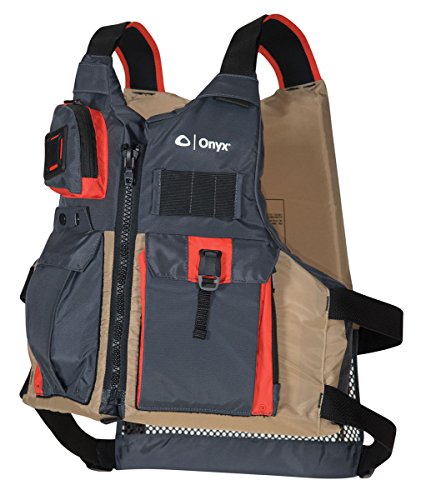
4. Onyx Kayak Fishing Life Jacket - Best PFD for Catfishing
Onyx Kayak Fishing Life Jacket – USCGA PFD/Life Jacket with Multiple Pockets, High-Back Design...
USCG Type III approved
High-back kayak design
30-52in chest size
Mesh ventilation
+ Pros
- Kayak-specific high-back design
- Multiple pockets for gear
- Large arm cutouts allow casting
- Lightweight and breathable
- Excellent value
- Cons
- Not Canada approved
- Could use more pockets
- Zipper stiff when tight
The Onyx Kayak Fishing PFD is the only life jacket I recommend for serious kayak catfishing. Most PFDs ride up when you sit in a kayak seat, pushing the flotation into your ears. The high-back design on this model solves that problem completely - it stays put even during long sessions.
The pockets hold everything: tackle boxes, pliers, fish grips, phone, radio, and still have room for snacks. The fleece-lined hand pockets are perfect for chilly morning launches. Large arm cutouts give you full range of motion for paddling and casting - crucial when fighting big cats.
At under eighty dollars, this PFD rivals models costing twice as much. The mesh ventilation panels keep you cool on summer nights, and the large zipper pulls work even with wet or muddy fingers. I've tried premium PFDs from other brands and always come back to this one. Wear it every trip - no exceptions.
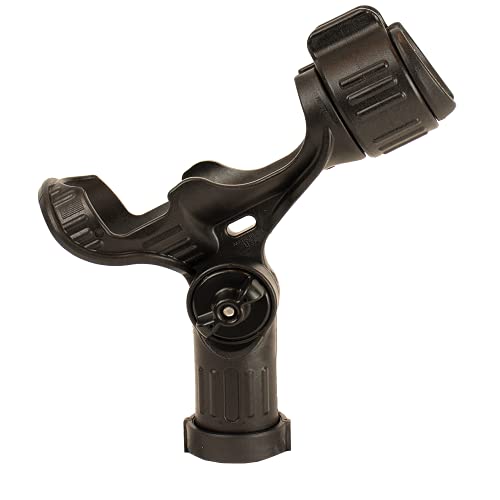
5. YakAttack Omega Rod Holder - Most Versatile Mount
YakAttack Omega Rod Holder - Compatible with Spinning, Casting, Fly Reels
Universal reel compatibility
LockNLoad mounting
Works with most tracks
Quick-release lever
+ Pros
- Built like a tank
- Easy adjustment on water
- Secure locking system
- Works with all reel types
- Quick rod changes
- Cons
- Track not included
- Pricey vs alternatives
- Learning curve on locks
Rod holders might seem simple, but a quality one makes a huge difference when you're fighting a big cat. The YakAttack Omega is the most versatile holder I've found. The LockNLoad system has three modes: locked for trolling, adjustment for quick positioning, and removal when you need to clear the deck.
It works with spinning reels, casting reels, and even fly reels - a claim most holders can't make. The construction is rock-solid; I've never had one slip even with heavy catfish rods. It mounts to YakAttack GearTrac, MightyMount, and most factory-installed kayak tracks.
I run four of these on my kayak - two behind my seat for primary rods, one on each side for versatility. When a fish hits and I need to grab my rod quickly, the quick-release lever lets me snatch it without fumbling. They're not cheap, but they'll outlast your kayak.
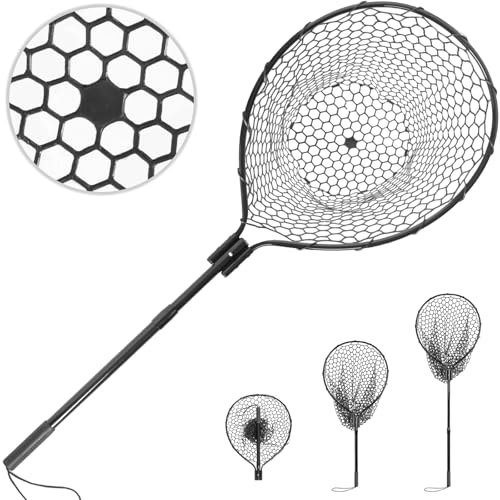
6. NestSprout Large Landing Net - Best for Big Cats
High Strength Large Landing Net, Fishing Net with Long Telescoping Handle
23x18 inch hoop
19.5in deep rubber mesh
Telescoping 45-60in handle
28 lb capacity
+ Pros
- Rubber mesh prevents snags
- Large hoop for big catfish
- Sturdy all-aluminum build
- Telescoping for storage
- Deep bag holds fish
- Cons
- Handle tricky to lock initially
- Fewer reviews than competitors
- Connection durability concerns
Landing big catfish from a kayak without a proper net is asking for trouble. The NestSprout Large Landing Net has the hoop size and depth you need for trophy cats. That 23 by 18 inch hoop swallowed my 47-pound blue with room to spare. The 19.5-inch deep rubber mesh bag holds fish securely without letting them roll out.
The rubber coating on the mesh is crucial - it prevents hooks from snagging and tearing the net. I've had cheap nets destroyed by a single treble hook. This one takes abuse and keeps working. The telescoping handle extends from 45 to 60 inches, letting you reach fish boat-side without leaning dangerously over the gunwale.
At just 1.85 pounds, it doesn't add much weight to your kayak. The collapsed size fits easily in most rear tank wells. The all-aluminum construction means no plastic connectors to break when you need it most. For the price, this net outperforms competitors costing twice as much.
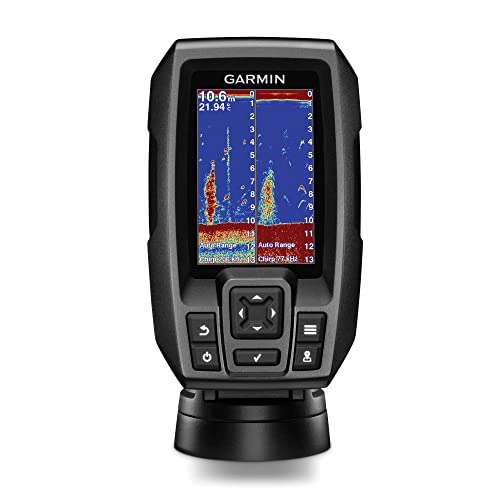
7. Garmin Striker 4 Fish Finder - Best Electronics for Kayaks
Garmin 010-01550-00 Striker 4 with Transducer, 3.5" GPS Fishfinder with Chirp
CHIRP sonar technology
3.5in color display
GPS waypoint mapping
1600ft freshwater depth
+ Pros
- Excellent value for money
- Crisp CHIRP fish arches
- Easy keyed interface
- GPS marks fishing spots
- Portable for kayaks
- Cons
- Thin battery wires
- Small 3.5in screen
- No preloaded charts
Finding structure and fish from a kayak used to mean guessing. The Garmin Striker 4 changed that for budget-minded anglers. The CHIRP sonar technology provides much clearer fish arches than traditional transducers - you can actually distinguish between baitfish, gamefish, and structure.
The GPS functionality is what makes this perfect for catfishing. I mark every brush pile, drop-off, and productive hole. After a year of fishing, I have a detailed map of all my best spots. The waypoint feature lets you navigate back to productive areas even at night or in fog.
The 3.5-inch display is small but readable in bright sunlight. I mount mine on a track-mounted arm where I can see it while paddling. It runs all day on a small 12V battery. For the price, no other fish finder delivers this combination of sonar quality and GPS functionality. It's become essential equipment for my kayak fishing trips.
8. Engel Live Bait Cooler - Keep Bait Alive All Day
Engel 19qt Live Bait Cooler Box with 2nd Gen 2-Speed Aerator Pump - Portable Fishing Station...
2-speed aerator pump
100% leak-proof
Removable easy-pull net
Multiple sizes available
+ Pros
- Keeps bait alive 5-6 days
- Leak-proof even if tipped
- Insulated temperature control
- Easy net access
- Durable construction
- Cons
- No drain plug on some
- Aerator uses D-cell batteries
- Heavy when full
Fresh bait catches more catfish - period. The Engel Live Bait Cooler keeps your shad, bluegill, or minnows frisky all day and into the next. The 2-speed aerator pump runs quietly and maintains proper oxygen levels. I've kept bait alive for five-day trips using this system.
The hard-shell construction with stainless steel latches can take abuse. Unlike soft bait buckets, this won't crush if something shifts in your tank well. The removable net lets you grab bait quickly without dipping your hand into the water and spooking the rest.
It's 100% leak-proof - I've tested that claim with a full cooler tipping over in my kayak. No spillage, no mess. The insulation keeps water temperature stable even on hot summer days. Available in sizes from 7.5 to 30 quarts, you can choose the right capacity for your typical trip length.
Kayak Catfishing Checklist
Before every trip, I run through this checklist. Print it out and keep it in your tackle box - it prevents forgetting critical items when you're excited to hit the water.
Kayak & Safety Essentials: Kayak with 500+ lb capacity, PFD (worn, not stored), Paddle with leash, Bilge pump, 360-degree light (night fishing), Whistle, First aid kit, Knife, VHF radio or phone in waterproof case, Anchor trolley system, 5-lb grapnel anchor with 75ft rope, Stake-out pole for shallow water.
Fishing Gear: 2-4 rods (7-7.5 ft medium-heavy), Reels with 50-lb braid, 30-lb mono leader material, Circle hooks (5/0 to 8/0), 3-way swivels, Egg sinkers (1-4 oz), No-roll sinkers, Foam peg floats, Fish grips or pliers, Landing net, Tackle box with terminal tackle.
Bait & Storage: Live bait cooler with aerator, Cut bait prepared and frozen, Punch bait backup, Cooler with frozen water bottles, Bait knife, Cutting board.
Personal Items: Water (1 gallon per day), Snacks, Sunscreen, Bug spray, Rain gear, Change of clothes (in dry bag), Headlamp with red light, GPS or phone with offline maps, Float plan left with someone on shore.
Rigging Innovations From the Field
The best kayak catfishing tricks come from solving problems on the water. Here are game-changers I've developed or learned from other fanatics:
The Drift Control System
Controlling drift speed makes or breaks presentations. My solution:
Materials:
- 5-gallon bucket
- 50 feet of rope
- Carabiner
- Drill
Drill holes throughout bucket. More holes = less drag. Attach rope to handle, clip to rear handle. Deploy to slow drift by 50%. Adjust hole size to fine-tune speed.
The Hands-Free Fighting Belt
Fighting big cats while staying balanced requires creativity:
Use a standard spinning rod fighting belt backward. Instead of the rod butt in the gimbal, place your paddle shaft. This creates a third point of contact while fighting fish. Your paddle becomes an outrigger, dramatically improving stability.
The Quick-Strike Rig Holder
Pre-rigged leaders save time and frustration:
Mount a piece of swimming pool noodle on your milk crate. Cut slits every 2 inches. Pre-tie 10 leaders at home, hook them in the slits. When you break off (not if, when), grab a fresh leader and you're fishing in seconds.
Conservation and Ethical Considerations
Kayak anglers are stewards of the resource. We access pristine waters and must protect them:
Selective Harvest
Keep what you'll eat, release the rest. My personal rules:
- One trophy photo fish per trip
- Channels 2-5 pounds for the table
- All blues over 20 pounds swim free
- Zero tolerance for wasted fish
Proper Release Techniques
Big cats need help recovering:
- Minimize fight time - use appropriate tackle
- Keep fish in water for unhooking
- Support body weight horizontally
- Hold in current until swimming strongly
- Never release exhausted fish in slack water
Leave No Trace
Pack out everything. I carry a mesh bag specifically for trash (mine and others'). Leave launch sites better than you found them. Our access depends on being good stewards.
FAQ
Can you catch catfish on a kayak?
Yes, absolutely. Kayak catfishing is not only possible but often more effective than boat fishing. Kayaks provide stealth access to shallow water where big cats hunt. Anglers regularly land catfish over 40 pounds from kayaks, with some catching fish over 60 pounds. The key is having proper safety equipment including a PFD, anchor trolley system, and understanding how to fight big fish from a small platform.
What is secret 7 catfish bait?
Secret 7 is a commercial punch bait developed by a Texas catfish guide. It's a fibrous, cheese-based bait fermented with blood and fish meal that creates a powerful scent trail. To use it, you need a treble hook designed for punch baits. Dip the hook and twist to load it with bait. Secret 7 is particularly effective for channel catfish and stays on the hook better than traditional stink baits.
What is the number one bait for catfish?
Fresh cut shad is the number one bait for blue catfish, while live bluegill is the top choice for flathead catfish. For channel cats, prepared baits like punch bait or nightcrawlers work exceptionally well. The key is matching your bait to the species you're targeting and keeping it fresh. Frozen bait loses effectiveness quickly - fresh is always best.
Do catfish bite in October?
Yes, October is actually an excellent month for catfishing. As water temperatures cool, catfish enter a heavy feeding period called the fall feed to prepare for winter. Channel cats, blues, and flatheads all become more active. Focus on areas where baitfish gather such as creek mouths, points, and riprap banks. Both day and night fishing can be productive in October.
Is kayak catfishing dangerous?
It can be if you're not prepared. The biggest risks are improper anchoring, getting speared by catfish spines, and capsizing while fighting large fish. Always wear your PFD, use quick-release anchor systems, and handle fish with tools like fish grips and pliers instead of bare hands. Night fishing adds additional risks and should only be done with proper lighting and a buddy system.
What size catfish can you catch from a kayak?
I've personally landed blues up to 47 pounds from my kayak, and I know anglers who've boated 60-pounders. The key is having the right setup and technique. Your kayak needs at least 500-pound capacity, and you need to be comfortable with the sleigh ride when big cats tow you around. Proper rod angle, drag settings, and boat positioning are essential when fighting trophy fish.
Do you need special rods for kayak catfishing?
Yes, shorter rods work much better in the confined space of a kayak. Look for 7 to 7.5 foot rods with medium-heavy power and moderate-fast action. This length gives you enough leverage to control big fish without being too long to manage in tight quarters. Rods over 8 feet become difficult to handle and increase the risk of hooking the bank or your own kayak.
What's the best anchor system for catfishing?
A proper anchor trolley is non-negotiable. Run trolleys on both sides of your kayak with quick-release clips. For anchors, use a 5-pound grapnel in deep water or stake-out poles in shallow water under 6 feet. The key is being able to quickly release if things go wrong - attach your anchor to a float so you can unclip and retrieve it later. Never anchor in heavy current over 4 mph.
Can you catfish at night from a kayak?
Night fishing produces most trophy cats, but requires extra preparation. You need a tall 360-degree white light (legally required), multiple backup lights, and a solid float plan. Never night fish alone and always stay within shouting distance of your partner. Pre-scout your fishing area in daylight to know all obstacles and hazards. The fishing is incredible, but safety comes first.
What's the best bait for kayak catfishing?
Fresh cut shad is king for blue cats, while live bluegill triggers violent flathead strikes. For channel cats, try punch bait or prepared dip baits. The key is keeping bait fresh in limited kayak space. Pre-cut baits at home and store them in a small cooler with frozen water bottles instead of messy ice that creates puddles in your kayak.
How do you land big catfish in a kayak?
Patience and technique. Fight the fish to complete exhaustion before attempting to land it. For cats under 20 pounds, use the grip and flip method with pliers on the lower jaw. For monsters over 30 pounds, use a tail rope secured to your rear handle and paddle to shallow water for proper landing. Never try to muscle a green fish into your kayak.
What's the best kayak for catfishing?
Look for kayaks with at least 32-inch beam width for stability, 500+ pound weight capacity, and an anchor trolley system. The Pelican Catch Mode 110 offers excellent stability with its tunnel hull design, 375-pound capacity, and fishing-specific features at a reasonable price. For budget options, the Perception Pescador Pro series provides great stability. Stability is more important than speed when fighting big cats.
Final Thoughts and Pro Tips
After thousands of hours chasing catfish from kayaks, these truths remain constant:
Patience pays: Catfishing is a waiting game. Bring a comfortable seat, good company, and patience. The bite will come.
Simple succeeds: Fancy rigs catch fishermen. Simple rigs catch fish. Master the basics before getting complicated.
Safety first: No fish is worth your life. When conditions deteriorate, go home. The cats will be there tomorrow.
Learn constantly: Every trip teaches something. Keep a journal, note patterns, and never stop learning.
Share knowledge: Teaching others grows our sport. Take a newcomer fishing, share your spots (okay, maybe not ALL of them), and pass it forward.
The combination of kayaking and catfishing creates adventures you'll remember forever. Whether it's the sunrise paddle to a secret honey hole or the midnight battle with a river monster, these experiences become part of who we are.
Now stop reading, rig up your kayak, and get out there. The cats are waiting, and your next personal best is one cast away. See you on the water!