
5 Best Kayak Carts (October 2026): How to Use Guide
Last Saturday at Lake Travis, I watched a guy struggle for 20 minutes trying to carry his loaded fishing kayak from the parking lot to the launch. His face was beet red, his back was clearly killing him, and he had to stop three times just to catch his breath. That's when I rolled up with my 14-foot Hobie on a cart, cruising past him like I was pushing a shopping cart at the grocery store.
The look on his face? Priceless.
After helping him get his kayak to the water (and showing him my cart setup), he immediately asked where to buy one. But here's the thing - buying a kayak cart is only half the battle. Knowing how to use it properly? That's what separates the smooth operators from the parking lot wrestlers.
Why Every Kayaker Needs to Master Cart Usage?
I've been paddling for over a decade, and I can tell you that learning the best way to use kayak cart techniques transformed my kayaking experience. No more throwing out my back, no more multiple trips for gear, and definitely no more arriving at the water already exhausted.
Whether you're hauling a lightweight recreational kayak or a fully-rigged fishing beast, understanding proper cart usage isn't just about convenience - it's about preserving your energy for what really matters: time on the water. While carts are essential, there are also times when how to carry a kayak properly is a skill worth having.
Understanding Kayak Cart Types (And Which One You Actually Need?)
Before diving into techniques, let's talk hardware. Not all kayak carts for boats are created equal, and choosing the wrong type can turn your easy transport dream into a nightmare. The main categories include strap-style carts, scupper-style carts, and the increasingly popular kayak dolly and kayak trolley options that fold for easy storage.
Strap-Style Carts: The Versatile Workhorses
These are what most paddlers picture when they think "kayak cart." They feature:
- Padded cradles that support your hull
- Adjustable straps to secure your kayak
- Universal fit for most kayak types
I've used my strap-style cart on everything from my solo touring kayak to my buddy's tandem fishing monster. The key? Understanding weight distribution. Position it too far forward, and you're lifting dead weight. Too far back, and your bow scrapes the ground.
When I reviewed the best kayak trailers last year, I noticed many paddlers who owned trailers still kept a strap-style cart for those times when the launch was just a short walk away.
Scupper-Style Carts: The Sit-on-Top Specialist
If you paddle a sit-on-top, these plug-style scupper cart options might be your ticket:
- Two vertical posts that insert into scupper holes
- No straps needed - the posts do the securing
- Quick loading once you get the hang of it
Here's the catch: they only work with specific kayaks. I learned this the hard way when I tried to help a friend with his sit-inside kayak. Spoiler alert: it didn't go well. Many manufacturers, including Old Town, specifically warn against scupper carts for their kayaks due to potential hull stress. The scupper cart vs strap cart debate usually favors strap carts for expensive kayaks.
The Game-Changer: Foldable Kayak Trolley Options
Let me tell you about the foldable kayak trolley revolution. These compact carts fold small enough to store in your hatch, meaning you can portage mid-trip if needed. The Railblaza C-Tug is a standout here - it breaks down completely and fits inside most kayak hatches. I keep one stashed in my fishing kayak for those times when I need to hop between lakes.
Step-by-Step: Loading Your Kayak Like a Pro
Method 1: The Classic Strap-Style Load
This is my go-to technique that works 99% of the time:
Step 1: Position Your Cart Place the cart perpendicular to your kayak, about 2/3 of the way back from the bow. For my 12-foot kayak, that's roughly at the rear of the seat - the ideal cockpit position for balance.
Step 2: The Lift and Slide Here's where technique beats muscle. Instead of deadlifting, I:
- Squat down at the stern
- Lift with my legs (not my back!)
- Rest the stern load on the cart's cradle
- Walk to the bow handle and align everything
Step 3: Find the Sweet Spot The magic happens when you nail the balance point. You want about 60% of the weight over the wheels. When I lift the bow, there should be just enough weight to control it easily - not so much that I'm straining.
Step 4: Secure It Right This is where people mess up. Your straps should be:
- Tight enough to prevent shifting
- Not so tight they deform the hull
- Crossed if your cart allows it (better stability)
I once watched a guy's kayak slide off mid-transport because he thought "snug" was good enough. Trust me, take the extra 10 seconds to properly tighten those straps.
Method 2: The Scupper Cart Technique
For those using scupper-style carts:
Step 1: Prep Your Kayak Remove any scupper plugs first. I keep mine in a small dry bag attached to my seat - learned that lesson after losing a set.
Step 2: The Side Roll
- Tip your kayak on its side (I go port side)
- Position the cart underneath
- Align the posts with your rear scupper holes
- Insert posts firmly (you'll feel them seat properly)
Step 3: Roll It Back Carefully roll the kayak upright while supporting the cart. The first time feels awkward, but it becomes second nature.
Terrain-Specific Techniques That Actually Work
Conquering Sand with Beach Wheels
If you frequently launch from beaches, a kayak cart with beach wheels is worth its weight in gold. Those fat, balloon-style tires float over soft sand instead of digging in. The Wheeleez brand pioneered this design, and their balloon wheels are still considered the gold standard for soft sand launches.
Last month at Padre Island, I watched folks with standard wheels literally digging trenches trying to reach the water. Meanwhile, my beach wheels rolled smoothly across the same sand. The difference? Surface area and lower PSI.
Pro tip: Let a little air out of inflatable beach wheels for even better flotation. Just remember to reinflate for pavement. If you want the convenience of airless tires that never go flat, look for foam-filled or solid puncture-free wheels options.
Rocky Terrain and High Ground Clearance
This is where high ground clearance kayak carts earn their keep. Standard carts often bottom out on rocky launches, leaving you stuck like a turtle on its back. The axle height matters here - you need enough space between the frame and ground to clear obstacles.
At my local river launch (notorious for its rocky approach), I've seen too many carts get hung up. The solution? Either a high-clearance model or this trick I learned from an old-timer: approach rocks at an angle, never straight on. It keeps at least one wheel in contact with solid ground.
Navigating Boat Ramps and Docks
Here's something they don't tell you: how to use a boat cart effectively often means knowing when NOT to use it. Smooth boat ramps? Roll right down. But those with deep grooves or gaps between planks?
I've found it's often easier to:
- Cart to the top of the ramp
- Remove the cart
- Slide the kayak down manually
This saves your cart's wheels and prevents that horrifying moment when a wheel drops through a gap.
The Solo Paddler's Advanced Techniques
Loading a heavy fishing kayak solo requires finesse, not force. Here's my system for kayak carts for boats over 80 pounds:
The Leverage Method
- Use your car: Back your vehicle close to a slope or curb
- Create a ramp: Use your tailgate or hatch as an elevated platform
- Roll, don't lift: Slide the kayak onto the cart from the elevated position
The Pivot Technique
For those times when you can't use elevation:
- Attach the cart at the balance point
- Lift just the bow or stern (whichever's lighter)
- Pivot the kayak onto the cart using the ground as a fulcrum
This technique saved my back when I upgraded to a heavier fishing kayak with all the mods.
Real-World Cart Challenges (And How to Beat Them?)
The Parking Lot Marathon
Long distances from parking to water test your cart setup. I learned at Lake Powell (half-mile walk to launch) that:
- Proper tire pressure matters more than you think
- Load distribution affects rolling resistance dramatically
- Taking breaks isn't admitting defeat
For really long hauls with multiple kayaks, you might also consider upgrading to one of our recommended kayak trailers.
Multi-Kayak Transport
Taking the family out? You can't use multiple kayak carts for cars effectively by yourself. Instead:
- Load all kayaks at the vehicle
- Cart them one at a time to a staging area
- Make the final push to water together
This staged approach works better than trying to Superman multiple boats at once.
Securing Your Cart at the Launch
Cart theft is real. At popular launches, I always:
- Lock my cart to something solid (I use a cable lock)
- Store it out of sight if possible
- Mark it clearly with my info
Check my guide on kayak security for more theft prevention tips.
Choosing Your Cart: Features That Matter
After testing dozens of carts, here's what actually makes a difference:
Wheel Type Breakdown
Standard Wheels:
- Best for: Paved paths, boat ramps, hard-packed dirt
- Avoid for: Sand, thick grass, mud
Beach/Balloon Wheels:
- Best for: Sand, grass, soft terrain
- Avoid for: Nothing really, just heavier to transport
Foam-Filled Never-Flat:
- Best for: Reliability and zero maintenance
- Avoid for: Extreme soft sand (less flotation than air-filled)
Frame Construction
Aluminum frames cost more but last forever. I still use my first aluminum cart from 2015. My buddy's steel cart? Rusted out after two seasons of saltwater use. Look for corrosion resistant materials and stainless steel hardware if you paddle in saltwater.
Weight Capacity Reality Check
Manufacturers list max weights, but here's the truth: aim for a cart rated at least 50% higher than your loaded kayak weight. My 90-pound fishing kayak rides on a 150-pound rated cart, and it still feels the strain on rough terrain. Load capacity is critical for heavy kayak transport, especially with pedal drives and full gear loads.
Now that you know how to use a cart, see our complete guide to the best kayak carts to find the perfect match for your setup.
Kayak Cart Price Tiers: What to Expect
Understanding price ranges helps set realistic expectations:
$25-50 - Entry Level: Basic carts from brands like Ozark Trail and Magellan. Good for occasional use with lightweight kayaks under 50 lbs. Expect plastic wheels and basic frames. Many users report these failing after a season or two with heavier loads.
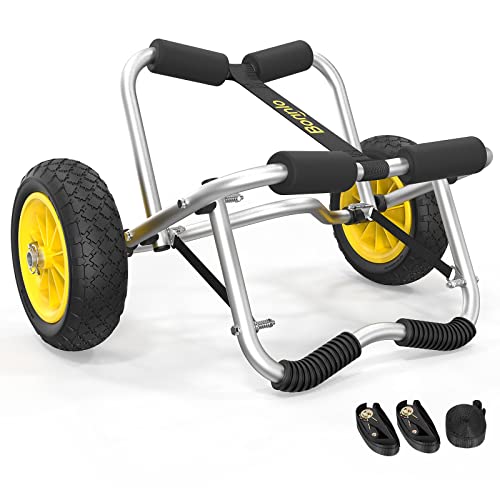
$50-100 - Mid-Range Value: Solid options like Bonnlo and Vevor offer aluminum frames and airless tires in this bracket. The Bonnlo cart dominates this space with over 3,000 positive reviews. These handle recreational kayaks and lighter fishing setups reliably.
$100-200 - Premium Performance: This is where Railblaza, C-Tug, Suspenz, and Wilderness Systems live. Better materials, higher weight capacities (250-350 lbs), and features like quick release wheels, adjustable frame systems, and kickstand stabilization. Worth it for serious paddlers and heavy fishing kayaks.
$200+ - Heavy-Duty Professional: Specialized carts for tandem kayak transport, commercial use, or extreme terrain. Wheeleez beach wheel setups and Suspenz heavy-duty models fit here. If you're moving 100+ pound pedal drive fishing kayaks regularly, this is your tier.
Maintenance: Making Your Cart Last
A good cart costs $100-300. With proper care, it'll last a decade:
After Every Use
- Rinse thoroughly (especially after saltwater)
- Dry completely before storage
- Check straps for fraying or UV damage
Monthly Checks
- Tire pressure (if applicable)
- Wheel bearings (a drop of oil goes far)
- Frame joints (tighten any loose bolts)
Annual Service
- Replace worn straps before they fail
- Deep clean and lubricate all moving parts
- Inspect wheels for cracks or excessive wear
I learned the importance of regular maintenance the hard way when a wheel bearing seized mid-transport. Now I'm religious about cart care.
Seasonal Considerations
Summer Sand Challenges
Hot sand isn't just uncomfortable - it can actually damage your cart:
- Plastic wheels can deform in extreme heat
- Metal frames get burning hot (wear gloves)
- Straps can stretch when hot
Winter Transport
Cold weather brings its own challenges:
- Deflated tires from temperature drops
- Brittle plastic components
- Ice buildup in wheel wells
I store my cart indoors during winter and check tire pressure before every cold-weather trip.
Pro Tips From a Decade of Cart Use
- Mark your balance point: Use tape or a sticker on your hull where the cart goes
- Practice at home: Load and unload in your driveway first
- Bring backup straps: They're light and can save your day
- Know your limits: Some terrain just isn't worth the struggle
Recommended Kayak Carts for 2026
After years of testing and hundreds of trips to the water, here are my top picks for the best way to use kayak cart gear available today. These recommendations cover different needs and budgets, from budget-friendly options to heavy-duty workhorses. For more detailed comparisons, check out our complete guide to the best kayak carts.
Quick Comparison
Here's how these five top-rated kayak carts stack up:
| Product | Key Specs | Action |
|---|---|---|
 Railblaza C-Tug SandTrakz Railblaza C-Tug SandTrakz |
|
Check Latest Price |
 Suspenz Super Duty Suspenz Super Duty |
|
Check Latest Price |
 Suspenz Catch-All Suspenz Catch-All |
|
Check Latest Price |
 Bonnlo Beach Cart Bonnlo Beach Cart |
|
Check Latest Price |
 Bonnlo Standard Bonnlo Standard |
|
Check Latest Price |
1. Railblaza C-Tug with SandTrakz - Best Overall for Sand
RAILBLAZA C-Tug Kayak and Canoe Roller Cart with SandTrakz Puncture Free All-Terrain Wheels, 300lb...
300 lb capacity
Puncture-free SandTrakz wheels
Fits in kayak hatches
Tool-free assembly
5-year warranty
+ Pros
- Excellent sand performance
- Compact storage size
- Quick assembly
- Rust-resistant
- Strong warranty
- Cons
- Parts can loosen over time
- Kickstand unstable on uneven ground
- Straps need practice
The Railblaza C-Tug has earned its reputation as the go-to cart for paddlers who need versatility. The SandTrakz puncture-free wheels roll over soft beach sand where standard carts would sink, yet they handle pavement just as smoothly.
What sets the C-Tug apart is its portability. The entire cart breaks down without tools and fits inside most large kayak hatches. This means you can bring it along for unexpected portages or lock it inside your boat instead of leaving it at the launch point.
The 300-pound capacity handles most recreational and fishing kayaks with ease. The kickstand keeps the cart stable during loading, though you'll want to position it on level ground for the best results.
After testing the C-Tug on everything from deep sand to rocky trails, I can confirm it lives up to the hype. The five-year warranty shows Railblaza stands behind their product.
Who Should Buy the C-Tug?
Beach launchers, river paddlers who portage between runs, and anyone who wants one cart for multiple kayak types. The breakdown feature makes it ideal for kayakers who need to store their cart in the hatch during paddling.
Who Should Skip It?
If you exclusively paddle from hard surfaces and never need to break down your cart, simpler options might save you money. Also, if you have a very heavy pedal-drive kayak pushing 150+ pounds loaded, consider the higher-capacity Suspenz model below.
2. Suspenz Super Duty - Best Heavy-Duty Option
Suspenz All-Terrain Kayak Cart Dolly, Super Duty Canoe Cart with No-Flat Airless Wheels, 350 lb...
350 lb capacity
15-inch airless wheels
Adjustable bunker bars
Spring-loaded kickstand
Powder-coated steel
+ Pros
- Exceptional weight capacity
- Large airless wheels
- Adjustable for any hull
- Sturdy kickstand
- Includes straps
- Cons
- Can rust in saltwater
- Heavier at 17 lbs
- Not ideal for soft sand
When you're moving a fully-loaded pedal-drive fishing kayak that weighs 120+ pounds, you need serious equipment. The Suspenz Super Duty delivers with a 350-pound capacity that laughs at heavy loads.
The 15-inch airless wheels are the largest in this lineup, rolling over obstacles that would stop smaller wheels. The adjustable bunker bars accommodate tunnel hulls, catamarans, V-shapes, and flat-bottomed kayaks.
I particularly appreciate the spring-loaded kickstand on this Suspenz model. It provides a stable platform for loading, which is crucial when you're wrestling a heavy fishing kayak solo.
The powder-coated steel frame provides strength but requires maintenance after saltwater exposure. Rinse it well, and it will serve you for years. The included cam buckle straps are long enough to secure even wide fishing kayaks.
3. Suspenz Catch-All - Best for Fishing Kayaks
Suspenz Fishing Kayak Cart Trolley | Heavy Duty Canoe Carrier Trailer with Adjustable Bi-Directional...
Award-winning design
Bi-directional bunker bars
4-point strap system
Low-lift kickstand
Lifetime warranty
+ Pros
- 2023 Industry Award winner
- Perfect for pedal drives
- Prevents load shifting
- Limited lifetime warranty
- Excellent stability
- Cons
- Fewer reviews (newer model)
- Padding can be slippery
- Higher price point
The Suspenz Catch-All won the 2023 Paddling Magazine Industry Award for Best Transport Cart, and for good reason. This cart was designed specifically with fishing kayakers in mind.
The 32-inch bi-directional bunker bars can be positioned lengthwise or crosswise to accommodate wide fishing kayaks or narrow touring models. The 4-point tie-down strap system spans the entire width, preventing the rocking and load shifting that can damage expensive fishing kayaks.
The low-lift kickstand minimizes how far you need to lift your kayak during loading - a welcome feature when dealing with heavy pedal-drive systems. The quick-release wheels make breakdown fast when you need to stash the cart in a hatch.
If you've invested in a premium fishing kayak with all the gear, this award-winning Suspenz cart provides the secure transport you need to protect that investment.
4. Bonnlo Beach Cart - Best for Sand
Bonnlo Kayak Cart Trolley Canoe Paddle Board Boat Cart Carrier Dolly with 12" Big Beach Wheels...
12-inch balloon wheels
300 lb capacity
Free air pump included
Aluminum alloy frame
Folds compact
+ Pros
- Excellent on soft sand
- Balloon wheels float over terrain
- Free pump included
- Good weight capacity
- Folds for transport
- Cons
- Tires need inflation
- Loading takes practice
- Kickstand positioning matters
If your local launch involves beach sand, the Bonnlo with balloon wheels is purpose-built for you. Those 12-inch low-pressure tires roll across soft sand with about half the effort of standard wheels.
The aluminum alloy construction resists corrosion better than steel, making this a smart choice for saltwater beach launches. The 300-pound capacity handles most kayaks, and the included air pump means you're ready to adjust tire pressure for conditions.
Unlike the Railblaza C-Tug with its puncture-free wheels, this Bonnlo uses inflatable balloon tires. They provide better flotation on sand but require you to monitor and maintain air pressure. Let some air out for deep sand, pump them up for pavement.
At under $100, this is one of the most affordable beach-capable carts available. If you primarily launch from sand, it's an excellent value.
5. Bonnlo Standard - Best Budget Option
Bonnlo Universal Kayak Carrier - Trolley for Carrying Kayaks, Canoes, Paddleboards, Float Mats, and...
Airless tires
200 lb capacity
Double kickstand
Only 5 lbs weight
+ Pros
- Excellent value
- Airless never-flat tires
- Lightweight at 5 lbs
- Fits in hatches
- 2-year warranty
- Cons
- Lower capacity (200 lbs)
- Not for soft sand
- Kickstand can collapse
Sometimes you just need something simple that works. The Bonnlo Standard cart is Amazon's #1 Best Seller in kayak carts with over 3,000 reviews, and it's easy to see why.
At just 5 pounds, this is the lightest cart on our list. The airless tires eliminate maintenance - no pumping, no flats. The foldable design fits in most kayak hatches, and the 200-pound capacity handles recreational kayaks under 12 feet.
The double kickstand provides extra stability during loading, though you need to position it correctly to prevent collapse. For the price, you won't find a more reliable cart for lightweight to medium kayaks.
Just know its limits - this isn't the cart for 100+ pound pedal-drive fishing kayaks. But for recreational paddling, it's a fantastic value that will last for years with minimal care.
When to Upgrade Your Cart?
Your needs change as your kayaking evolves. I've owned four different carts, upgrading when:
- I moved to a heavier kayak
- My regular launch spots changed
- Wear compromised safety
- New features justified the cost
My current setup? A high-clearance cart with beach wheels for my fishing kayak, plus a compact folder stored inside for unexpected portages. Ready to upgrade? Browse our tested picks for the best kayak carts available now.
DIY Kayak Cart Option
Not everyone wants to spend $100+ on a cart. If you're handy and want a budget option, building a DIY kayak cart from PVC pipe is a popular project that costs under $50.
The basic design uses 1-inch PVC pipe, T-joints, and two small wheels from a garden cart or purchased online. You'll need about 20 feet of pipe, wheels with an axle, and foam padding for the cradle area.
Construction involves building a rectangular frame, adding vertical supports for the cradle, and attaching the axle and wheels. Add pool noodle sections as padding, and you have a functional cart.
The trade-offs? DIY carts lack the refined features like kickstands, adjustable widths, and the durability of commercial options. But for occasional use with lightweight kayaks, they work fine. Many forum users report their homemade carts lasting multiple seasons with basic care.
Just be realistic about weight capacity - PVC construction won't handle heavy fishing kayaks safely. For recreational kayaks under 60 pounds, though, a homemade cart can be a fun weekend project that saves money.
The Bottom Line on Kayak Cart Mastery
Learning how to properly use a kayak cart transformed my time on the water. No more exhaustion before launching, no more back pain after loading, and definitely no more limiting myself to easy-access launches.
Whether you're using a basic strap cart or a specialized foldable kayak trolley, the principles remain the same: proper positioning, secure attachment, and smart technique beat brute force every time.
Now get out there and roll with confidence. Your back will thank you, and you'll have more energy for what really matters - exploring those hidden spots that others can't reach because they're too tired from the carry.
See you on the water!
FAQ
What's the best position for a kayak cart?
For strap-style carts, position it roughly 2/3 back from the bow, typically just behind the seat. This creates optimal weight distribution where you're controlling about 40% of the weight when lifting the bow.
Can I leave my kayak cart in my car while paddling?
Yes, but secure it first. I've seen carts stolen from truck beds at popular launches. Either lock it up or hide it well. Some paddlers even bring small folding carts like the Railblaza C-Tug that fit in their kayak's storage compartment.
How do I use a kayak cart on soft sand?
Wide, low-pressure tires are essential. Let some air out of inflatable wheels for better flotation. Pull steadily without stopping - momentum is your friend in soft sand. If you're still struggling, zigzag slightly instead of going straight. The Bonnlo Beach Cart with balloon wheels or Railblaza C-Tug with SandTrakz are excellent sand performers.
Do kayak carts work with fishing kayaks?
Absolutely, but you need a heavy-duty model. My 120-pound fully-loaded fishing kayak requires a cart rated for at least 150 pounds. The Suspenz Super Duty (350 lb capacity) or Suspenz Catch-All are specifically designed for heavy fishing kayaks. The extra gear weight and higher center of gravity mean stability matters more than with recreational kayaks.
How long do kayak carts typically last?
With proper maintenance, 5-10 years is common. My aluminum cart is going on 8 years. The keys are rinsing after saltwater use, keeping moving parts lubricated, and storing it properly. Straps usually need replacing every 2-3 years due to UV damage. Cheaper steel carts may rust out in 2 seasons of saltwater use.
Can I modify my kayak cart for better performance?
Yes! Common mods include adding foam padding for hull protection, upgrading to better wheels, and extending the frame width for stability. Just ensure any modifications don't exceed the cart's weight rating. Some paddlers DIY carts from PVC pipe for under $50.
What's the difference between kayak carts and dollies?
Functionally, they're the same thing - the terms are used interchangeably. Cart is more common in the US, while dolly or trolley is often used elsewhere. The important thing is choosing one that fits your specific kayak and launch conditions.
Should I use a scupper cart or strap cart for my sit-on-top?
While scupper carts seem convenient, most manufacturers don't recommend them due to potential hull stress. I stick with strap carts even for my sit-on-top - they're more versatile and gentler on the kayak's structure. Old Town specifically warns against scupper carts for their kayaks.
How do I transport multiple kayaks with carts?
Don't try to pull multiple carts at once. Instead, stage them: cart each kayak partway, then move them all the final distance together. Or better yet, recruit help - kayaking is more fun with friends anyway! For regular multi-kayak transport, consider a kayak trailer instead.
What about electric or motorized kayak carts?
They exist but are overkill for most paddlers. The added weight, complexity, and cost rarely justify the benefit unless you have mobility issues or regularly traverse extremely long distances. Manual carts with proper technique handle 95% of paddling situations effectively.