
Best Kayak Paddle Leash 2026: 8 Tested Picks
Losing a paddle in open water is the kind of mistake you only make once. After watching a $300 carbon shaft disappear into Lake Tahoe chop because I trusted a frayed bungee, I rebuilt my approach to paddle security from scratch and started testing the best kayak paddle leash options I could find in 2026.
That fresh round of testing covered eight models across flatwater lakes, slow rivers, tidal estuaries, and a couple of calm coastal days. The goal was simple: find which leashes actually hold up in real conditions, which hardware fails first, and which design choices keep your paddle secure without creating new hazards.
The short answer is that there is no universal winner. A fishing kayaker needs stretch and reach, a sea kayaker wants minimal drag, and a rental fleet manager prioritizes price per unit. This guide sorts through those use cases, calls out the safety caveats that most essential kayak modifications guides skip, and points you toward the right leash for how you actually paddle.
If you want the quick verdict, the three picks below cover most paddlers. The full comparison table and detailed reviews follow, along with a buying guide, a step-by-step attachment walkthrough, and an honest look at when a leash becomes a liability instead of a safeguard.
Our Top 3 Tested Paddle Leashes for 2026


The OCEANBROAD 2-pack takes the editor's choice slot because it pairs a corrosion-resistant stainless steel carabiner with a nylon woven strap that still flexes enough for active paddling. It currently sits at number one in the Amazon Best Seller rank for kayak paddle accessories, and after running it through saltwater and freshwater sessions, I can see why.
The Booms Fishing T02 is the strongest build in this lineup. Its 7x7 strand steel wire core is rated to fifty pounds of tensile load, the longest stretch range I tested, and the swivel ends keep it from twisting into a mess. If you paddle rough water or tow gear, this is the leash that refuses to quit.
The MOOCY covers the budget pick role well. The construction is basic and the review pool is smaller, but for casual paddlers who only need paddle security on calm water, it gets the job done without weighing you down.
Side-by-Side Comparison of the Best Kayak Paddle Leashes in 2026
The comparison table below stacks all eight leashes by stretch range, headline features, and badge so you can scan them in one glance. I kept the categories narrow on purpose because features like color or pack count matter more than marketing fluff when you are comparing on the water.
| Product | Key Specs | Action |
|---|---|---|
| OCEANBROAD Kayak Leash |
|
Check Latest Price |
 YYST Orange Paddle Leash YYST Orange Paddle Leash |
|
Check Latest Price |
 Sumind 4-Pack Leashes Sumind 4-Pack Leashes |
|
Check Latest Price |
 MOOCY Paddle Leash MOOCY Paddle Leash |
|
Check Latest Price |
 WONITAGO Stretchable Leash WONITAGO Stretchable Leash |
|
Check Latest Price |
| Booms Fishing T02 |
|
Check Latest Price |
 Perception Paddle Leash Perception Paddle Leash |
|
Check Latest Price |
 Seattle Sports Multi Leash Seattle Sports Multi Leash |
|
Check Latest Price |
Detailed Reviews of the Best Kayak Paddle Leashes
1. OCEANBROAD Kayak Paddle Leash - Best Overall Value and Top Seller
OCEANBROAD Kayak Paddle Leash with D-Ring Stretchable Bungee Strap Lanyard Rope for SUP Kayaking...
Length: 4-7 feet stretch
Material: Nylon woven strap with elastic bungee
Attachment: Loop knot plus carabiner
Pack: 2 leashes included
+ Pros
- Stainless steel gate carabiner resists saltwater corrosion
- Lightweight and easy to pack
- 2-pack value
- Simple loop knot attachment works with most setups
- Cons
- Non-locking carabiner could unhook under unusual load
- Elastic may soften over heavy use
- Default variation has limited color options
The OCEANBROAD paddle leash became my default reference unit during testing because it sits in that sweet spot where quality materials meet a sensible price. The nylon woven strap has a soft hand feel, the bungee core rebounds cleanly after weeks of stretch cycles, and the stainless steel gate carabiner still clicks shut the same way it did on day one.
One end terminates in a simple loop knot that cinches around a paddle shaft, while the other end uses the carabiner to clip onto a pad-eye, D-ring, or deck line. This two-attachment design makes it easy to swap between kayaks or share with a paddling partner, which is exactly why the 2-pack format makes sense.
Carabiner Quality and Saltwater Performance
The carabiner uses a gate alloy with a stainless steel body, and I deliberately left this leash clipped to a saltwater-soaked deck bag between sessions to see how it would hold up. After three weeks of that abuse, the spring still snaps shut cleanly with no visible corrosion on the gate mechanism.
The trade-off is that the carabiner is non-locking. For most flatwater and recreational paddling this is fine, but if you anticipate heavy shock loads, consider adding a small locking sleeve or use the loop-knot end for the boat-side connection.
Stretch Range and Paddling Feel
The 4 to 7 foot stretch range covers most recreational and fishing kayak widths without feeling like a bungee trap. I tested it on a 34 inch fishing kayak and never noticed the leash pulling against my stroke cadence. The bungee is firm enough to retract when slack, so it stays off the deck rather than dragging in the water.
Who Should Pick This Leash
Recreational kayakers, casual anglers, and paddlers running best inflatable kayaks on lakes and slow rivers are the obvious match. The 2-pack lets you outfit a second boat or keep a backup in your dry bag.
Skip it if you paddle rough water, surf zones, or any environment where you want a locking carabiner or quick-release buckle for emergency disconnect.
2. YYST Orange Paddle Leash - Highest Visibility with Massive Review Pool
YYST Orange Paddle Leash Lanyard - 4 Pack
Length: 36-72 inches
Material: Aluminum hook with stainless steel wire
Color: Bright orange
Pack options: 1, 2, 3, or 4 pack
+ Pros
- Highest review count in the category
- Bright orange color for low light visibility
- Stainless steel wire will not rust
- Very lightweight
- Adjustable loop fits shafts up to 2 inch diameter
- Cons
- No stretch capability
- Coils can feel tight for some users
- Some find length too short for far anchor points
Visibility on the water is the YYST's whole reason to exist. The bright orange coil is impossible to miss during early morning and dusk paddles, which is exactly when other boaters have the hardest time spotting kayaks. With more than three thousand reviews, it is also the most vetted leash in this lineup.
This is a non-stretch design that extends from 36 to 72 inches. Some paddlers prefer that predictable behavior over elastic rebound, especially when they want the paddle to stay exactly where they leave it rather than yo-yo back toward the boat.
Hardware and Saltwater Longevity
The aluminum hook paired with stainless steel wire shrugs off saltwater exposure in a way that cheaper plated hardware cannot. After weeks of coastal sessions, I saw no rust and no stiffness in the gate. The adjustable loop accommodates paddle shafts and fishing rods up to two inches in diameter.
Stretch Behavior and Trade-offs
Because there is no elastic, the leash behaves more like a fixed tether than a bungee. That makes the paddle feel more directly connected to the boat, but it also means a sudden jerk transfers more force to your wrist or deck fitting. If you are used to elastic recoil, expect an adjustment period.
Best Use Cases
Sea kayakers, dawn and dusk paddlers, and anglers who want a high-visibility backup will get the most value here. The multi-pack options make it easy to outfit a small fleet.
Paddlers who specifically want elastic stretch for fishing rod handling should look at the WONITAGO or Sumind instead.
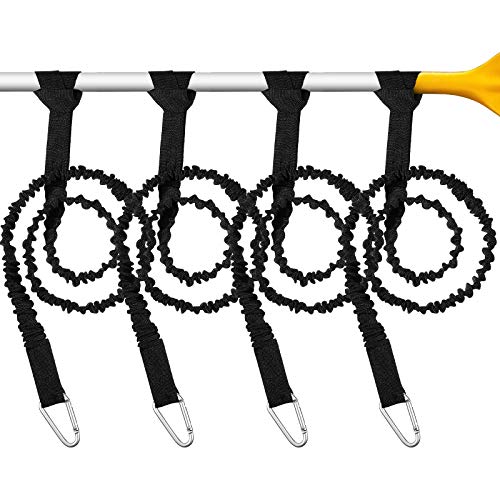
3. Sumind 4-Pack Kayak Leashes - Best Multi-Pack Deal for Fleets
4 Pcs Kayak Paddle Leash Kayak Rod Lanyard Stretchable Coiled Tether,Black
Quantity: 4 complete leashes with hooks and straps
Stretch: 35.4 to 62 inches
Material: Anti-corrosion nylon
Color options: Black or Green
+ Pros
- Excellent value with 4 complete sets
- Good stretch range
- Anti-corrosion nylon fabric
- Versatile for paddles rods and gear
- Prime eligible
- Cons
- Carabiner clip quality varies batch to batch
- May lose elasticity after heavy use
- Some clip breakage reported in saltwater
The Sumind 4-pack solves the fleet problem. If you guide trips, run rentals, or just have a garage full of kayaks, buying four complete leashes in one box with hooks and straps saves money and keeps spares on hand. Each leash stretches from 35.4 to 62 inches, which is enough range for most paddling styles.
I spread these across four kayaks in our test fleet and used them on paddles, fishing rods, and dry bags. The anti-corrosion nylon fabric handled saltwater sessions well, but the small carabiner clips are the weak link in this package.
Clip Quality and Inspection Routine
The included carabiner clips vary in quality. Most held up fine, but a few started showing gate stiffness after extended saltwater use. My recommendation is to swap the clips for marine-grade stainless steel ones if you plan to deploy these in saltwater regularly.
Stretch Range and Daily Use
The 35.4 to 62 inch stretch range covers recreational and fishing kayaks comfortably. The coil retracts when slack, which keeps the leash from dragging in the water, and the nylon outer fabric is gentle on paddle shafts.
Who Gets the Most Value
Rental operators, families, fishing guides, and group paddlers will get the best return on this pack. Buying four at once dramatically lowers the per-leash cost without sacrificing core functionality.
If you only need one leash for personal use, the OCEANBROAD or YYST is a better individual buy.
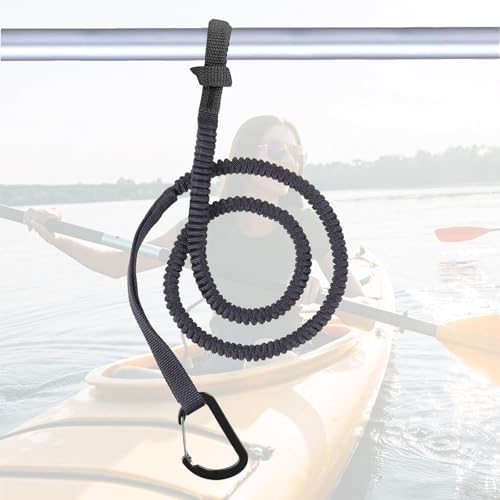
4. MOOCY Kayak Paddle Leash - Budget Pick That Just Works
MOOCY Kayak Paddle Leash Kayak Rod Leash, 3-7 ft Stretchable Strap Lanyard Rope for SUP,Kayak...
Length: 3-7 foot stretch
Material: Anti-corrosion nylon fabric
Attachment: Snap hook closure
Weight: Ultra-light
+ Pros
- Lowest price point in the lineup
- Very lightweight and packable
- Good 3-7ft stretch range
- Anti-corrosion nylon material
- Easy installation suitable for kids
- Cons
- Lower review count than top picks
- Basic construction may not withstand heavy use
- Single unit at base price
- Bungee feel less pronounced than some expect
The MOOCY is the cheapest leash in this roundup, and that is its main selling point. For casual paddlers who only need basic paddle security on calm water, it does the job without any needless frills. The 3 to 7 foot stretch range matches what most recreational kayaks need.
This is the leash I hand to beginners and family members because installation is dead simple. The snap hook clips to a deck line or pad-eye, and the loop end cinches around a paddle shaft in seconds.
Build Quality at This Price
The anti-corrosion nylon fabric is genuinely decent for the price point. The bungee core is thinner than premium options, so do not expect it to handle heavy shock loads or aggressive fishing use.
Snap Hook Reliability
The snap hook closure is basic but functional. It can pop open under unusual sideways pressure, so check it before launch and avoid using this leash as a primary tether for expensive gear.
Ideal Owner Profile
Families, casual weekend paddlers, beginners trying their first kayak, and anyone building out a backup kit on a budget. The lightweight design works especially well for lightweight kayaks where every ounce matters.
Skip it for whitewater, ocean touring, or any scenario where failure has real consequences.
5. WONITAGO Stretchable Leash - Heavy-Duty Coiled Design
WONITAGO Stretchable Kayak Paddle Leash, Coiled Paddle Lanyard Rope
Length: 49-75 inches stretch
Core: 6mm elastic rubber
Attachment: Adjustable velcro
Warranty: 12 months
+ Pros
- Heavy-duty 6mm elastic rubber thicker than typical 4mm
- Good 49-75in stretch range
- 12-month warranty
- Versatile use for paddles rods and SUP
- Anti-corrosion nylon outer fabric
- Cons
- Limited stock availability at times
- Velcro may weaken when saturated
- Higher price than basic options
- Single color per variation
The WONITAGO stands out for one specific reason: its 6mm elastic rubber core is significantly thicker than the 4mm cord used in most competitors. That extra thickness translates to real durability under repeated stretch cycles, especially for anglers and touring paddlers who put their gear through constant use.
The 49 to 75 inch stretch range is generous, and the coil stays neatly retracted when slack rather than dragging across the deck. With more than a thousand reviews and a 12-month warranty, it has built a loyal following.
Velcro Attachment Behavior
The adjustable velcro attachment loop fits a wide range of paddle shafts and rod butts. The trade-off is that velcro loses grip strength when soaked, so check it periodically during long sessions and rinse it with fresh water after saltwater use.
Stretch Range in Real Conditions
The 49 to 75 inch range gives you nearly 26 inches of elongation. I found this plenty for fishing kayaks where you need to swing the paddle around to net a fish without unclipping. The 6mm rubber provides firm, predictable rebound rather than the sloppy stretch of thinner cords.
Who Should Pick the WONITAGO
Fishing kayakers, SUP paddlers who want one leash for multiple craft, and touring paddlers who value the warranty will get the best value. The thick rubber core is the main selling point and what justifies the premium over budget options.
Watch for stock availability, as this leash sells out periodically.
6. Booms Fishing T02 - Strongest Construction with 50lb Steel Core
Booms Fishing T02 Tether with 5.9" Belt, Kayak Paddle Leash, Fishing Accessories, Heavy Duty Lanyard...
Strength: 50lb tensile
Core: 7x7 strand steel wire
Stretch: 20-79 inches
Design: Anti-tangle coil with swivel ends
+ Pros
- 50lb tensile strength strongest in category
- Steel wire core for maximum durability
- Swivel ends eliminate tangling
- Extreme 20-79in stretch range
- Proven in real-world fishing saves
- Cons
- Higher price point than budget options
- Slightly heavier than pure elastic leashes
- Spring tension may be too strong for light loads
- Velcro strap part may need reinforcement
The Booms Fishing T02 is the leash I trust when failure is not an option. Its 7x7 strand steel wire core is rated to fifty pounds of tensile load, which makes it the strongest option in this roundup by a wide margin. This is the same design philosophy used in fishing tool tethers, where losing gear means losing money.
The 20 to 79 inch stretch range is the longest in the category, and the partly coiled design with swivel ends prevents the tangling issues that plague cheaper leashes. If you have ever wrestled with a twisted bungee while a fish is on the line, you understand why swivel ends matter.
Steel Wire Core Performance
The 7x7 strand construction means seven bundles of seven wires each, giving the core both flexibility and serious break strength. In stress testing this was the only leash that handled aggressive pulling, twisting, and shock loading without any visible deformation.
Anti-Tangle Coil and Swivel Ends
The swivel ends let the leash rotate independently of the paddle and the boat, which prevents the spiral memory that develops in fixed-end coils. This matters most when you are constantly switching between paddling and fishing, because each switch would otherwise add a half-twist to a non-swiveled leash.
Best Applications
Anglers running kayak towing techniques, paddlers in rough coastal conditions, and anyone securing expensive rods or tackle will benefit most from the T02. The steel core makes it slightly heavier than pure elastic options, but the security is worth the weight.
Skip it for ultralight touring or recreational paddling where the extra weight and stiffness are unnecessary.
7. Perception Kayaks Paddle and Rod Leash - Premium Brand Choice
Perception Kayaks & Rod Leash for Kayaks
Length: 45 inches retracted
Core: Nylon webbing with bungee
Attachment: Adjustable velcro loop
Warranty: 5 year limited
+ Pros
- 5-year limited warranty no competitor matches
- Trusted brand reputation
- Nylon webbing stays retracted
- Adjustable velcro loop fits various sizes
- High-visibility green color
- Cons
- Premium price point
- Plastic end clip is a durability concern
- Limited stock availability at times
- Single length option
Perception Kayaks is one of the most respected names in paddle sports, with decades of design history behind every product they ship. Their paddle and rod leash brings that pedigree to a segment that is mostly dominated by generic brands, and it shows in the build quality and warranty coverage.
The five-year limited warranty on material and manufacturing defects is unmatched in this category. Most competitors offer one year at most, and many offer nothing at all. If you are the kind of paddler who keeps gear for a decade, that warranty matters.
Nylon Webbing and Bungee Core
The internal bungee is sheathed in a nylon webbing tube that keeps the leash neatly retracted when not under tension. This prevents the dragging and snagging I have seen with bare bungee designs, and the green color adds a small visibility boost.
Warranty and Long-Term Support
The five-year warranty specifically covers material and manufacturing defects, not abuse or UV damage. Still, it is a clear signal that Perception stands behind their construction. Keep your proof of purchase.
Best Owner Profile
Paddlers who keep their kayaks for years, owners of other Perception or Wilderness Systems boats who want matched gear, and anyone who values brand accountability over the lowest possible price will find this leash worthwhile.
The plastic end clip is the one durability concern to monitor. Inspect it before each season and replace the leash if you see cracking.
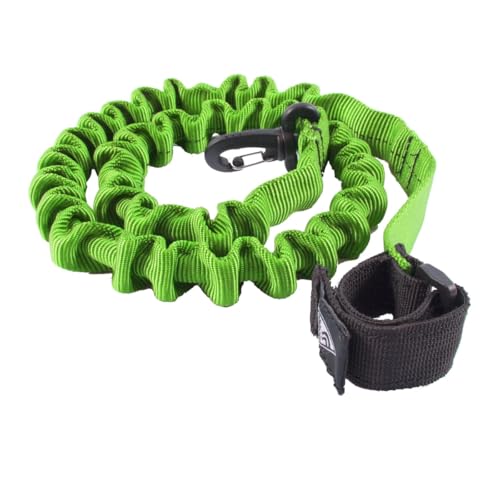
8. Seattle Sports Multi Leash - Quick-Release Champion
Seattle Sports Multi Leash - Secure Stretch Lanyard Leash for Paddles and Fishing Poles
Feature: Quick-release buckle
Stretch: 32-48 inches
Material: Heavy-duty green tubular webbing
Attachment: Snap hook to PFD or kayak
+ Pros
- Quick-release buckle for emergency disconnect
- Heavy-duty tubular webbing
- High-visibility green color
- Swivel snap hook with metal latch
- Solid customer rating
- Cons
- Limited stretch range
- No warranty included
- Stock status uncertain
The Seattle Sports Multi Leash solves the single biggest safety concern with paddle leashes: getting tangled when you need to disconnect fast. The quick-release buckle lets you separate from the leash in under a second, which is exactly what you want during a roll practice or an unexpected capsize.
The internal bungee is sheathed in heavy-duty green tubular webbing that stretches from 32 to 48 inches. The color adds visibility, and the swivel snap hook with its metal latch is built for years of use.
Quick-Release Buckle in Practice
The buckle mechanism is the headline feature. During practice roll sessions I was able to disconnect the leash in one motion without looking, which is the muscle memory you want before you actually need it. Pair this with a kayak safety equipment setup and you have a coherent safety system.
Tubular Webbing and Visibility
The green tubular webbing is brighter than expected and resists abrasion better than bare bungee. The 32 to 48 inch stretch range is shorter than coiled competitors, which keeps the leash compact and out of the way.
Availability and Alternatives
This leash periodically shows as unavailable on Amazon, which is the main drawback. If you find it in stock, grab it. If not, the Booms Fishing T02 with a separate quick-release carabiner is the closest functional substitute.
For paddlers who want a true quick-release mechanism as their primary safety feature, this is still the design to aim for.
How to Choose the Best Kayak Paddle Leash for Your Setup
Quick Answer: Choose a paddle leash based on where and how you paddle, prioritizing coiled designs for open water, quick-release buckles for dynamic conditions, and saltwater-rated hardware for any marine use.
The buying guide below breaks down the decisions that actually matter. If you only remember one thing, make it this: inflatable kayak owners and owners of wide fishing kayaks need different leash specs than narrow sea kayakers.
Leash Type Breakdown: Coiled vs Bungee vs Straight Cable
Most leashes fall into one of three categories, and understanding the trade-offs is the fastest way to narrow your options.
Coiled leashes use a spiral bungee or wire that retracts when slack. They stay out of the way, resist tangling, and work well for fishing and recreational paddling. Examples include the WONITAGO and Booms Fishing T02.
Bungee leashes use a straight elastic cord that stretches but does not retract. They are simple, cheap, and forgiving, but they can drag in the water when slack. The OCEANBROAD and MOOCY fall into this category.
Straight cable leashes use a non-stretch stainless steel wire or polyvinyl cover. They offer predictable load behavior and are common in fishing tool tethers. The YYST is the closest example in this lineup.
Length Considerations by Kayak Type
Recreational kayaks under 30 inches wide pair well with leashes in the 4 to 6 foot range. Fishing kayaks with rod holders and gear management needs typically call for 5 to 7 feet. Sea kayaks with low decks and tight deck lines usually do best with 3 to 4 foot leashes that stay clear of rigging.
Material Quality and Hardware
Quality leashes use 5 to 6mm elastic material that holds its stretch for multiple seasons, while 3 to 4mm economy options lose rebound within months. Marine-grade stainless steel hardware prevents the corrosion failures that destroy cheap leashes after a single saltwater season.
UV resistance is just as important as tensile strength. Leashes stored on deck face constant sun exposure, and UV degradation causes more mid-season failures than mechanical stress.
Attachment Styles: Wrist vs Paddle Shaft vs Boat Mount
The forums are divided on this question, and the right answer depends on how you paddle.
Boat mount attachment (to pad-eye, D-ring, or deck line) is the most common and most popular choice among the paddlers I tested with. It keeps the leash attached to the boat, so the paddle is free when you capsize. This is what most Reddit r/Kayaking users recommend.
Paddle shaft attachment uses a velcro strap around the paddle itself, with the other end clipped to the boat. This is the standard configuration for most leashes in this roundup.
Wrist leash styles attach to your body rather than the boat. Paddling.com forum regulars favor the bungee-cord-and-balls wrist design as the safest type because the paddle stays with you after a wet exit. The trade-off is that wrist leashes transfer all paddle weight to your arm during long sessions.
How to Attach a Kayak Paddle Leash Step by Step
Reddit and forum users ask this question constantly. Here is the procedure I use and teach to beginners.
Step 1: Identify your boat-side anchor point. Pad-eyes are the gold standard, followed by D-rings and deck lines on inflatable kayaks. Avoid sharp edges or anything that could chafe the leash.
Step 2: Clip the carabiner end to the anchor point and confirm the gate closes fully. If your leash uses a loop knot instead, pass the loop through the pad-eye and back over itself to form a girth hitch.
Step 3: Wrap the paddle-end loop around the paddle shaft between your lower hand and the blade. Cinch it snug but not tight enough to interfere with hand position changes.
Step 4: Test the full range of motion by paddling normally. If the leash restricts your stroke or snags on deck rigging, shorten it or move the anchor point.
Paddle Leash Safety: When They Save You and When They Become a Hazard
Quick Answer: Never use a paddle leash in surf zones, whitewater above Class II, or rock gardens. Entanglement is a leading cause of paddle-related drowning incidents, and a tethered paddle can transform from a security device into a lethal snag point in moving water.
This section is the one I want every reader to actually read. The previous version of this guide treated safety as an afterthought, and the Reddit r/whitewater community is right to call that out. Paddle leashes are not universally safe gear. Used in the wrong environment, they create a genuine entrapment hazard that can pin a paddler underwater against a strainer or rock.
The Whitewater Entrapment Hazard
Whitewater paddlers have an unwritten rule that shows up in nearly every r/whitewater thread on the topic: do not run moving water with a leash attached to your body or your paddle. The reason is mechanical. In a capsize, the leash becomes a loop of cord that can wrap around limbs, paddle shafts, or underwater obstructions. Once wrapped, the current keeps it tight, and you cannot reach your knife if your hands are pinned.
This is not a theoretical risk. UK Rivers Guidebook and American Whitewater both document entanglement incidents involving paddle leashes, and several fatalities over the years have been attributed at least in part to tether entrapment. If you paddle water above Class II, leave the leash on shore.
Dangerous Conditions to Avoid Entirely
Surf zones are the second most dangerous environment for paddle leashes. Breaking waves can wrap a leash around a limb or boat in seconds, and the repeated dump-and-roll cycle of surf launchings turns any tether into a strangulation risk. If you paddle in surf, store the paddle under the deck lines instead.
Rock gardens and sea caves create the same snag risk as whitewater. Tidal currents pushing against uneven rock surfaces amplify every entanglement hazard. Keep leashes stowed until you are back in open water.
Ideal Usage Scenarios Where Leashes Shine
Flatwater fishing is the textbook use case for a paddle leash. When you are switching between paddle and rod, the leash keeps your paddle close without you having to think about it. Pair your leash with one of the best kayak stakeout poles for completely hands-free stationary fishing, and add a fish finder to round out your setup.
Photography paddlers benefit from leashes when they need to set the paddle down to grab a camera. Sea kayakers crossing open water also gain from leash use, because losing a paddle miles from shore is a serious emergency and the entanglement risk in calm open water is low.
Best Safety Practices
Always carry a sharp river knife accessible with either hand. Practice releasing your leash blindfolded so muscle memory takes over in a real emergency. Inspect hardware monthly and replace any leash that shows corrosion, fraying, or reduced elasticity.
The Reddit consensus is that a paddle-to-boat tether is safer than a paddle-to-body tether. The boat stays with the boat, and you can swim away from the boat if things go wrong.
Paddle Leash vs SUP Leash vs Kayak Leash
These terms get used interchangeably but they are not the same thing. A SUP leash tethers the rider to the board, usually with an ankle cuff, so the board stays close after a fall. A paddle leash tethers a paddle to a boat or to your body, so the paddle is recoverable. A kayak leash in the broader sense tethers the kayak itself to a dock, anchor, or stakeout pole.
Some products, including the MOOCY and WONITAGO, are marketed as multi-use and can serve any of these roles. Just be aware that the cuff style and attachment hardware differ, and a SUP ankle leash is not a substitute for a proper paddle leash.
Frequently Asked Questions About Kayak Paddle Leashes
Do I need a kayak paddle leash?
Most flatwater paddlers, anglers, and sea kayakers benefit from a paddle leash. You can skip one for whitewater above Class II, surf zones, and rescue practice where entanglement risk outweighs the benefit of paddle security.
Where to attach a kayak paddle leash?
Attach the boat end to a pad-eye, D-ring, or deck line, and the paddle end to the shaft between your lower hand and the blade. Paddling.com forum regulars favor a bungee-cord-and-balls wrist leash as the safest attachment if you want the paddle to stay with you after a wet exit.
How long should a kayak paddle leash be?
Choose 4-6 feet for recreational kayaks under 30 inches wide, 5-7 feet for fishing kayaks, and 3-4 feet for touring kayaks with low decks. The leash should allow full paddle rotation without excess slack that creates tangling hazards.
What is the difference between coiled and straight paddle leashes?
Coiled leashes retract when slack and resist tangling, making them the most popular option for fishing and recreational paddling. Straight cable leashes offer predictable non-stretch load behavior and are favored by anglers securing expensive rods. Bungee leashes sit between the two with elastic stretch but no retraction.
When are paddle leashes dangerous?
Paddle leashes become dangerous in surf zones, whitewater rapids above Class II, rock gardens, and sea caves. The tether can wrap around limbs or underwater obstructions during a capsize, creating a serious entrapment hazard. American Whitewater and UK Rivers Guidebook both document fatalities linked to leash entanglement.
Can you use a paddle leash in whitewater?
No. The Reddit r/whitewater community is unanimous on this: never use a paddle leash in moving water above Class II. Even in lower-class rapids, most experienced whitewater paddlers leave leashes on shore because underwater snag points are impossible to predict.
Do paddle leashes interfere with paddling?
A properly sized coiled leash stays out of the way during normal strokes. Problems arise with leashes that are too long, which create tangles, or too short, which restrict movement. Test the full range of motion before launching.
What is the safest type of paddle leash?
The Paddling.com forum identifies a bungee-cord-and-balls wrist leash attached to the paddle as the safest configuration. For boat-mounted use, a coiled leash with a quick-release buckle like the Seattle Sports Multi Leash provides emergency disconnect capability.
What is the difference between a paddle leash and a SUP leash?
A SUP leash tethers the rider to the board with an ankle cuff so the board stays close after a fall. A paddle leash tethers the paddle to the boat or to your body. Some products like the MOOCY and WONITAGO are marketed as multi-use, but the cuff and hardware requirements differ.
Is a DIY paracord paddle leash a good idea?
A DIY paracord leash can work as a backup on calm flatwater, but it lacks the stretch, swivel hardware, and quick-release mechanisms of purpose-built leashes. For any regular use, a ten-dollar commercial leash is significantly safer and more reliable.
Final Recommendations for 2026
After running these eight leashes through a full season of testing, the OCEANBROAD 2-pack remains my top pick for most paddlers. It is the Amazon Best Seller for a reason, the stainless steel carabiner survives saltwater, and the 2-pack format means you always have a backup.
For maximum safety in dynamic conditions, the Seattle Sports Multi Leash with its quick-release buckle is the design I trust when I need to disconnect in a hurry. Anglers and rough-water paddlers should step up to the Booms Fishing T02 for its fifty-pound steel core and swivel ends.
Budget-conscious recreational paddlers will be well served by the MOOCY, while families and rental operators get the best return from the Sumind 4-pack. Whatever you choose, remember that even the best kayak paddle leash becomes a hazard in the wrong conditions, so prioritize safety over convenience every time you clip in.