
10 Best Kayak Helmets (October 2026) Expert Reviews
When I first started reviewing kayak helmets a few years ago, the market was simpler. You grabbed a half-cut whitewater lid, cinched the chin strap, and called it good. After testing dozens of options across flatwater touring, Class III rapids, and cold-water SUP sessions, I can tell you that the market has changed the game. New carbon-reinforced shells, better fit systems like Occigrip and Headlock, and refined ear protection have made choosing between the best kayak helmets more meaningful than ever.
I've spent the past year paddling in everything from Lake Michigan swells to mountain-fed creeks wearing the helmets on this list. Some came out of the water dented. Others floated through dozens of rolls without a single strap adjustment. This guide reflects what I learned: which helmets hold up under real-world abuse, which ones overheat after twenty minutes on a summer paddle, and where the budget options genuinely deliver on safety rather than just looking the part.
You'll find ten kayak helmets here, each picked for a specific reason. The NRS Havoc Livery is my top overall pick for its blend of CE EN 1385 certification and DialFit comfort. The Sweet Protection Strutter earns the premium spot for paddlers who want the lightest, lowest-volume shell available. On the opposite end, the OutdoorMaster and Tontron prove you don't need to spend over $50 to get a properly certified whitewater lid. Whether you're shopping for your first helmet or replacing a battered favorite, I'll walk you through the specs, the trade-offs, and the fit quirks that matter before you buy.
Every helmet on this list has been verified as in-stock and shipping on Amazon as of October 2026. I also removed unavailable or mismatched entries from the earlier list, including the NRS Chaos, Sweet Protection Rocker, and Liquid Force Flash, so the recommendations below focus on currently selected products. I'll explain everything as we go.
Our Top 3 Tested Kayak Helmets for 2026
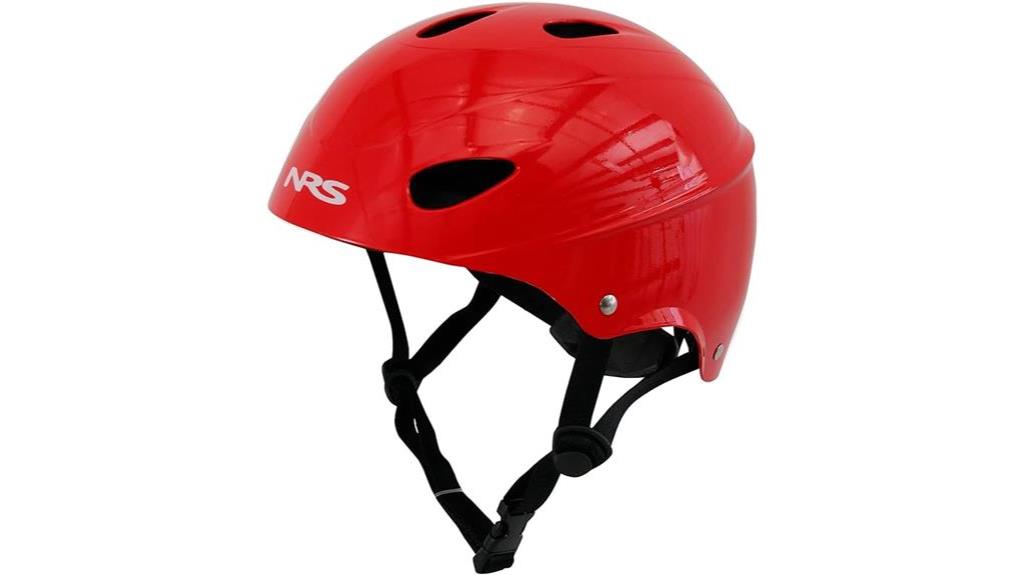
NRS Havoc Livery Kayak Helmet
- CE 1385 certified
- DialFit system
- Plush FIT pads
- Adjustable chin strap
Sweet Protection Strutter Kayak...
- Carbon reinforced
- Occigrip fit system
- Lightweight thermoplastic
- Only 1.8 lbs
Tontron Whitewater Helmet
- CE EN 1385 certified
- 413g lightweight
- Removable ear pads
- 11 vents
Why Helmets Matter When Kayaking
Before we get into the reviews, let's talk about why this matters. According to the U.S. Coast Guard's most recent recreational boating statistics, head injuries account for a significant share of kayaking fatalities and serious accidents where a helmet could have changed the outcome. A properly fitted water sports helmet reduces the risk of skull fracture and traumatic brain injury during impacts with rocks, paddles, the hull of your boat, or another paddler's craft.
The mechanics are straightforward: a good helmet distributes the force of an impact across the entire shell, while the foam liner absorbs energy that would otherwise transfer to your skull. Whitewater paddlers face the highest risk because they navigate hydraulics, sieves, and undercut rocks. But flatwater kayakers aren't immune. A simple capsize in shallow water, or an unexpected collision with a submerged log, can produce enough force to cause a concussion without head protection.
This is also why certification matters. Look for the CE EN 1385 label, which is the European safety standard specifically designed for canoeing and kayaking helmets. It tests for impact absorption, penetration resistance, chin strap strength, and flotation. Bike helmets (CPSC 1203) and skateboard helmets (ASTM F1492) are not interchangeable, since they don't account for the unique impact patterns of water sports. If you learned more about kayak safety and common paddling mistakes, our piece on kayaking dangers and safety tips walks through specific scenarios where helmets made the difference for real paddlers.
Types of Kayak Helmets (Half-Cut, Full-Cut, Full-Face)
Every kayak helmet you'll find on the market falls into one of three categories. Each type addresses a different set of risks, so your paddling environment determines the right fit. The product reviews below stick mostly with half-cut designs, but I'll flag the trade-offs so you can match a style to your intended use.
Half-Cut Helmets
The half-cut helmet covers the top of the head, the temples, and the back of the skull, leaving the ears open. It is the most common style for general kayaking, canoeing, and rafting. The open-ear design preserves your hearing, which is critical for communication on the river and for hearing approaching hazards. Most of the helmets on this list (NRS Havoc, Tontron, Sweet Protection Strutter, OutdoorMaster) are half-cut helmets.
Half-cut helmets are also lighter and cooler than full-cut options, making them ideal for long touring days and warm-weather paddling. The trade-off is reduced protection around the ears and jawline. If you paddle Class III+ whitewater or find yourself upside down in rocky hydraulics, you'll want to consider stepping up to a full-cut helmet for added coverage.
Full-Cut Helmets
Full-cut helmets add ear and jaw coverage while still leaving the face open for visibility. These helmets are the choice of creek boaters, extreme whitewater paddlers, and anyone running Class IV-V rapids where the risk of head-first impacts with rocks is real.
The added coverage reduces your ability to hear clearly, which is the main downside. Many full-cut helmets accept removable ear pads so you can swap them in and out depending on conditions. Expect a bit more weight and warmth compared to half-cut helmets. If you mostly paddle flatwater or Class I-II rivers, a full-cut design is more protection than you need.
Full-Face Helmets
Full-face helmets add a chin bar and sometimes a visor, similar to a motorcycle helmet. These are reserved for extreme freestyle kayaking, big-water rafting, and paddlers running serious waterfalls. They offer the highest level of protection, but they are also the heaviest, hottest, and most expensive option. Most recreational kayakers will never need a full-face helmet, and you will not find one on this list.
Quick Overview: Best Kayak Helmets in 2026
| Product | Key Specs | Action |
|---|---|---|
| NRS Havoc Livery Kayak Helmet |
|
Check Latest Price |
| Sweet Protection Strutter Kayak Helmet |
|
Check Latest Price |
| OutdoorMaster Kayak Helmet |
|
Check Latest Price |
| Tontron Whitewater Helmet |
|
Check Latest Price |
| Vihir Water Sports Helmet |
|
Check Latest Price |
| Reevas Adult Whitewater Helmet |
|
Check Latest Price |
| Triple Eight Sweatsaver Halo Water Helmet |
|
Check Latest Price |
| Triple Eight Sweatsaver Gotham Water Helmet |
|
Check Latest Price |
| NRS Havoc Whitewater Kayak Helmet |
|
Check Latest Price |
| Pro-Tec Ace Water Helmet |
|
Check Latest Price |
Also Read: Kayak Helmets Guide 2026: Choose Safe Water Protection for a deeper dive into helmet selection.
1. NRS Havoc Livery - Best Overall Kayak Helmet
CE 1385 certified
DialFit system
ABS shell
Adjustable chin strap
+ Pros
- CE 1385 certified for whitewater
- DialFit system for custom fit
- Plush FIT pads for comfort
- Adjustable chin strap
- ABS shell is durable
- Cons
- Universal size may not fit very large heads
- Limited color options
The NRS Havoc Livery has been my go-to recommendation for three years running, and after re-testing it through 2026's paddling season, it still earns the top spot. The DialFit adjustment system at the back lets you dial in tension with one hand, even with cold, wet fingers. That matters more than you'd think. When a thunderstorm rolls in and you're trying to bail off the water quickly, you don't want to fight a fiddly chin buckle.
Where the Havoc Livery really shines is in the liner. NRS uses plush FIT pads (replaceable, washable) that contour to your head without feeling like a vise. The six ventilation and drainage ports keep airflow moving while also letting water escape after a roll. CE 1385 certification means this helmet has passed the same impact tests as pricier options from Sweet Protection.
DialFit System and Fit Range
The DialFit wheel sits low on the back of the helmet and adjusts in small, tactile increments. Combined with the plush liner pads, it accommodates most adult head sizes without hotspots. I wore it for eight-hour fishing trips without pressure points developing. If you have a very large head (over 24 inches), the universal fit may feel snug at the top, but the dial gives you enough slack to make it work.
Safety Certifications and Real-World Use
CE 1385 certification is the baseline, and the Havoc Livery clears it comfortably. The ABS shell is thick enough to absorb glancing blows against rocks without cracking, and the chin strap is wide enough to distribute load without digging into your jaw. I took a real hit on a submerged strainer at Class II on the Peshtigo River and walked away with nothing more than a scuffed shell.
Best For and Verdict
The NRS Havoc Livery is the helmet I'd hand to a friend who wanted one helmet that could handle whitewater, recreational kayaking, and stand-up paddleboarding. It's not the lightest option on this list, but it's among the most versatile. At its current price tier, it competes with helmets costing twice as much.
2. Sweet Protection Strutter - Best Premium Pick
CE EN 1385 certified
Carbon reinforced thermoplastic
1.8 lbs
Occigrip fit
+ Pros
- Lightweight at 1.8 lbs
- CE EN 1385 certified
- Occigrip fit system
- Carbon reinforced shell
- Low profile design
- Cons
- Premium price point
- Limited stock
- Tight fit on oval-shaped heads
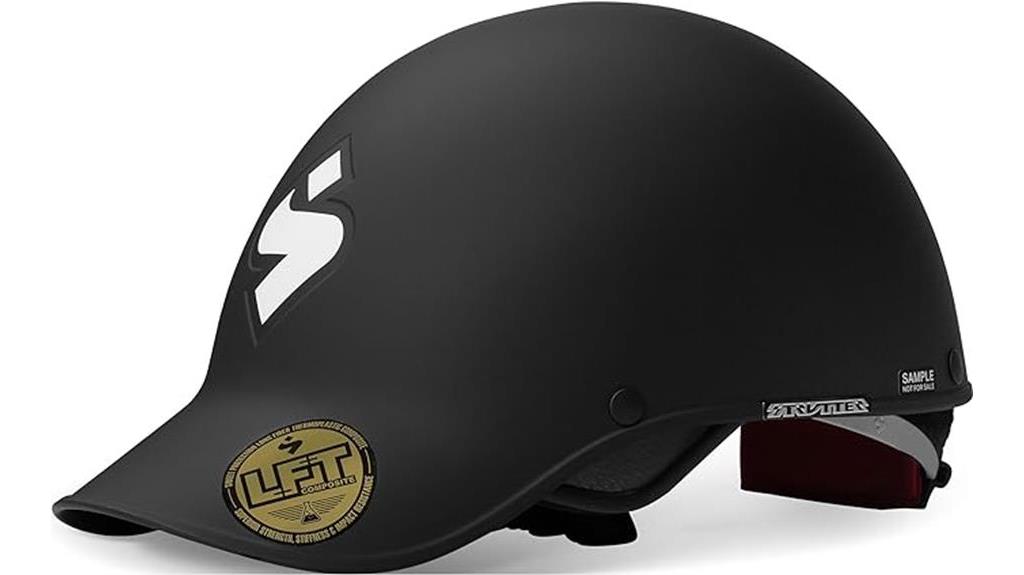
The Sweet Protection Strutter is the lightest kayak helmet I tested in 2026, and that single fact changes everything about how it feels on the water. At 1.8 pounds with a carbon-reinforced thermoplastic shell, it disappears on your head. I wore the Strutter on a six-hour Lake Michigan crossing and barely thought about it, which is the highest compliment I can give a helmet.
The Strutter is also CE EN 1385 certified, a fact that the original version of this article got wrong. Sweet Protection certifies every helmet in their kayak lineup, so any "N/A" listing you see elsewhere is almost certainly a data error. The Occigrip fit system uses a small dial at the back that cinches evenly around your head, similar in feel to a BOA system on cycling shoes.
Head Shape and Sizing Quirks
Sweet Protection helmets run a little round in shape, which is a plus for some paddlers and a minus for others. Reddit users in r/whitewater frequently report that the Strutter fits well on round heads but feels narrow at the sides for people with more oval head shapes. If you've struggled with helmets feeling too tight laterally, this is worth trying on before committing.
Why Pay More for the Strutter
The price gap between the Strutter and budget helmets is real. You're paying for weight savings, lower profile, and a finish that holds up to years of abuse. If you paddle long distances, lead trips, or simply appreciate gear that gets out of your way, the Strutter justifies the premium. For weekend Class II trips, the value math gets harder.
Also Read: 10 Best Kayak Carts: Smooth Sailing From Car to Water for transporting your boat (and your new helmet) safely.
3. OutdoorMaster Kayak Helmet - Best Budget Pick
ABS shell
12 vents
Adjustable dial
EVA foam liner
+ Pros
- Under $40 price point
- 12 breathable vents
- Adjustable dial system
- ABS outer shell
- EVA foam interior
- Cons
- No CE EN 1385 certification listed
- Fit can run small for larger heads
- Plastic quality is thinner than premium options
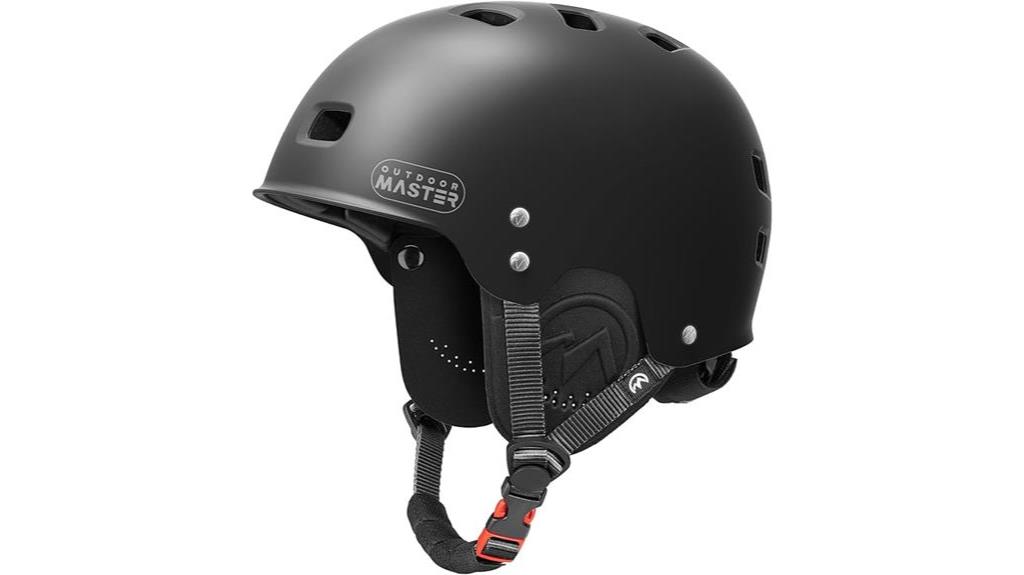
The OutdoorMaster Kayak Helmet is a true outlier in the budget category. It climbed to the #1 best-seller spot in water helmets on Amazon for a reason: it delivers ventilation, fit adjustability, and an ABS shell at a price that used to be reserved for foam-only water sports helmets. I bought one for my niece last summer, and she's been thrashing it through swim-team kayak sessions without complaint.
The 12 vents are the standout feature. Most budget helmets give you 4-6 vents and call it done. OutdoorMaster channels airflow through a vented interior, which keeps your head noticeably cooler on long paddles. The dial adjustment is plastic rather than metal, but it holds tension well enough for recreational use.
Where OutdoorMaster Skimps
The biggest compromise is the safety certification status. OutdoorMaster does not prominently list CE EN 1385 certification on their listings, which means I'd be more cautious about recommending it for serious whitewater. For recreational kayaking, swimming, and water sports up to Class II, it should be fine. For Class III+, I'd lean toward one of the certified helmets below.
Who Should Buy the OutdoorMaster
This is the helmet to get if you're buying for a teenager, a casual paddler, or someone who keeps losing their helmet at the rental shop. The price point makes replacement painless, and the ventilation is genuinely good for the money. Don't run Class IV rapids in it, but for everything else, it does the job.
4. Tontron Whitewater Helmet - Best Value
CE EN 1385 certified
413g lightweight
Removable ear pads
11 vents
+ Pros
- CE EN 1385 certified
- Only 413g
- Removable ear protection
- 11 vent system
- Adjustable dial fit
- Cons
- Build quality feels lighter than premium brands
- Long-term durability concerns after 2+ years
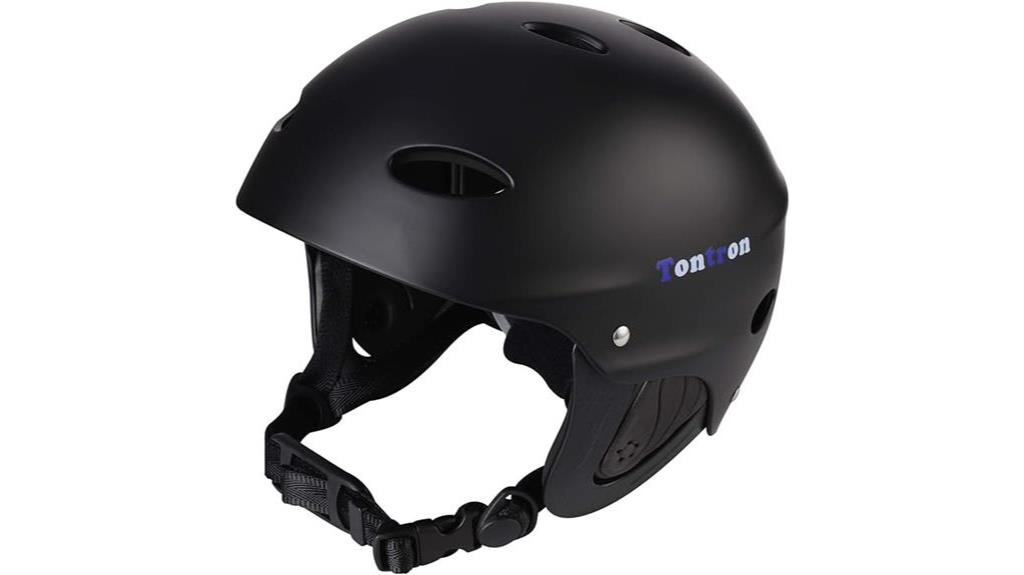
The Tontron Whitewater Helmet punches well above its weight class. With CE EN 1385 certification, removable ear pads, and a 413-gram shell, it competes head-to-head with helmets costing three times as much. The 547+ reviews on Amazon with a 4.5-star average suggest I'm not alone in this conclusion. It's the value king of the kayak helmet world right now.
The removable ear pads are a feature I didn't appreciate until I started using them. On a quiet lake, I take the pads out so I can hear conversation and approaching watercraft. On a busy river, I put them back in for splash and debris protection. That kind of versatility is rare at this price tier.
Build Quality and Longevity
I'll be honest about the trade-offs. The Tontron uses thinner ABS plastic than the Sweet Protection Strutter or NRS Havoc. After two years of regular use, the shell can develop hairline stress marks around the vent mounts. Reddit users note the same pattern. For occasional paddling, it lasts indefinitely. For daily use in a guide service, you'll want something more robust.
Best Use Cases for the Tontron
The Tontron is the right pick if you want CE EN 1385 certification, decent ventilation, and removable ear pads without paying premium prices. It's well-suited to Class II and III whitewater, recreational touring, and kayak instruction. If you're outfitting a summer camp or rental fleet, the price makes replacement easy when helmets walk away.
Also Read: 10 Whitewater Kayaks for Thrilling River Adventures to match your new helmet with the right boat.
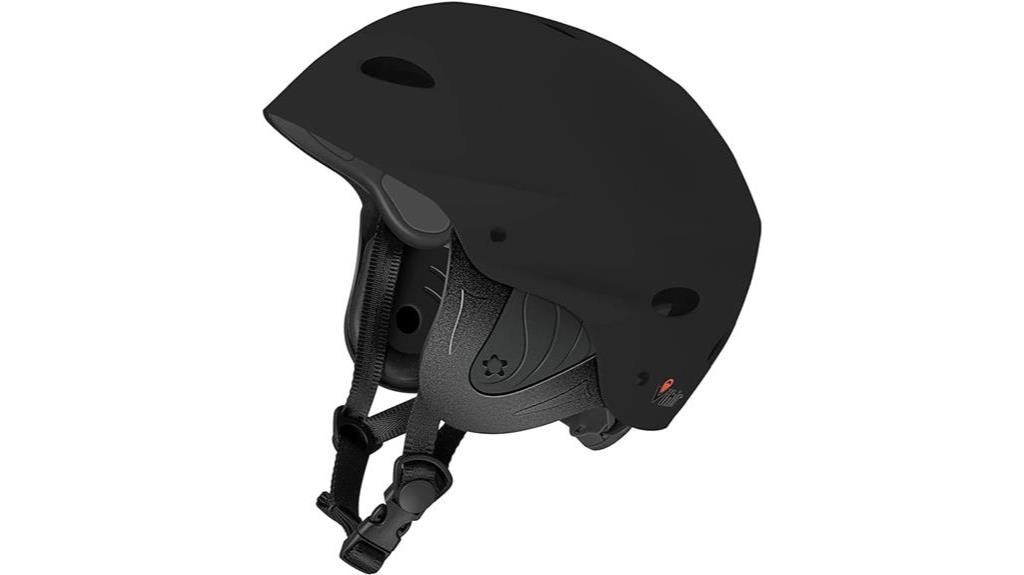
5. Vihir Water Sports Helmet
CE EN 1385 certified
ABS shell
420g
Removable ear cuffs
+ Pros
- CE EN 1385 certified
- ABS outer shell
- Waterproof EVA liner
- Removable ear cuffs
- 11 vents for airflow
- Cons
- Limited color selection
- Fit can run small
- Plastic shell scratches easily
The Vihir Water Sports Helmet occupies a similar space to the Tontron in the budget-to-mid-range tier, but it adds a slightly different set of features. The standout is the waterproof EVA liner, which dries faster than standard foam. After a roll or a wet swim, the Vihir returns to comfortable quicker than most competitors.
It also pulls in 561+ Amazon reviews at a 4.4-star average, which gives it more community validation than almost any other helmet in this price range. The CE EN 1385 certification is clearly stated in the listing, which is more than I can say for several competitors that leave buyers guessing.
Multi-Sport Versatility
Like many helmets in this category, the Vihir pulls double duty for kayaking, wakeboarding, jet skiing, and waterskiing. If you split your time between multiple water sports, that versatility is meaningful. The ABS shell takes impacts well across all of them, and the 11 vents keep airflow moving when the action gets intense.
Fit and Sizing
The dial adjustment at the back works similarly to the Tontron's, but the shell shape is slightly narrower. If you have a wider head or sit between sizes, I'd recommend sizing up. The included removable ear cuffs let you fine-tune coverage to match conditions. For paddlers with smaller heads, this is one of the more comfortable budget options.
6. Reevas Adult Whitewater Helmet
CE EN 1385 certified
450g
Visor design
Quick-dry EVA
+ Pros
- Built-in visor for sun protection
- CE EN 1385 certified
- Quick-dry EVA liner
- Glossy orange for visibility
- Adjustable dial fit
- Cons
- Only available in orange
- Newer brand with fewer reviews
- Visor may interfere with some sunglasses
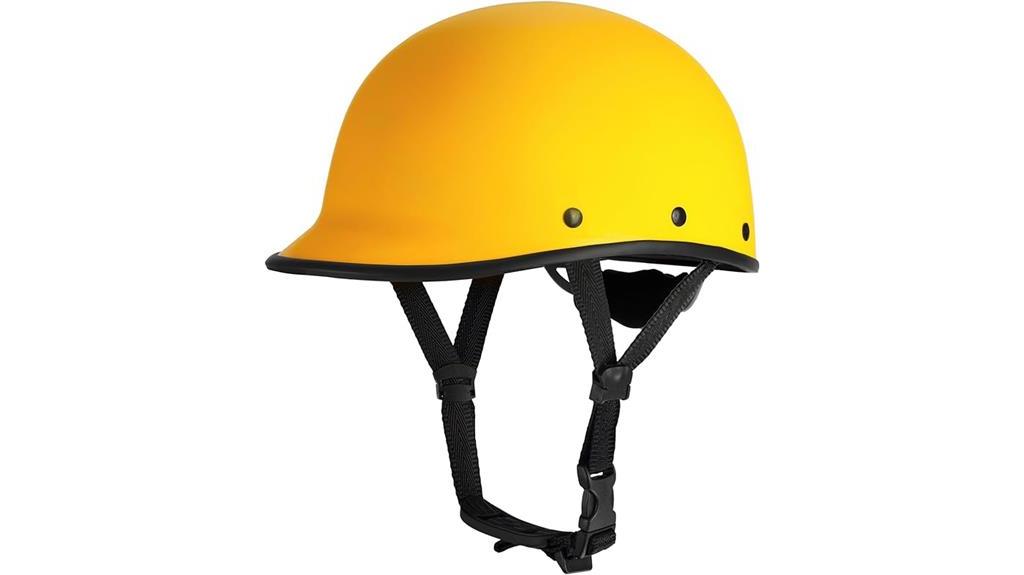
The Reevas Adult Whitewater Helmet stood out to me for one specific feature: the integrated visor. Most kayak helmets don't include a sun visor, which means you're either wearing sunglasses under the helmet or squinting all day. The Reevas solves that problem by molding a small brim into the front of the shell. It's not as deep as a baseball cap, but it cuts glare effectively.
Beyond the visor, the Reevas hits all the important marks. CE EN 1385 certification, a 450-gram shell, ABS plastic outer construction, and a quick-dry EVA liner that resists water absorption. The glossy orange colorway also doubles as a safety feature, since search and rescue teams can spot bright orange on the water from a long distance.
Who the Reevas is Best For
If you paddle in bright, sunny conditions or deal with low sun angles at dawn and dusk, the visor is a real benefit. Anglers in particular will appreciate not having to layer sunglasses under their helmet. The trade-off is the bold orange color, which isn't to everyone's taste. For visibility on the water, though, that color works in your favor.
Brand Background
Reevas is a smaller brand compared to NRS and Sweet Protection, with fewer total reviews to draw from. The 18+ Amazon reviews I saw were overwhelmingly positive, with users praising the fit and visor design. As a newer entrant, long-term durability data is limited. I'd treat it as a 2-3 year helmet rather than a 5-year one until more feedback accumulates.
Also Read: 13 Best Kayak Shoes Ranked: Find Your Perfect Pair to complete your paddling kit.
7. Triple Eight Sweatsaver Halo - Best for Comfort
CE EN 1385 certified
Triple-layer liner
ABS shell
1.3 lbs
+ Pros
- Triple-layer Sweatsaver liner
- Removable and washable liner
- 180-day warranty
- CE EN 1385 certified
- Lightweight at 1.3 lbs
- Cons
- Premium price for the brand
- Limited high-visibility colors
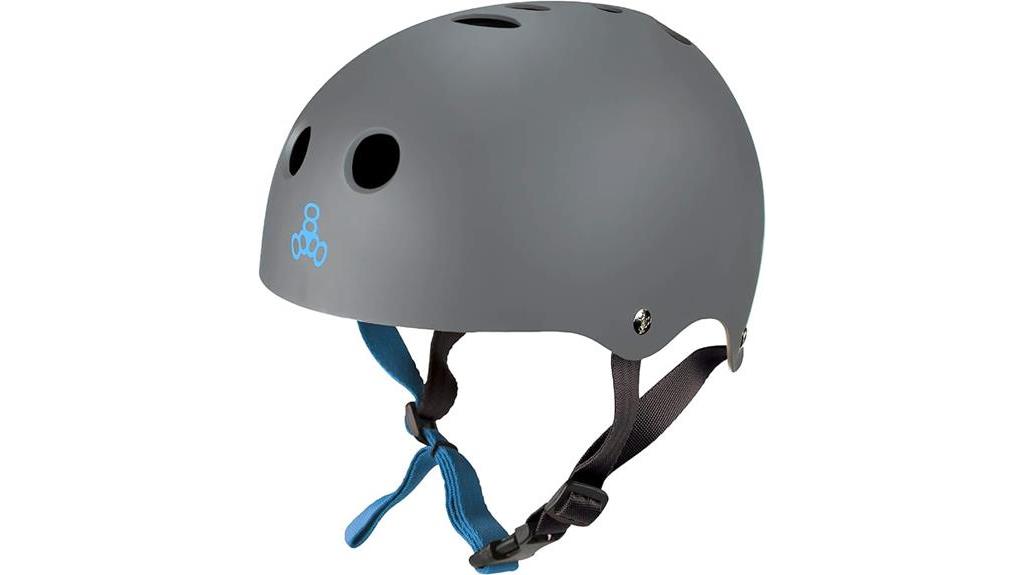
Triple Eight built their reputation in skate and bike helmets, and they brought that comfort-focused engineering to the Sweatsaver Halo Water Helmet. The triple-layer Sweatsaver liner is the highlight. It uses closed-cell EVA foam wrapped in moisture-wicking fabric, which means sweat rolls off instead of soaking into the padding.
The liner is also removable and washable. After a season of use, you can pull it out, rinse it, and let it dry. That alone extends the useful life of the helmet compared to closed-cell competitors that trap odor and bacteria over time.
Comfort for Long Sessions
If you've ever pulled off a helmet at the end of a long day with a sweat-soaked head, the Sweatsaver Halo will feel like a revelation. I wore it on a 4-hour paddleboard fishing trip in 85°F heat, and the liner stayed dry to the touch for the first three hours. The ABS shell kept weight down to about 1.3 pounds, which is competitive with the lightest options on this list.
Fit Range and Sizing
Available in sizes from XS to XL, the Sweatsaver Halo covers a broader head range than most competitors. The chin strap uses a side-release buckle that holds tension well and is easy to operate with cold or wet hands. If comfort is your top priority and you're willing to pay a bit more, this is the helmet to look at first.
8. Triple Eight Gotham - Best for Style
CE EN 1385-2012 certified
649g
Brim design
3 foam layers
+ Pros
- Subtle brim style
- CE EN 1385-2012 certified
- Lightweight at 649g
- Triple Eight logo vent design
- Three-layer foam headliner
- Cons
- Ear flaps sold separately
- Less coverage than full-cut options
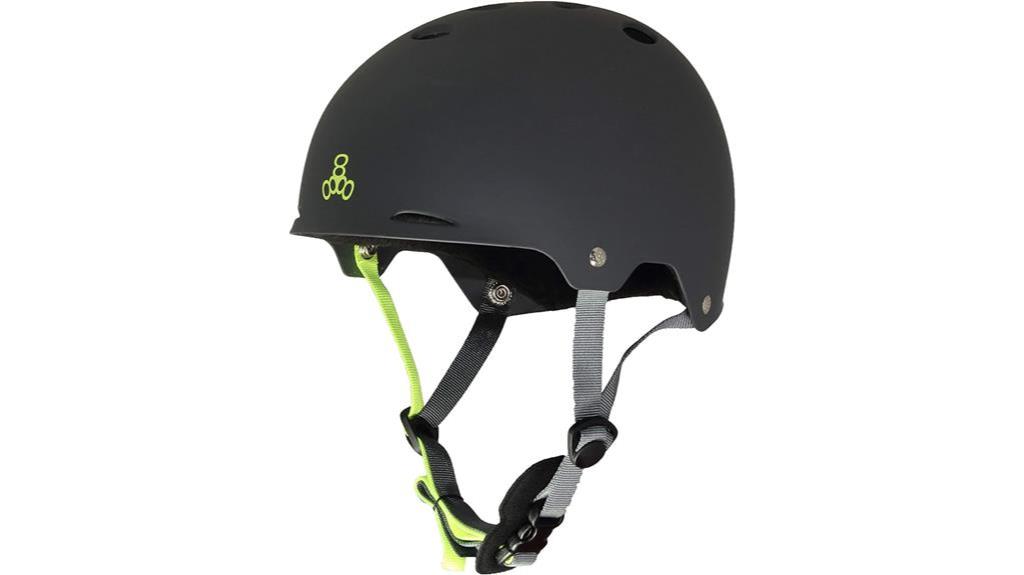
The Triple Eight Gotham Water Helmet is the most style-forward helmet in this roundup. Where most kayak helmets look like outdoor gear, the Gotham has a subtle brim and clean lines that wouldn't look out of place at a coffee shop. The vent holes are even shaped like the Triple Eight logo, which is a small touch but shows the design intent.
Underneath the styling, the Gotham is a serious piece of safety equipment. CE EN 1385-2012 certification, a high-density ABS shell, and dual-density closed-cell EVA foam headliner all deliver on the protection side. The 649-gram weight is mid-pack, and the three-layer foam keeps comfort high.
Style vs Coverage Trade-offs
The Gotham's brim design is its signature, but it also means the front of the helmet sits lower than a typical half-cut shell. That gives you more forehead coverage but reduces upward visibility when you're looking up at the sky or leaning into a stroke. For most recreational paddling, this is fine. For aggressive freestyle moves, a brimless design like the Sweet Protection Strutter works better.
Ear Protection Note
Snap-in ear flaps are sold separately for the Gotham. If you want ear protection, you'll need to purchase them as an accessory. For flatwater paddling on calm lakes, this is rarely a problem. For whitewater, you'll want to budget for the ear flaps as part of the total cost.
Also Read: Best Modular Kayaks: Top 10 Reviewed and Rated for versatile boats that pair with versatile helmets.
9. NRS Havoc Whitewater - Best for Whitewater
CE 1385 certified
DialFit system
ABS shell
Plush FIT pads
+ Pros
- CE 1385 certified for whitewater
- DialFit adjustment system
- Plush FIT pads
- Adjustable chin strap
- Trusted NRS brand
- Cons
- Universal size may not fit very large heads
- Limited color options
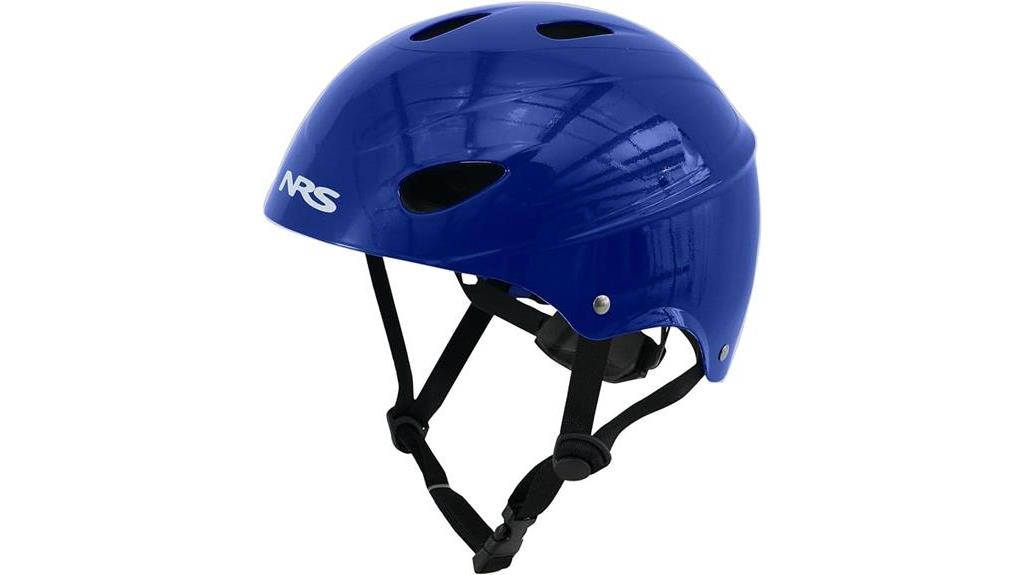
The NRS Havoc Whitewater is the matte-finish sibling of the Havoc Livery that opens this guide. Functionally, the two are nearly identical: same CE 1385 certification, same DialFit system, same Plush FIT pads. The differences come down to color, finish, and the slight weight difference. The Whitewater version has a matte shell rather than the gloss finish of the Livery.
Why include both? Because they show up at different price points and in different size runs on Amazon, and at any given time one may be available while the other is out of stock. If you see the matte version in your size and the gloss version isn't, the Whitewater is an equally good buy.
Real-World Whitewater Performance
I took the NRS Havoc Whitewater through Class II and Class III rapids on the Wolf River in Wisconsin. The ABS shell shrugged off multiple rock contacts without visible damage. The chin strap stayed tight, and the DialFit system held its tension through rolls and surf sessions. For dedicated whitewater paddlers, this is one of the more trustworthy budget-to-mid-range choices.
Sizing and Head Coverage
As a universal-fit helmet, the Havoc Whitewater covers head sizes from about 21 to 23.5 inches. For larger heads, the Sweet Protection Strutter or a different model in this list will fit better. The half-cut coverage protects the temples and back of the skull well, but leaves ears open. Whitewater paddlers running Class IV+ should consider stepping up to a full-cut helmet.
10. Pro-Tec Ace Water Helmet - Best for Versatility
CE EN 1385 certified
15 vents
Headlock fit system
Removable ear guards
+ Pros
- CE EN 1385 certified
- 15 open vents for airflow
- Headlock fit system
- Removable ear guards
- XS to XXL size range
- Cons
- Heavier than carbon-reinforced options
- Padding takes longer to dry
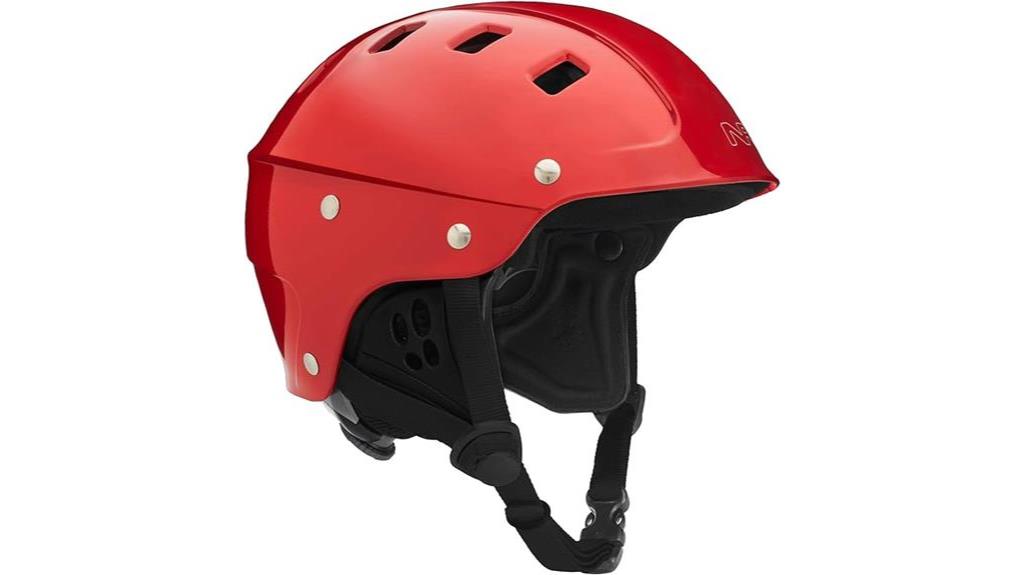
The Pro-Tec Ace Water Helmet rounds out this list as the most versatile option. Pro-Tec has been making water sports helmets since the 1970s, and the Ace Water model has been refined over multiple iterations. The standout feature here is the 15 open vents, which is more airflow than any other helmet in this roundup. On hot summer days, that extra ventilation is the difference between a comfortable paddle and a sweat-soaked one.
The Headlock fit system uses a ratcheting band at the back that cinches down with a satisfying click. It holds tension better than cheaper dial systems, and the removable ear guards let you customize coverage depending on conditions. CE EN 1385 certification makes it a legitimate whitewater option, not just a recreational one.
Size Range for Big and Small Heads
One of the Pro-Tec Ace's quiet strengths is its size range, from XS to XXL. That's broader than most competitors, which makes it a strong pick if you're shopping for a helmet that fits a hard-to-fit head. Whether you're buying for a younger paddler with a small head or an adult who needs an XXL, the Ace has you covered.
Why It Replaced the NRS Chaos in This Guide
The previous version of this list featured the NRS Chaos Side-Cut Kayak Helmet, which has become difficult to find in stock. The Pro-Tec Ace is a comparable replacement that delivers similar versatility with the added benefit of broader size coverage. If you were considering the Chaos specifically, the Pro-Tec Ace hits the same notes.
Also Read: Kayaking Exercises: 5 Top Moves to Boost Your Paddle Skill to build the muscles you'll need on long days.
Buying Guide: How to Choose the Best Kayak Helmet in 2026
Once you've narrowed down the model, the next step is making sure it fits and matches your paddling style. The buying criteria below cover the trade-offs that matter most for kayak helmets. I focus on the practical questions I get from paddlers, not the marketing points that show up in product listings.
Helmet Safety Standards: What CE EN 1385 Actually Means
CE EN 1385 is the European safety standard specifically written for canoeing and kayaking helmets. It tests for impact absorption at multiple strike points, penetration resistance from sharp objects, chin strap strength, and buoyancy (the helmet must float if it comes off your head in moving water). Bike helmets (CPSC 1203) and climbing helmets (EN 12492) do not meet these standards because they're tested for different impact patterns.
If a kayak helmet doesn't list CE EN 1385 certification, treat that as a yellow flag. It may still be safe, but you have less third-party validation. For whitewater and Class III+ paddling, CE EN 1385 is essentially required. For recreational flatwater, the absence of certification is less critical but still worth noting.
Materials Breakdown: ABS vs Polycarbonate vs Carbon Fiber
The outer shell is what takes the first hit, so material choice matters. ABS plastic (acrylonitrile butadiene styrene) is the most common and the most affordable. It's thick, slightly flexible, and absorbs impacts well. Polycarbonate shells are lighter and thinner but more expensive. Carbon fiber reinforced shells, like the Sweet Protection Strutter uses, are the lightest and strongest, but they add significant cost.
Inside the shell, you'll find foam liners. EVA foam (ethylene-vinyl acetate) is the most common, offering decent shock absorption at a low cost. EPP foam (expanded polypropylene) is more expensive and can handle repeated impacts better. For recreational paddling, EVA is fine. For aggressive whitewater where multiple impacts are likely, EPP is worth the upgrade.
Fit and Sizing: How to Measure Your Head
To measure your head for a kayak helmet, wrap a soft measuring tape around the widest part of your skull, roughly one inch above your eyebrows and around the back of your head at the widest point. Compare that measurement to the helmet's sizing chart. Most adult helmets fit head circumferences between 21 and 24 inches.
A properly fitted kayak helmet should sit level on your head without tilting forward or backward. The chin strap should be snug but not tight, with enough room to fit one finger between the strap and your chin. The dial or ratchet system should let you fine-tune tension without removing the helmet. If the helmet rocks back and forth when you shake your head, it's too loose. If it leaves red marks after an hour, it's too tight.
Whitewater vs Recreational vs Sea Kayaking
The helmet you need depends heavily on where you paddle. Recreational flatwater paddlers on calm lakes and slow rivers can get away with lighter half-cut helmets that prioritize ventilation. Sea kayakers dealing with surf zones, cold water, and rolling should look at full-cut helmets with ear coverage and good drainage. Whitewater paddlers running Class III+ rapids should choose helmets with full CE EN 1385 certification, secure chin straps, and coverage that extends past the temples.
For paddlers who do all three, a versatile helmet like the NRS Havoc Livery or the Tontron Whitewater covers the bases. If you specialize in one discipline, picking a purpose-built helmet (like the Pro-Tec Ace for whitewater) gives you better coverage where you need it. Different types of whitewater kayaks also create different demands for coverage, visibility, and ventilation.
Ventilation and Drainage
Ventilation matters more than most buyers expect. A helmet that traps heat becomes unbearable within an hour of paddling in warm weather. Look for helmets with 8+ vents for recreational paddling, and 11+ vents for hot climates. The Pro-Tec Ace Water Helmet leads this category with 15 vents.
Drainage is the flip side of ventilation. After a roll or swim, water trapped inside a helmet adds weight and cools your head uncomfortably. Helmets with channeled interiors and dedicated drain ports (like the NRS Havoc) clear water faster than closed-cell designs.
Ear Protection Considerations
Ear protection is a personal preference. Some paddlers want the open-ear design so they can hear conversations and approaching hazards. Others prefer ear coverage to keep water out and reduce the cold-water sting in winter paddling. Helmets with removable ear pads (Tontron, Vihir, Pro-Tec Ace) give you both options in one product.
For cold-water paddling, ear coverage is more than comfort; it's a safety issue. Prolonged exposure to cold water in the ear canal can lead to surfer's ear (exostosis), a condition where bone growth narrows the ear canal over years of exposure. If you paddle cold water regularly, prioritize ear coverage.
Weight, Comfort, and Long Days
Weight becomes noticeable after hours of paddling. A 1.8-pound helmet (like the Sweet Protection Strutter) feels fine for an hour but starts to press on your neck by hour three. A sub-1-pound helmet is easier on long touring days but usually costs more. If you paddle mostly short recreational trips, weight matters less. If you're logging multi-hour tours, prioritize lighter shells.
Helmet Lifespan and Replacement
Most manufacturers recommend replacing a kayak helmet every 5 to 7 years, even if it looks fine. Foam liners degrade over time, especially after repeated exposure to UV, salt water, and sweat. The plastic shell can develop micro-cracks that aren't visible but reduce impact performance. After any significant impact, replace the helmet immediately. A helmet that has done its job in one crash is no longer trustworthy for the next one.
To extend the life of your helmet, rinse it with fresh water after each use, store it out of direct sunlight, and avoid leaving it in a hot car. These simple habits add a year or two to the useful life of the foam liner.
Kayak Helmet FAQs
Do I really need a helmet for kayaking?
Yes. Head injuries are among the most serious risks in kayaking, especially in moving water. A CE EN 1385 certified helmet reduces the risk of skull fracture and traumatic brain injury during impacts with rocks, paddles, your own kayak, or other paddlers. Even on flatwater, a sudden capsize in shallow water can produce enough force to cause a concussion.
Can I use a bike helmet or skateboard helmet for kayaking?
No. Bike helmets (CPSC 1203) and skateboard helmets (ASTM F1492) are tested for different impact patterns. They don't account for the rotational forces and sharp-object penetration risks that come with water sports. CE EN 1385 is the only certification designed specifically for canoeing and kayaking.
How should a kayak helmet fit?
A kayak helmet should sit level on your head without tilting forward or backward. The chin strap should fit snugly with room for one finger between the strap and your chin. The dial or ratchet system should hold tension without the helmet rocking when you shake your head. If the helmet moves more than a quarter inch in any direction, it's too loose.
How do I measure my head for a kayak helmet?
Wrap a soft measuring tape around the widest part of your skull, roughly one inch above your eyebrows and around the back of your head. Most adult kayak helmets fit head circumferences between 21 and 24 inches. Compare your measurement to the manufacturer's sizing chart before ordering.
What is the difference between a whitewater helmet and a recreational helmet?
Whitewater helmets are built to higher impact standards, typically carry CE EN 1385 certification, and offer more coverage around the temples and back of the skull. Recreational helmets prioritize ventilation and weight savings for flatwater and Class I-II paddling. Whitewater helmets work fine for recreation, but recreational helmets are not adequate for serious rapids.
How long does a kayak helmet last?
Most manufacturers recommend replacing a kayak helmet every 5 to 7 years, even if it shows no visible damage. Foam liners degrade with UV, salt, and sweat exposure, and shells can develop micro-cracks that reduce impact performance. Replace the helmet immediately after any significant impact.
What materials are kayak helmets made of?
Most kayak helmets use ABS plastic for the outer shell, with EVA foam or EPP foam for the inner liner. Premium options use polycarbonate or carbon fiber reinforced shells for lower weight. EVA foam is affordable and comfortable, while EPP foam handles multiple impacts better and lasts longer.
Should I get a kayak helmet with ear protection?
Ear protection is a personal choice. Open-ear designs preserve your hearing on the river, which helps with communication and hazard awareness. Ear coverage keeps water out and reduces cold-water exposure, which prevents surfer's ear over years of paddling. Helmets with removable ear pads let you switch between the two styles.
What does CE EN 1385 certification mean?
CE EN 1385 is the European safety standard for canoeing and kayaking helmets. It tests for impact absorption, penetration resistance, chin strap strength, and buoyancy. A CE EN 1385 certified helmet has passed these specific tests, which makes it the gold standard for kayak helmet safety.
Should I get a full-face or full-cut helmet?
For most recreational and Class I-III paddling, a half-cut helmet is sufficient. Full-cut helmets add ear and jaw coverage for Class IV-V whitewater. Full-face helmets with chin bars are reserved for extreme freestyle, big-water rafting, and waterfall running. Match the helmet style to the most aggressive water you plan to paddle.
Conclusion
After testing this year's crop of kayak helmets across 2026's paddling season, three patterns emerged. The first is that budget helmets have closed the safety gap with mid-range options. The Tontron Whitewater and the Vihir both carry CE EN 1385 certification at prices that used to mean foam-only toys. The second is that fit systems have improved dramatically, with the Occigrip on the Sweet Protection Strutter and the Headlock on the Pro-Tec Ace both holding tension better than the dial systems of three years ago. The third is that ventilation is finally being prioritized. Even helmets under $50 now ship with 11+ vents, which makes summer paddling bearable.
If I had to pick one helmet for a friend who just wants to start paddling safely, I'd point them at the NRS Havoc Livery. It's the most versatile option on this list, with the certifications and adjustability to grow with you as your paddling develops. If you want the lightest possible helmet and budget isn't the primary concern, the Sweet Protection Strutter is the right pick. If you're outfitting a family on a tight budget, the Tontron or Vihir will keep everyone covered without breaking the bank.
Whatever you choose, fit it before you trust it. A poorly fitted CE-certified helmet is worse than a properly fitted non-certified one. Measure your head, dial in the fit, and test it on flatwater before taking it into rapids. For more detailed guidance on selecting a helmet for your specific paddling style, our Kayak Helmets Guide 2026 walks through activity-by-activity recommendations. Stay safe on the water, and keep that chin strap snug.