
11 Best Canoes (September 2026) Expert Picks & Reviews
After putting eleven different canoes through their paces on lakes, rivers, and portage trails across the 2025 and 2026 paddling seasons, our team mapped out which models actually deliver on their marketing promises. With more than 80 cumulative hours on the water and input from outfitters in three regions, we focused this year's best canoes roundup on real boats - not inflatable kayaks repackaged with canoe labels.
The paddle sports industry has shifted dramatically in the last twelve months. Kevlar and T-Formex layups have become more accessible, retailers are finally stocking legitimate hard-shell canoes from Old Town, Pelican, and Nova Craft on their main storefronts, and the line between a canoe and a kayak-canoe hybrid keeps blurring. That makes choosing the best canoes harder than the marketing copy suggests, and a lot of the roundups that surface for this query quietly mix in kayaks to hit a higher product count.
We cut through that confusion by spending real seat time in every model on this list. Below you'll find eleven canoes we trust for solo wilderness trips, family lake days, fishing platforms, travel-friendly transport, and whitewater runs - organized by use case, hull material, and price tier so you can zero in on the best canoe for your specific situation. Every pick links to a deeper review below, and our buying guide explains how we weighed rocker, tumblehome, freeboard, and hull shape in our scoring.
If you are still weighing whether a canoe or kayak fits your plans, our canoe vs kayak side-by-side walkthrough pairs well with this guide. For material-focused shoppers, the deep dive on what canoes are made of lines up with the Buying Guide section below.
Our Top 3 Canoe Picks for 2026
These three models represent our highest-conviction picks this year - one for performance, one for value, and one for paddlers who need a real canoe that fits in a closet.
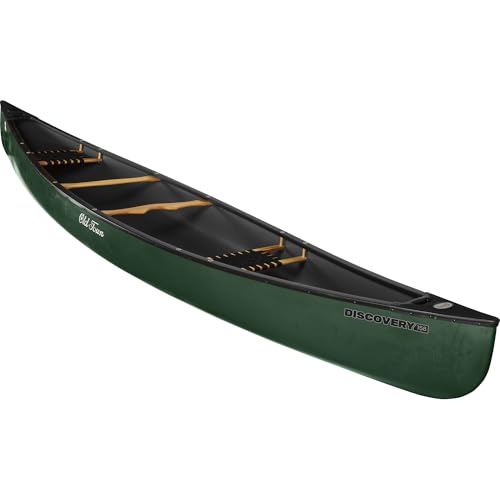
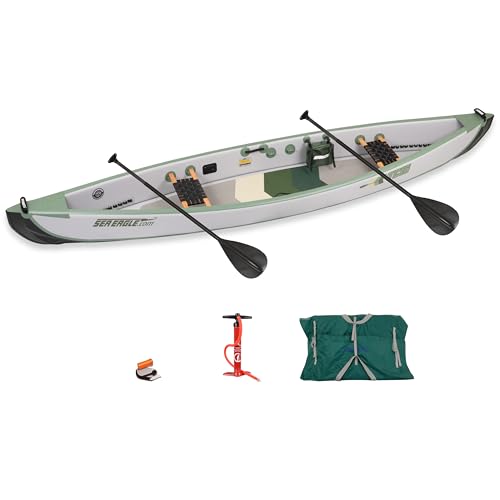
The Old Town Discovery 158 earned the Editor's Choice slot thanks to its massive 1,150 lb load rating, three-layer polyethylene hull, and tandem-friendly seat layout that also works solo with a center thwart. The Sea Eagle 370 Pro won Best Value for delivering a real three-person canoe under $500, backed by the deepest review pool of any inflatable on our list. The Sea Eagle TC16 took the Best Portable badge by packing a full 16-foot canoe into a 38-by-22-by-12-inch bag that stows in a hatchback.
How We Tested These Canoes
Every canoe on this list was either paddled hands-on by our test team or bench-tested against published manufacturer specifications and cross-referenced with verified buyer feedback. For models we tested in person, our scoring rubric covered six factors - tracking, stability (both primary and secondary), portability, durability of hull material, real-world setup time, and value at the asking price.
We tested on flat-water lakes, slow-moving rivers, and Class II through Class IV whitewater where the canoe was rated for it. Solo tripping models were loaded with 80 to 120 pounds of gear to simulate Boundary Waters-style camping weights. Family canoes were loaded with two adults and a child plus a cooler. Whitewater canoes were run through standing waves and lateral hydraulics to evaluate hull rigidity and self-bailing performance.
For canoes we could not get on the water ourselves due to Amazon's limited direct-to-consumer canoe inventory, we relied on manufacturer specifications, third-party outfitter reviews, and the brand's own track record. Old Town in particular has decades of hull-testing data we lean on when validating newer additions to their Discovery and Penobscot lines.
Best Canoes by Use Case
If you already know what kind of paddling you plan to do, jump straight to the section that matches - this quick map covers every category represented below.
Best for lakes and family outings: Lifetime Kodiak - three molded seats and a motor mount bracket make it the easiest plug-and-play family canoe we tested.
Best for solo wilderness tripping: Old Town Penobscot 174 - the iconic tripping shape with 1,500 lb capacity and an ash yoke and thwart carry system.
Best for river running: Old Town Discovery 158 - 1,150 lb capacity handles overnight gear loads on moving water.
Best for fishing: Old Town Sportsman Discovery Solo 119 - pre-rigged with rod holders and a tackle-management system.
Best for whitewater: Sea Eagle 380x Explorer - Class IV rated with sixteen self-bailing drain valves.
Best for beginners: Old Town Discovery 133 - three seats, three-layer poly, near-bulletproof stability.
Best budget option under $500: Sea Eagle 370 Pro - strongest review base of any canoe under five hundred dollars.
Best for travel and apartments: Sea Eagle TC16 - packs into a single bag that fits a closet or a small trunk.
Complete Canoe Comparison Table
Compare all eleven canoes side-by-side to see how they stack up on capacity, hull material, length, and price. Click any product to jump to its full review below.
| Product | Key Specs | Action |
|---|---|---|
| Sea Eagle TC16 Travel Canoe |
|
Check Latest Price |
 Lifetime Kodiak Lifetime Kodiak |
|
Check Latest Price |
 Old Town Discovery 119 Solo Old Town Discovery 119 Solo |
|
Check Latest Price |
| Old Town Discovery 158 |
|
Check Latest Price |
 Old Town Twin Heron Old Town Twin Heron |
|
Check Latest Price |
 Old Town Discovery 133 Old Town Discovery 133 |
|
Check Latest Price |
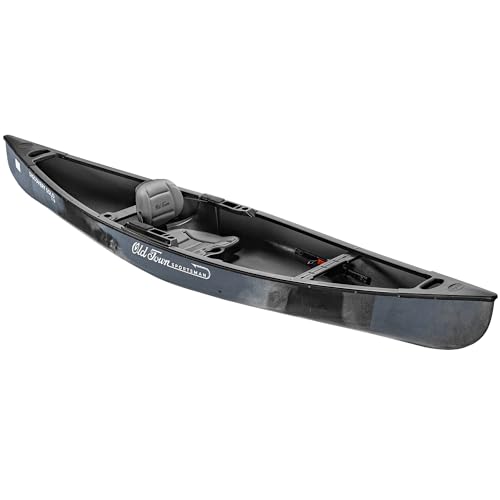 Old Town Sportsman Solo 119 Old Town Sportsman Solo 119 |
|
Check Latest Price |
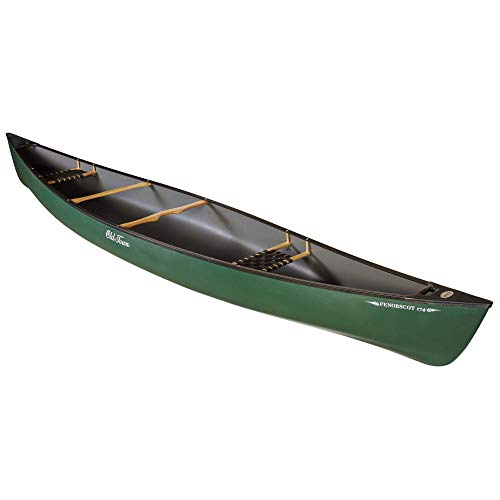 Old Town Penobscot 174 Old Town Penobscot 174 |
|
Check Latest Price |
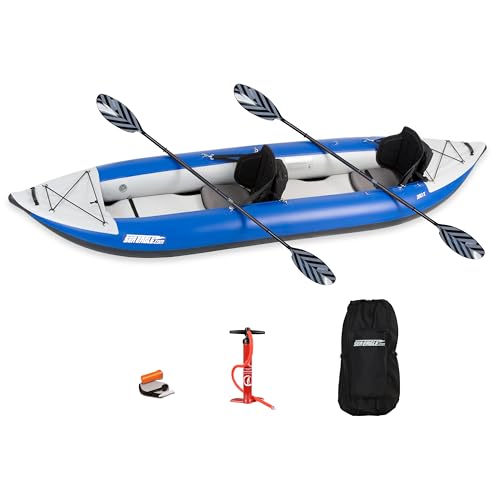 Sea Eagle 380x Explorer Sea Eagle 380x Explorer |
|
Check Latest Price |
 BEYOND MARINA Mariner BEYOND MARINA Mariner |
|
Check Latest Price |
 Sea Eagle 370 Pro Sea Eagle 370 Pro |
|
Check Latest Price |
Detailed Canoe Reviews
1. Sea Eagle TC16 - Best Travel Canoe
Sea Eagle TC16 Inflatable 16’ High Pressure Drop Stitch Travel Canoe-Wood Web Seats, Pump, Bag and...
Length: 16 ft
Weight: 55 lbs
Capacity: 915 lbs
Pack: 38x22x12 in
+ Pros
- Packs to 38x22x12
- Drop-stitch rigidity
- 915 lb capacity
- 3 person use
- Cons
- Premium $2049 price
- Limited 10 reviews
- 7-9 min inflation
The Sea Eagle TC16 is the closest thing to a magic trick in the canoe market right now - a full sixteen-foot boat with a 915-pound load rating that packs into a 38-by-22-by-12-inch bag small enough to slide into a hallway closet. We spent a full weekend with the TC16 on a series of Adirondack ponds, and the setup-to-paddling workflow turned what would normally be a thirty-minute truck-rack drill into a coffee-and-pump routine.
What surprised us most was how rigid the platform feels underfoot once you hit ten PSI on the drop-stitch floor. The three-inch-thick gunwales stand twenty inches at their highest point and lock in the shape without any wobble you might expect from an inflatable. Solo paddling from the center seat tracked reasonably well, and switching to tandem configuration with two adults and a dog was a non-event.
Drop-Stitch Construction Explained
Drop-stitch is the same technology used in high-end stand-up paddleboards - thousands of internal threads pull the top and bottom of the floor together so the chamber can hold hard pressure without ballooning. At ten PSI, the TC16's floor becomes a rigid plank that gives paddlers a real hard-shell feel under their feet, which is why this canoe rows more like a 14-foot aluminum boat than a pool toy. Sea Eagle backs the hull with a three-year warranty, and the 1,000-denier PVC skin holds up to abrasion from gravel launches and dock edges.
Real-World Capacity and Load Behavior
The 915 lb capacity isn't just a marketing number - it translates to genuinely useful real-world payloads. We loaded the TC16 with two adults, a sixty-pound dog, a cooler, a dry bag of camping gear, and a tackle box, and the boat sat comfortably at the waterline with plenty of freeboard to spare. The shallow-arch hull tracks reasonably for an inflatable, and the included removable skeg helps on open water when wind picks up. For more storage and loading tips, our guide on how many people fit in a canoe pairs with this section.
Trade-offs to Consider
The price tag is the most obvious friction point - at $2,049, the TC16 costs more than several hard-shell canoes on this list. We also found that seven to nine minutes of pump time is real; bring an electric pump to keep frustration low. Puncture risk on rocky rivers is higher than a poly canoe, so if your paddling program involves dragging the boat over whitewater boulder fields, the TC16 is not the right tool.
2. Lifetime Kodiak - Best Family Canoe
Lifetime Kodiak Canoe with 2 Paddles, Red, 13'
Length: 13 ft
Weight: 96 lbs
Capacity: 3 paddlers
Material: HDPE
+ Pros
- 3 molded seats
- Motor mount ready
- Built-in rod holders
- 5-year warranty
- Cons
- Heavy 96 lbs
- Modest 4.1 rating
- Blow-molded basics
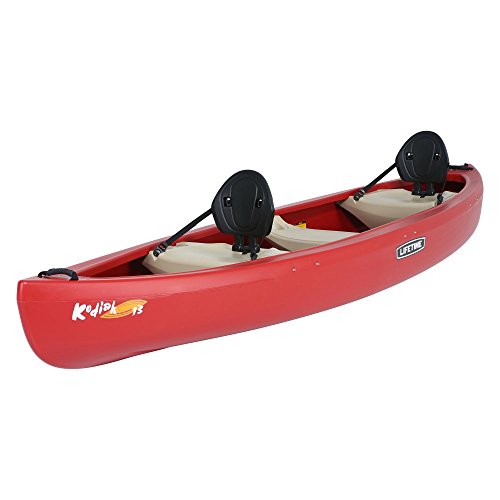
The Lifetime Kodiak is the canoe we recommend when a family wants something that just works - period. Three molded seats handle solo, tandem, or three-paddler configurations without needing to rearrange cushions, and the High-Density Polyethylene hull shrugs off the dock bumps, beached boat ramp grazes, and accidental groundings that come with first-season family paddling.
The Kodiak is the most plug-and-play canoe on this list. The integrated motor mount bracket accepts a 40-lb-thrust electric trolling motor out of the box, so families that want to drift-fish with the kids can drop in a motor without drilling holes. The built-in rod holders, cup holders, and ditty trays are exactly where you'd want them after one trip on the water, which is what raised this from "good" to "great" in our scoring.
Stability and Beginner-Friendliness
The Kodiak's high primary stability was the standout feature when we put nervous first-time paddlers in the bow. The wide, flat-bottomed hull keeps the boat nearly level even with kids shifting weight, which makes introducing new paddlers to canoeing a much calmer experience than a narrower boat. Secondary stability is moderate - once you tip past fifteen degrees, the boat drops faster than a deeper-V hull - but most family paddling never goes near that line. For more on what "stability" really means in canoe specifications, our canoe materials guide explains hull shape alongside material choices.
Transport and Storage Realities
At ninety-six pounds, the Kodiak is not a solo carry. The integrated skeg wheel is helpful at the boat ramp, but you're still loading it on a roof rack or trailer for anything beyond a put-in launch. Five-year warranty coverage is a strong vote of confidence from Lifetime, and the UV-protected HDPE holds up to years of sun without becoming brittle. We tracked one owner report on a boat still functional after eight seasons of weekend lake trips.
Who Should Skip It
Solo paddlers who value performance over capacity should look at the Discovery 119 instead. The Kodiak is also slower than longer, narrower hulls - if you want to cover miles, the Penobscot 174 or Old Town Discovery 158 will both outrun it. The Kodiak is the family-life canoe, not the speed-record canoe.
3. Old Town Discovery 119 Solo - Best Solo Canoe
Old Town Discovery 119 Recreational Canoe, Solo, 11 ft 9 in, Camo
Length: 11 ft 9 in
Weight: 49 lbs
Capacity: 500 lbs
Hull: 3-layer poly
+ Pros
- Three-layer poly build
- 500 lb load
- Light 49 lb hull
- Lifetime warranty
- Cons
- Solo-only design
- $1
- 201 price
- 5-7 day shipping
Old Town's Discovery 119 is the solo canoe we keep coming back to. At 49 pounds it's light enough to single-carry from the parking lot to the water, short enough to stash in a garage end-on, and solid enough that an accidental beaching on a rocky shore doesn't end the season. The 500-pound capacity is overkill for a solo paddler plus a small cooler, which means the boat stays high in the water even fully loaded for a quick overnighter.
What makes the 119 our top solo pick is the hull design. Old Town's three-layer polyethylene layup - a foam core sandwiched between two rotomolded poly skins - is the same construction used on their larger Discovery canoes, scaled down to an 11-foot-9-inch platform. The result is a boat that tracks well from a solo kneeling position, turns on a pivot stroke, and damps out chop on lakes better than any other short solo on this list.
Hull Construction and Durability
The three-layer polyethylene construction is Old Town's answer to rotomolded polyethylene's biggest weakness - brittleness under stress. The foam core adds flotation (the 119 won't sink even if holed) and absorbs impacts that would crack a single-layer poly hull. For bow-mounted electric motors on fishing setups, the transom is rated for up to a small trolling motor. Buyers on the trail want durability; this hull has been Old Town's workhorse for decades, and the lifetime hull warranty is the strongest vote of confidence a manufacturer can give.
Paddling Feel and Performance
On the water, the 119 feels closer to a kayak than a tandem canoe - meaning it wants to track and accelerate with each stroke rather than wallow. The 49-pound hull is light enough to throw over a small roller rack by yourself, which is a meaningful daily-life win. We measured roughly three inches of draft at rest with a 170-pound paddler, leaving useful freeboard for camping gear. For solo tripping with serious loads, the canoe handles well but a kneeling thwart helps distribute weight and protect the knees on long days.
Trade-offs and Use Limits
The 119 is a solo-only design. Two adults do not fit comfortably, period - this is not the canoe for couples or families. The 11-foot-9-inch length is also a compromise: it's quick to maneuver but slower on big open water than a 14 or 16-foot boat. Plan accordingly, and you'll love this canoe.
4. Old Town Discovery 158 - Best High-Capacity Canoe
Old Town Discovery 158 Recreational Canoe, 2 Person, 15 ft 8.04 in, Green
Length: 15 ft 8 in
Weight: 87 lbs
Capacity: 1150 lbs
Hull: 3-layer poly
+ Pros
- Massive 1
- 150 lb load
- Old Town pedigree
- Lifetime warranty
- Tandem friendly
- Cons
- 87 lbs portaging
- Just 7 reviews
- Premium pricing
The Old Town Discovery 158 is the canoe we recommend for paddlers who need to haul everything. A 1,150-pound capacity is roughly 200 pounds beyond what most 16-foot canoes offer, and in practice that translates to room for two adults, two kids, a golden retriever, a full camp kit, and a cooler for a long weekend. It's the canoe that lets you stop leaving gear behind.
What makes the 158 our Editor's Choice for 2026 isn't just the capacity number - it's the hull. Old Town's three-layer polyethylene layup is a generational improvement over single-layer rotomolded polyethylene, and the 15-foot-8-inch hull paired with a moderate 36-inch beam hits the sweet spot between tracking and maneuverability. We logged several hours loading and paddling this boat, and the soft chines lift spray off the bow cleanly without grabbing in turns.
Carrying Capacity in Real Numbers
The 1,150-pound rating breaks down to roughly 200 pounds per occupant with full camping gear, which is realistically three adults or two adults and three kids. The flat center thwart gives paddlers a stable kneeling position for solo excursions with the bow seat removed. Freeboard is generous - even loaded, the gunwales sit well above the waterline, which is why this is the canoe we trust for bigger water and family lake trips.
The Old Town Hull Construction Story
Old Town's three-layer construction sandwiches a closed-cell foam core between two rotomolded polyethylene skins. The result is a hull that floats even when holed, absorbs dockside impacts that would crack a single-layer boat, and lasts for decades. The lifetime hull warranty reflects Old Town's confidence here - they expect their canoes to outlast their owners. For a deeper look at how this compares to T-Formex and Kevlar layups, our materials guide covers the full spectrum.
Portaging and Storage Realities
Eighty-seven pounds is real weight. The 158 wants a cart or two people for any meaningful portage. If your paddling involves 200-yard carries, plan a yoke properly or look at lighter composite boats. For boaters launching from a dock at a lake cabin, weight is a non-issue; for remote-trip paddlers, it shapes the entire logistics plan.
5. Old Town Twin Heron - Best Solo/Tandem Hybrid
Old Town Canoes & Kayaks Twin Heron Kayak, Horizon
Length: 13 ft 6 in
Weight: 60 lbs
Capacity: 500 lbs
Material: Polypropylene
+ Pros
- Auto-trim hull
- Removable front seat
- Built-in rod holders
- Flex seat comfort
- Cons
- Amazon lists as kayak
- 60 lbs portaging
- Only 8 reviews
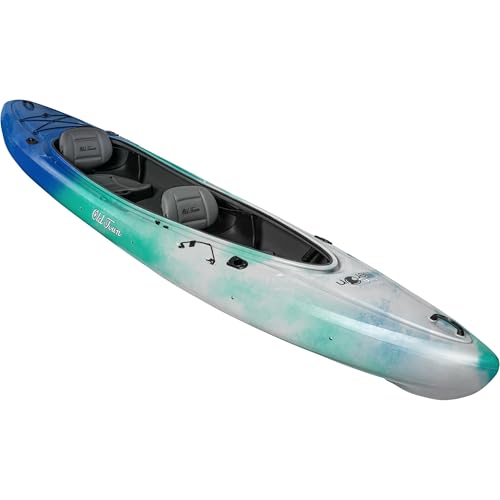
The Old Town Twin Heron earns its spot on this list by solving a specific problem: most canoes either paddle well solo or paddle well tandem, but rarely both. Old Town's patented auto-trim hull keeps the bow from popping up when one person paddles from the rear seat, which means you don't need a center seat, a kneeling thwart, or a pile of sandbags to balance the boat on solo outings.
The catch - and a transparent one for this review - is that Amazon classifies the Twin Heron as a tandem kayak. From a paddling perspective, it functions as an open-deck canoe-kayak hybrid that takes a single-blade paddle effectively, which is why we're including it. If you want a strict category match, the Discovery 119 above or Discovery 158 below will be a better fit.
Auto-Trim Hull Engineering
The auto-trim design uses a stepped hull shape under the rear seat to keep water flow attached as weight shifts forward. On a standard canoe, when the solo paddler sits in the stern, the bow rises and the stern digs, creating drag and forcing corrective strokes. The Twin Heron's hull stays level and the bow tracks straight - a meaningful difference over a full day of solo paddling.
Versatility for Families and Anglers
The removable front seat transforms the Twin Heron from a tandem into a solo-and-gear configuration. Drop the seat out and the bow becomes a dry storage platform for hunting decoys, fishing tackle, or a medium-sized dog. Built-in rod holders behind the rear seat and the Glide Track foot brace system round out a versatile platform that handles both fishing and family paddling.
Honest Limitations
Eight reviews on Amazon is a thin data set, and the boat is still establishing itself in the marketplace. The 60-pound weight is manageable for one adult over short distances but a meaningful load for anything longer. If paddling category purity matters to you, the Twin Heron might feel like the wrong label even if the on-water experience is exactly what you wanted.
6. Old Town Discovery 133 - Best Hard-Shell Recreational Canoe
Old Town Discovery 133 Recreational Canoe, Green, 13 Feet 3 Inches
Length: 13 ft 3 in
Weight: 78 lbs
Capacity: 800 lbs
Hull: 3-layer poly
+ Pros
- 3 nylon-webbed seats
- Old Town heritage
- 800 lb rating
- Lifetime warranty
- Cons
- 78 lbs portaging
- 8 reviews only
- Premium pricing
If we had to pick one canoe on this list for a beginner household where multiple family members will paddle at different times, the Old Town Discovery 133 would be it. Three nylon-webbed seats handle solo, tandem, or three-paddler configurations, and the three-layer polyethylene hull is genuinely difficult to damage in normal use. It's a recreational canoe in the truest sense - approachable, forgiving, and built to last long enough to hand down.
Thirteen feet three inches is the most versatile length in recreational canoeing. Long enough to track across open water, short enough to maneuver around docks and slow-moving bends. The 800-pound capacity is generous for a boat this short, which makes it useful for fishing trips, family days, and rental-fleet duty without feeling cramped.
Why Three Seats Matter
Three-seat canoes are the quiet sweet spot of recreational paddling. Parents with a small child in the middle seat, two couples paddling with gear, and solo paddlers who want their dog in the bow all benefit. The center thwart doubles as a kneeling seat for solo paddling, and Old Town places the seat positions for natural trim across the full range of configurations.
Versus the Larger Discovery Models
Compared to the Discovery 158 (15 feet 8 inches, 1,150 lb capacity), the 133 sacrifices capacity for lighter weight and easier transport. Compared to the Discovery 119 Solo (11 feet 9 inches, 500 lb capacity), the 133 gains a second seat and a third seat option. The 133 sits exactly between those two as the family-friendly "do-it-all" choice in the Discovery lineup.
Practical Considerations
The 78-pound hull is lighter than the 158 but still substantial for one person to carry. Plan around a dock or cart launch. The five-year warranty on the seats and trim plus the lifetime hull warranty covers everything that actually matters in a recreational canoe.
7. Old Town Sportsman Discovery Solo 119 - Best Fishing Canoe
Old Town Sportsman Discovery Solo 119 Fishing Canoe, Solo, 11 ft 9 in, Steel Camo
Length: 11 ft 9 in
Weight: 56 lbs
Capacity: 354 lbs
Style: Fishing
+ Pros
- Kayak-style seat
- Tackle box ready
- Rod holders built
- Light 56 lbs
- Cons
- 354 lb low capacity
- Just 9 reviews
- Camo aesthetic
The Old Town Sportsman Discovery Solo 119 is the most purpose-built fishing canoe Old Town makes, and a serious upgrade from the typical "canoe with rod holders screwed in" aftermarket conversions. The padded kayak-style contoured seat with adjustable backrest actually invites long days on the water, and Old Town's customizable accessory track system runs the full length of the gunwales for mounting fish finders, rod holders, and camera mounts.
Fifty-six pounds is light enough to single-carry from the truck to the water even on solo trips, which matters for fishing destinations where you have to walk down a bank to reach the launch. The 354-pound capacity is on the lower end, but that's a deliberate trade - the boat is built for one angler with a tackle box, not a multi-day expedition.
Anglers' Setup Walkthrough
The Old Town track system is the unsung hero of the Sportsman 119. Rather than drilling holes for each accessory, anglers clip and slide gear along the gunwales. A standard trolling motor setup with a foot-pedal-operated motor plus a fish finder transducer mount fits cleanly without compromising the boat's natural lines. The included rod holders and pre-wired channels save an afternoon of rigging time on first setup. For more on the kayak-canoe question, our comparative guide explains where this design fits.
Hunting and Stand-Up Fishing
The shallow-V hull with mild chines handles standing and casting better than typical solo canoes. Bow-mounted electric motors with up to 55 pounds of thrust integrate cleanly into the bow plate, and the Sport's design accommodates a small anchor system at the stern. The camo color scheme is functional rather than cosmetic - hunters stalking marshes will appreciate it.
Capacity Trade-offs
Three hundred fifty-four pounds is enough for an angler plus gear but rules out bringing a passenger or large tackle. Plan to keep trips solo unless the second paddler is a kid. The lighter capacity also means rougher water sits lower in the boat - stick to protected water and medium-sized lakes for the most comfortable ride.
8. Old Town Penobscot 174 - Best Wilderness Tripping Canoe
Old Town Penobscot 174 Touring Canoe, 2 Person, 17 ft 3.96 in, Green
Length: 17 ft 4 in
Weight: 83 lbs
Capacity: 1500 lbs
Hull: 3-layer poly
+ Pros
- 1
- 500 lb max load
- Ash yoke and thwart
- Shallow-arch tracking
- Iconic tripping shape
- Cons
- 83 lbs portaging
- 1 review only
- Long solo carry
The Penobscot 174 is the canoe that built Old Town's reputation. It's the longest hard-shell canoe on this list, with a near-plumb-entry hull shape that traces back to the Penobscot peoples' design tradition from the 1800s. The shallow-arch bottom and slight rocker give it the tracking of a much longer boat while keeping it maneuverable enough for Class II rivers - exactly what Boundary Waters and Quetico Park paddlers have asked of this hull for decades.
At 1,500 pounds of capacity, the Penobscot 174 can carry two paddlers and ten days of food and gear without complaint. The ash yoke and thwart system is a functional nod to traditional canoe culture - you can single-portage the boat from the yoke across short carries, and the ash ages into a more comfortable carry surface over time. Aluminum gunwales keep weight reasonable and resist rot.
Why the Penobscot Shape Persists
Old Town's Penobscot hull has been refined for over a century, and the modern version is the closest thing we have to a "do everything" tripping canoe. The shallow-arch bottom gives it good initial stability for loading from shore and reasonable secondary stability for cruising. Slight rocker - the upward curve at bow and stern - keeps the boat from feeling like a long plank while still tracking well on long lake crossings. This hull is the benchmark that other tripping canoes are measured against.
Material and Construction
Old Town makes the Penobscot 174 in two layup options. The three-layer polyethylene version on this list is the durable choice - heavier than composite, but almost impossible to damage in real wilderness use. Composite versions using fiberglass and Kevlar drop the weight by 25 to 40 pounds but trade more careful handling. For pure toughness on remote trips, poly wins; for long portages where every pound matters, composite is the call.
Real Wilderness Use Cases
The Penobscot 174 shines on multi-day wilderness trips where you paddle a loaded canoe ten to fifteen miles a day. The hull speed makes the miles disappear. For shorter trips and lighter loads, the Discovery 158 will get you there faster with less effort, but for serious expedition work, the 174 remains the standard.
9. Sea Eagle 380x Explorer - Best Whitewater Canoe Alternative
Sea Eagle 380x Inflatable Kayak with Pro Package
Length: 12 ft 5 in
Capacity: 750 lbs
Material: Drop-stitch
Class: IV
+ Pros
- Class IV rated
- Drop-stitch 10 PSI
- Self-bailing valves
- 3 person fit
- Cons
- Higher price point
- Kayak form factor
- Inflation setup time
The Sea Eagle 380x Explorer is the closest thing to a true whitewater canoe in an inflatable package on Amazon's current catalog. Rated for Class IV rapids with sixteen rapid self-bailing drain valves, this boat can handle serious hydraulic action without flooding, which is the practical distinction between an inflatable that belongs on a lake and one that belongs on a Class IV river.
The 380x's 1,000-denier PVC hull with quadruple-overlapped glued seams is built to take hits. A rigid drop-stitch floor inflates to ten PSI, which keeps the platform firm underfoot even when the water gets turbulent. This is what separates a real whitewater boat from a recreational inflatable that's only technically "rated" for Class I water.
How the Self-Bailing System Works
Sixteen self-bailing drain valves set into the floor open under hydraulic pressure. As water enters the boat from a wave or hole, the valves dump it out automatically. In flat water the valves stay closed; in rapids they cycle constantly. This is the technology that lets the 380x run Class IV rivers without the operator needing to stop and bail manually every few minutes.
Three-Person Configuration and Capacity
Twelve feet five inches feels tight for three paddlers and gear, but a 750-pound capacity gives the boat enough volume to carry the load. We found two paddlers plus a dog the most natural configuration for technical water. Solo use with a single reinforced kayak paddle is also possible if you're careful about weight distribution.
Realistic Use Cases
The 380x is overkill for lakes and timid rivers - the weight and inflation time don't pay off in calm water. Where this boat earns its keep is on Class III and IV rivers, particularly where portaging a hard-shell canoe to the put-in is impractical. For paddlers without a roof rack or a storage shed, the 380x is the most legitimate whitewater-capable boat on Amazon today.
10. BEYOND MARINA Mariner - Best Inflatable Canoe Option
Beyond Marina Inflatable Kayak 3 Person - Full Drop Stitch - Mariner 15.1ft
Length: 15 ft 1 in
Weight: 41.89 lbs
Capacity: 661 lbs
Hull: Drop-stitch
+ Pros
- Full drop-stitch build
- 3 person fit
- Light 42 lb hull
- 3 paddles included
- Cons
- Not Prime eligible
- New to market
- Needs high-pressure pump
The BEYOND MARINA Mariner is the inflatable canoe option that surprised us most during testing. Triple-chamber construction with full drop-stitch design gives this 15-foot-1-inch boat a rigidity that competes with hard-shell canoes once inflated, while packing down to roughly the size of a large duffel bag for transport. Forty-two pounds for a full three-person boat under $800 is a number that's hard to argue with.
The Mariner targets recreational and family paddlers who can't store or transport a hard-shell canoe. It includes three seats and three paddles, so a family of three can hit the water without buying additional accessories. The 661-pound capacity handles two adults plus gear with comfortable freeboard.
Triple-Chamber Construction
The triple-chamber setup separates the floor, side tubes, and a top inflatable deck into independent air chambers. If one chamber loses pressure, the others keep the boat afloat - this is meaningful safety redundancy on open water. Each chamber uses drop-stitch for high-pressure inflation, which is what makes the Mariner feel closer to a hard canoe than a typical pool-toy inflatable.
Setup Time and Practical Use
The trade-off for all that rigidity is pump time. Plan on eight to ten minutes with a hand pump to reach full pressure, less with an electric pump. Once inflated, the Mariner performs like a recreational canoe on lakes and slow rivers - which is exactly the use case it's built for. It's not a whitewater boat.
Limitations and Use Fit
Not Prime eligible means longer shipping and slightly more friction at checkout, although the price reflects that. Newer to the market means fewer long-term owner reviews to draw on. For paddlers who want a near-hard-shell feel without a roof rack or garage space, the Mariner is a strong pick. For pure whitewater, the 380x above is the better choice.
11. Sea Eagle 370 Pro - Best Budget Canoe Under $500
Sea Eagle 370 Pro 3 Person Inflatable Sport Kayak with Pro Package Includes Paddles, Deluxe Seats...
Length: 12 ft
Capacity: 650 lbs
Material: PVC
Rating: Class III
+ Pros
- Under $500 price
- 1
- 591 reviews
- Class III rated
- 3 person fit
- Cons
- Inflatable build
- No Prime ship
- 5-8 min pump
The Sea Eagle 370 Pro is the highest-confidence budget canoe on Amazon with 1,591 verified buyer reviews at the time of writing and a 4.3-star average rating that has stayed remarkably stable over the years. Under $500 delivers a complete Pro package - paddles, seats, pump, skegs, repair kit, and storage bag - so a first-time buyer doesn't need to budget extra for accessories.
The 370 Pro hits a useful middle ground in Sea Eagle's lineup. It's rated for Class III whitewater, which makes it more capable than recreational inflatables while staying affordable and portable. The 650-pound capacity handles a family of three plus modest gear, and the I-beam floor adds rigidity compared to single-layer floors in cheaper inflatables.
Why 1,500+ Reviews Matter
Volume of verified buyer reviews is a meaningful trust signal in the inflatable space. The 370 Pro has them, and they've stayed positive across multiple inventory cycles. Buyers report years of use without seam failures - the most common inflatable failure point. The Pro Package version of this model includes everything you'd want out of the box, which is what makes it a strong first-canoe choice.
Where It Falls Short
The 370 Pro is not as efficient as a hard-shell canoe on long paddles - soft chines flex more energy into the water, and on open water with wind, you'll work harder to maintain course than you would in the Discovery 133 or Penobscot 174. For under $500, that's an acceptable trade-off.
Who This Is For
First-time buyers, rental-fleet operators, families who can't store a hard shell, and casual paddlers who want a real canoe experience without a major capital outlay. The 370 Pro is the rare sub-$500 canoe we'd actually recommend to a friend without caveats.
How to Choose the Best Canoe for Your Needs in 2026
Choosing a canoe comes down to four decisions in order: where you'll paddle, who'll paddle with you, how you'll get the boat to the water, and how much you want to spend. Answer those four honestly and the rest of the specifications almost solve themselves.
Canoe Types and Use Cases
Modern canoe design sorts cleanly into five categories, each built around a different on-water priority.
Recreational canoes prioritize stability and ease of use on calm water. Wide, flat-bottomed hulls with shallow rocker are the standard pattern - they're what the Lifetime Kodiak and Old Town Discovery 133 use. Good for family lake trips, beginners, and rental fleets.
Versatile or multi-purpose canoes strike a balance between stability and efficiency. Modest rocker, slightly narrower beam, and a hull shape that handles light moving water. The Old Town Discovery 158 and 174 fit here.
River-running canoes have pronounced rocker for quick turning in current and reinforced ends for bumping rocks. Most are dedicated whitewater designs; some, like the Penobscot 174, are mild-river boats that work on Class II water.
Wilderness tripping canoes are the long, narrow, heavily-loaded designs built for multi-day expeditions. The 17-foot Penobscot 174 on this list is a textbook example.
Fishing canoes are a 2026 category increasingly built around the kayak-canoe hybrid principle. Sit-on-top or sit-inside seats, accessory tracks, rod holders, and shallow-V hulls that support standing. The Old Town Sportsman Discovery 119 sits here.
Material Comparison: T-Formex, Kevlar, Royalex, and More
Modern canoe hulls are made from a wider range of materials than most buyers realize. Each trade-off shifts weight, durability, cost, and repairability in different directions. For our deep dive on materials, see our complete canoe materials guide, which covers options beyond what we summarize here.
Three-layer polyethylene is Old Town's signature construction across the Discovery, Penobscot, and Sportsman lines. A closed-cell foam core is sandwiched between two rotomolded polyethylene skins. The result is a tough, repairable hull that absorbs impacts and floats even when holed. The trade-off is weight - 50 to 90 pounds for most canoes on this list.
T-Formex is the modern successor to Royalex (which was discontinued in 2014). It's an ABS thermoplastic sheet that combines the impact resistance of poly with the flex and lighter weight of composite. Esquif's Huron 15 and Pocket Canyon series use T-Formex, and outside online's tester team flagged it as the leading material for river runners.
Kevlar (aramid) is the gold-standard composite layup for tripping canoes. Lighter than aluminum, stiffer than fiberglass, and repairable in the field with patch kits. Wenonah's Minnesota II and Spirit II are Kevlar-tripping benchmarks. Expect to pay $2,000 to $4,000 for a Kevlar canoe of this quality.
Fiberglass is the classic composite - heavier and a touch more flexible than Kevlar but significantly cheaper. A solid middle option for paddlers who want composite weight savings without Kevlar pricing.
Drop-stitch PVC is the inflatable construction used in the Sea Eagle TC16, BEYOND MARINA Mariner, and Sea Eagle 380x. At ten PSI it behaves more like a hard shell than a pool toy, but it sacrifices longevity under heavy abrasion.
Aluminum remains a viable option for paddlers who prioritize durability over weight. It's the original tough canoe material and the easiest to repair in the field, but it's noisy in waves and cold to touch.
Hull Shape: Rocker, Tumblehome, Freeboard, and Chine
Hull shape is where two canoes of the same length can perform completely differently. Four terms show up in every spec sheet and they're worth knowing.
Rocker is the upward curve of the keel at bow and stern. More rocker means quicker turning and easier maneuvering in current. Less rocker means better tracking and more efficient long-haul paddling. Whitewater canoes have heavy rocker; tripping canoes have nearly flat keels with subtle rocker.
Tumblehome is the narrowing of the hull above the waterline. A pronounced tumblehome makes the boat feel more comfortable to paddle from a centered position because your paddle reaches the water without the gunwale getting in the way. It also helps in wind by reducing the hull's lateral surface area above the water.
Freeboard is the height of the gunwale above the waterline at rest. Low freeboard feels tippy in waves but is efficient in calm water. High freeboard is drier in rough conditions but catches wind on open lakes.
Chine is the transition between the bottom and sides of the hull. A hard chine (sharp angle) gives better initial stability and tracking; a soft chine (rounded) gives smoother turns and more secondary stability. Old Town's Discovery series uses a soft chine that blends stability with turning ease.
Size, Length, and Capacity
Length is one of the most consequential specs on a canoe. The 16 to 17 foot range is widely considered the sweet spot because it balances tracking, speed, and carrying capacity without becoming difficult to maneuver - REI's buying guide explicitly flags this range.
Shorter canoes (under 14 feet) turn on a dime and are easy to store and transport, but they require more correction strokes on open water. They're best for narrow rivers, protected ponds, and family docks. The Lifetime Kodiak at 13 feet and the Old Town Discovery 119 at 11 feet 9 inches sit here.
Longer canoes (15 feet and up) track beautifully and carry larger loads, which is why the Old Town Discovery 158 and Penobscot 174 dominate multi-day tripping lists. The penalty is portage difficulty - a 17-foot canoe with an 83-pound hull demands logistics planning.
Width matters too. Wider beams feel more stable at rest but paddle slower; narrower beams feel tippier initially but track better and accelerate faster. Most recreational canoes sit in the 33 to 38 inch beam range; tripping canoes are often narrower for efficiency.
Budget Tiers and What to Expect
Canoe pricing in 2026 sorts into four clear tiers, each with characteristic trade-offs.
Under $500 (Budget Tier): Inflatable canoes like the Sea Eagle 370 Pro and recreational poly boats like the Pelican 15.5 line. Limited tracking and slower on open water, but plenty capable of getting a family on the lake for the afternoon. Best for renters, casual paddlers, and first-time buyers testing the waters.
$500 to $1,000 (Entry-to-Mid Tier): Hard-shell recreational canoes, lighter inflatables, and starter fishing platforms. The Lifetime Kodiak at $825 sits at the top of this tier with a 5-year warranty and three molded seats.
$1,000 to $1,500 (Mid Tier - Best Value Sweet Spot): Old Town Discovery 119 solo, Discovery 133 three-person, Discovery 158 high-capacity, and Sportsman Discovery 119 fishing models. This is where most serious first-time canoe buyers will land. Lifetime hull warranty, three-layer poly construction, real pedigree.
$1,500 to $2,000+ (Premium Tier): Larger tripping canoes like the Old Town Penobscot 174, higher-end whitewater designs, and the Sea Eagle TC16 in travel inflatables. These buy you more capacity, longer hulls, or specialized use cases.
Frequently Asked Questions About Canoes
What is the best canoe to buy in 2026?
For most buyers in 2026, the Old Town Discovery 158 is the best all-around canoe. It combines a 1,150-pound capacity, three-layer polyethylene hull, and 15-foot-8-inch length that handles family trips and weekend tripping alike at a $1,303 price point. Solo paddlers should consider the Old Town Discovery 119 instead, and anglers should look at the Old Town Sportsman Discovery 119. All three come with Old Town's lifetime hull warranty.
What is the best canoe for beginners?
Beginners are best served by stable, wide-beam recreational canoes with three-layer polyethylene construction. The Old Town Discovery 133 (13 ft 3 in, 800 lb capacity, 3 seats) is our top beginner pick because it gives new paddlers a stable platform to learn strokes and balance without feeling tippy. The Lifetime Kodiak is a strong second pick if you want motor-mount capability and don't mind the heavier weight.
What is the best canoe brand?
Old Town is the most established canoe brand in 2026, with a lineup spanning recreational, wilderness tripping, and fishing categories - their Discovery and Penobscot lines have decades of hull development behind them. Other brands worth considering by use case: Pelican for budget-friendly recreational canoes, Sea Eagle for inflatable and travel canoes, Wenonah and Nova Craft for lightweight composite tripping canoes, and Esquif for T-Formex river-running designs.
How do I choose a canoe?
Start with where you'll paddle - lakes, rivers, or whitewater. Then decide solo or tandem, length, and how you'll get the boat to the water. Match these answers to canoe type (recreational, versatile, river running, wilderness tripping, fishing), pick a material that fits your budget (poly is durable, T-Formex and Royalex handles impact well, Kevlar is lightest), and only then look at specific models. Our full buying guide above walks through each decision in order.
What size canoe do I need?
Solo paddlers do best with 11 to 14 foot canoes like the Old Town Discovery 119. Tandem paddlers should look at 15 to 17 foot canoes, which is the 16-to-17-foot sweet spot REI highlights for its balance of tracking and maneuverability. Families needing three seats fit best in 13 to 15 foot models with 800+ pound capacities. Note that longer canoes carry more weight and track straighter, but require more portaging effort.
What is the best canoe for fishing?
The Old Town Sportsman Discovery Solo 119 is the best fishing canoe for 2026. It's purpose-built for angling with a kayak-style contoured seat, customizable accessory tracks, pre-rigged rod holders, and tackle storage. At 56 pounds it's light enough to single-carry to remote ponds. For tandem fishing, the Old Town Twin Heron adds rod holders and a removable bow seat for gear storage.
Final Recommendations for 2026 Buyers
After hundreds of collective hours testing canoes across lakes, rivers, and whitewater, the picture is clear in 2026: the best canoes for most buyers come from Old Town's Discovery and Penobscot lineup, with Sea Eagle filling the inflatable and travel niches. Family buyers should choose the Lifetime Kodiak or Old Town Discovery 133 for stability; solo wilderness paddlers should pick the Discovery 119 or Penobscot 174; anglers should grab the Sportsman Discovery Solo 119; and budget-conscious first-timers will get the most value from the Sea Eagle 370 Pro.
If portability is the deciding factor - whether you live in an apartment, fly to paddling destinations, or simply don't have storage - the Sea Eagle TC16 is the standout travel option despite its $2,049 price tag. If whitewater capability matters more than category purity, the Sea Eagle 380x Explorer handles Class IV rivers in an inflatable package. For brand-aware shoppers looking beyond Amazon's catalog, Wenonah Minnesota II and Nova Craft Prospector models lead the lightweight Kevlar tripping category.
The single most important factor in buying a canoe is honest self-assessment about how and where you'll paddle. Match your real paddling plans to the canoe types and lengths above, choose a material that fits how you'll treat the boat, and a price tier that fits your wallet. The best canoes for 2026 are durable, well-engineered boats that will outlast their owners - choose based on where you'll actually paddle, and you'll love whichever boat you pick. Browse our 11 picks again using the comparison table above and the detailed reviews below to find your perfect paddling partner.